About
BLOG

Interested in a little light reading?

Our blog is continually updated with helpful educational information, advises, research and insights—all in the name of helping you level-up your color and appearance needs. Grab a drink and enjoy our stories!

Explore stories

"Addressing the Challenges of Optical Brightening Agents in Paper Color Measurement"

Read

Explore Our Products

View More

"Spectrophotometry Ensures Color Quality Control of High-Visibility Safety Clothing"

Read

"Spectrophotometry in the Textile Industry: Ensuring Color Consistency in Denim"

Read

"Choosing the Right Spectrophotometer for Plastics Can Increase Production and Sales"

Read

"Best Practices for Measuring the Color of Transparent Plastic Preforms"

Read

"Is Your Cashew Roast Color Missing the Mark?"

Read

"The Complete Guide to Measuring Opaque Plastic Preforms"

Read

Addressing the Challenges of Optical Brightening Agents in Paper Color Measurement

Posted on Jan 14, 2026 by HunterLab

Optical brightening agents present special challenges for accurate color measurement in paper products. Image Source: Pexels user Karolina Grabowska

For decades, spectrophotometric color measurement has played an integral part in the development and production of paper products that meet the diverse needs of consumers in a competitive and growing marketplace. The high level of accuracy, precise quantification of spectral data, non-destructive nature, and versatility of spectrophotometers have made them central to color quality management for paper manufacturers around the globe. However, the increasing popularity of optical brightening agents is posing considerable challenges for spectrophotometers unequipped to handle these unique color enhancers. As the use of these chemical compounds continues to expand, choosing an instrument that allows you to precisely analyze treated papers is more critical than ever before to satisfy the demand for the bright, aesthetically pleasing papers consumers have come to expect.

Consumer expectations of exceptionally bright whites have led paper manufacturers to increasingly turn to optical brightening agents as an effective and economical option for creating stark white hues. Image Source: Flickr user Emilian Robert Vicol

Posted in Color Measurement

Spectrophotometry Ensures Color Quality Control of High-Visibility Safety Clothing

Posted on Jan 14, 2026 by HunterLab

High-visibility clothing is essential for maintaining safety in dangerous conditions. Image Source: Unsplash user Ricardo Gomez Angel

Workers across the nation depend on high-visibility safety clothing every day when they get up and go to their job site. Highway workers, construction workers, airport runway personnel, firefighters, some factory workers, and telephone linemen all rely on fluorescent clothing to be seen by other in order to prevent accidents.  Practically everywhere that workers perform their duties in dangerous areas with low visibility, safety clothing is an essential element of their daily gear. High-visibility clothing can be important in civilian life as well, for bikers, hunters, or anyone outdoors during hunting season.

While it’s common sense that garment manufacturers have a stake in the correct coloration of their products, in the case of high visibility safety clothing, correct coloration has actually been codified into law. According to the U.S. Occupation Safety and Health Administration, workers performing dangerous tasks requiring high visibility, such as roadside workers, must wear garments that conform to the requirements established in ANSI/ISEA 107-2015.1 The ANSI standards require that a garment’s material must be tested by an accredited laboratory and certified by the manufacturer with a Declaration of Conformity.2 Without proper testing and the ability to guarantee that their products meet ANSI standards, manufacturers cannot sell high-visibility safety clothing without exposing themselves to a high degree of risk. In order to compete in the safety clothing marketplace, manufacturers must invest in color quality control instruments and processes, including spectrophotometers.

Firefighters wear high-visibility clothing to stay safe while on the job. Image Source: Unsplash user Benjamin Kerensa

Posted in Color In Textiles

Spectrophotometry in the Textile Industry: Ensuring Color Consistency in Denim

Posted on Jan 14, 2026 by HunterLab

A key to achieving success in the fashion market is ensuring consistency throughout a line of clothing. A line of shirts has to have the same type of cut, quality, and color to maintain the integrity of a brand.

Because denim can be one of the toughest fabrics to work with, maintaining color consistency from factory to factory for a particular brand of jeans is extremely difficult. Ensuring consistent color measurement throughout a roll of denim requires a manufacturer to make use of precise measuring equipment, such as spectrophotometers/colorimeters.

Challenges of Dyeing Denim

Denim can be a challenging fabric to use for clothing manufacturing for a variety of reasons. The weaving required to create a roll of denim fabric requires precise manufacturing work, but also provides the toughness denim is known to possess.

Those challenges carry over to dyeing denim, where the weaving pattern in the fabric can make it difficult to consistently spread the dye across the entire roll. A couple of options for dyeing denim are Indigo and sulfur dyeing.

  • Indigo dyeing is commonly used in denim manufacturing, as few other dyes can match the desirable sky blue color an Indigo dye can create. However, the Indigo dyeing process, if not performed correctly, can lead to undesirable fading after washing.
  • A sulfur dye will typically be a lower-cost option for dyeing denim than Indigo, but the color choices are a bit more limited. Most manufacturers will stick to a darker color when using sulfur dyeing. Non-blue colors are common with sulfur dyeing too.

Nothing’s Better Than Faded Jeans

One of the best properties of denim is the way the fabric fades over time. The faded look can be even more desirable than the original dyed color of the jeans.

For example, one reason why denim created in Japan is popular is because of the way it fades. Individual brands of Japanese denim are well known for the specific colors they produce after they fade, but those faded colors must be consistent over time to maintain the brand’s integrity.

To achieve a consistent fading process, the dye the manufacturer applies in the production phase must be consistent from fabric roll to fabric roll. A mistake in the original dyeing process will lead to a different faded color than what’s intended, which can be a disaster for a manufacturer of fashion jeans. Therefore, finding a way to consistently ensure the color of the denim dye process is important, which is where spectrophotometers/colorimeters enter the picture.

Posted in Color In Textiles

Choosing the Right Spectrophotometer for Plastics Can Increase Production and Sales

Posted on Jan 14, 2026 by HunterLab

New polymer products continue to flood the market, and there seems to be no end to the continued growth in plastic manufacturing. In 2024, the global molded plastics market reached a value of $541.2 million. Experts predict a compound annual growth rate of 7.5% over the next decade, which means the market's value will surge to over $1 billion by 2034. In this booming market, competition with large manufacturers may seem daunting, yet small business continues to thrive.

To stay competitive among these giants, choosing the right spectrophotometer for plastics is often the difference in product efficiency and quality. Understanding the value of color measurement in plastic production is the first step toward optimizing growth and increasing sales overall.

Utilizing Spectrophotometric Instrumentation in Plastic Production

Modern spectrophotometers measure more than the tristimulus values captured by basic equipment. They offer spectral measurement capabilities and can quantify appearance by considering the influences of gloss and texture on perception. This technology makes them an ideal choice for many plastics, which often feature various shapes, textures, and opacities.

Sample types determine the right measurement techniques for accurate color data, so understanding these characteristics that drive your approach is the first step to utilizing your color measurement solutions. For example, accurate color quantification for transparent plastic preforms requires measuring via transmission, while opaque plastics require reflectance measurements.

The device’s geometry is also critical to accurate appearance data capture. A directional 0°/45° geometry illuminates the sample at a 45° angle, with the viewing angle set at 0°. Scientific studies show that these geometric principles provide the truest representation of visual color perception.

Today’s spectrophotometers/colorimeters are available in portable, benchtop, and online models, designed to monitor color variations and changes in real time, from start to finish. Even slight alterations in color can be detected easily and allow for simple changes to be made at any stage of production, saving wasted materials, time, and money. These simple tools are beneficial for efficiently and effectively creating quality products and increasing sales.

Spectrophotometric Applications in Plastic Manufacturing

The variety in plastic shapes, sizes, and colors can present color measurement challenges. Nonuniformity, gloss, shape, and size can all affect color quantification, so choosing the right solution is the first step in developing consistency and quality in polymer products.

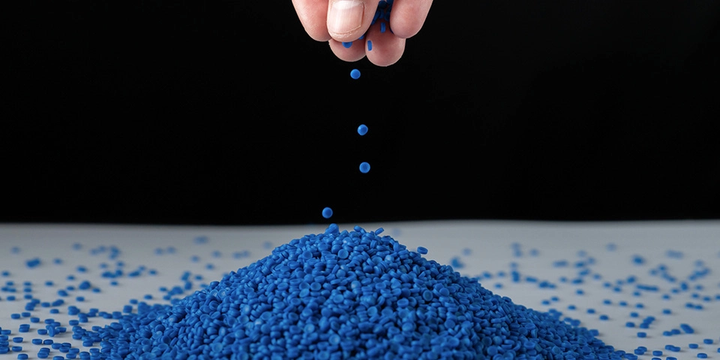
Not only are spectrophotometers/colorimeters effective for enhancing the quality and production of molded plastics, but their versatility also extends to many other areas of plastic manufacturing. For example, even nonuniform plastic pellet samples and recycled polyethylene terephthalate (rPET) can be accurately measured with this equipment. Doing so helps to ensure uniform and consistent pellet color, which is used in extrusion and injection molding and directly affects final color quality.

Other spectrophotometric applications in plastics processing include quantifying color data in:

  • Opaque plastic enclosures
  • Opaque plastic plaques
  • Opaque plastic films
  • Opaque sheet plastic
  • UltraDark plastics, such as deep blues, dark charcoal grays, indigos, and blacks
  • Vinyl siding

From the beginning stages of plastic production to the final stages of color analysis in sample plaques, spectrophotometry ensures consistency throughout every step of manufacturing. The simplicity and accuracy of today’s advanced instrumentation take the guesswork out of the process, increasing both production and quality overall.

Posted in Color In Plastics

Best Practices for Measuring the Color of Transparent Plastic Preforms

Posted on Jan 14, 2026 by HunterLab

A plastic preform is an essential component in manufacturing PET plastic packaging. It is commonly used to produce packaging for mineral water, carbonated and non-carbonated drinks, edible oils, and cosmetics.

Plastic preforms appear transparent, but various industries follow specific standards for the color of preforms. Measuring the color of transparent plastic preforms ensures compliance with industry standards and signifies excellent quality.

Factors Affecting the Color of Transparent Plastic Preforms

"It's transparent. Why are we discussing color?" This question probably came to mind when you read about measuring the color of transparent plastic preforms. In reality, there's a science behind it.

Color technology measures the color of plastic preforms, including opaque, translucent, and transparent preforms. Transparent preforms vary in color based on several factors. These are:

  • Pigment load: Pigments are particles added to the plastic to give it color. This process is why Sprite bottles are green and water bottles have a tinge of blue — blue pigments help offset yellowness from using rPET and post-consumer regrind. Pigment also influences the plastic's performance in terms of heat resistance, transparency, and durability.
  • Additives: Plastic additives are typically added during the manufacturing process to optimize the material. However, additives like oxygen scavengers can change the color of plastic.
  • Overheating: The molding process of plastic preforms involves high heat, which can cause thermal degradation resulting in discoloration. This explains the yellowing of plastic after the final molding step.

Aside from branding, industry standards, and aesthetic purposes, color also plays a crucial role in the recyclability of preforms and other plastics. Color variation forms part of a color-coding system that promotes sustainability and eco-friendliness.

Posted in Plastic

Is Your Cashew Roast Color Missing the Mark?

Posted on Jan 14, 2026 by HunterLab

You spot a batch of roasted cashews and think they look perfect—but the flavor testers disagree, and shelf life is inconsistent. If your QA team relies on visual checks, you’re working with blind spots. Inconsistent roast color means wasted product, unhappy customers, and lost revenue.

Here’s how two tools from HunterLab—Aeros and SpectraTrend HT—help you hit your color targets every time, keeping your QA process tight, efficient, and repeatable.

From Raw to Packaged: Where Color Can Slip

Let’s walk through a typical cashew roasting process. Color issues can pop up at any point.

  1. Preparation – You sort and clean kernels, then adjust moisture to 5–7%. Too much water = pale roast; too little = fast browning.
  2. Optional Blanching – You steam to remove skins, then dry back to 5%. Inconsistent moisture here skews roast uniformity.
  3. Roasting
  • Oil roasting at 160–175 °C for 3–5 min. Pull at the exact gold hue—subjective guesses introduce errors.
  • Dry roasting at 140–160 °C for 15–30 min. Without continuous color checks, batches run pale or over-roast.
  1. Cool & Season – Improper cooling affects final appearance and texture.
  2. QC and Packaging – Visual checks and moisture tests help, but they miss subtle color shifts until it’s too late.

That’s where objective color measurement makes the difference.

Posted in Color In Food Industry

The Complete Guide to Measuring Opaque Plastic Preforms

Posted on Jan 14, 2026 by HunterLab

Polyethylene terephthalate (PET) preforms are essential to attractive, durable packaging for industries like beverage manufacturing, edible oils, and more. As the market continues to grow, so does the need to accurately and objectively quantify appearance to uphold product quality. Spectrophotometry is the best solution for scientific color measurement, eliminating the error-prone nature of manual visual assessment for higher confidence and precise data. Explore why color matters in preforms, the challenges of color consistency, and the ideal equipment for measurement to ensure high-quality results.

Why Color Matters for Plastic Preforms

Color plays an instrumental part in conforming to standards, protecting products, and influencing consumers.

Industry Standards

Plastic preform color is vital in meeting industry-specific standards. Sectors like pharmaceuticals and beverages often have strict color tolerances to ensure safety, traceability, and regulatory compliance. For example, specific packaging colors may indicate the presence of certain additives or differentiate between product formulations. Adhering to these color standards helps uphold product integrity and consumer safety.

Product Protection

Some goods, such as certain pharmaceuticals and beverages, are sensitive to ultraviolet (UV) light. Ongoing exposure to UV rays can cause degradation, affecting visual appeal, medical efficacy, safety, or taste. Opaque plastic packaging forms a shield against UV light, helping protect the product within against excess exposure. Inconsistent color may signal uneven distribution of colorants or UV-blocking additives, potentially increasing the chances of UV rays penetrating the packaging.

Quality Perception

Products like edible oils and beverages compete in crowded marketplaces. As a result, standing out on the shelves is key to your success. The plastic colors you choose help attract attention and reinforce your branding with consumers. When your color remains consistent and appealing, it indicates your commitment to quality and meeting your customers' expectations. Conversely, color alterations can signify issues with your quality control or manufacturing processes, causing consumers to reach for a competitor's product instead.

Posted in Plastic
Prev
1
2
3
…
Next

Most Related Posts

  • Addressing the Challenges of Optical Brightening Agents in Paper Color Measurement
  • Spectrophotometry Ensures Color Quality Control of High-Visibility Safety Clothing
  • Spectrophotometry in the Textile Industry: Ensuring Color Consistency in Denim
  • Choosing the Right Spectrophotometer for Plastics Can Increase Production and Sales
  • Best Practices for Measuring the Color of Transparent Plastic Preforms
  • Is Your Cashew Roast Color Missing the Mark?
  • The Complete Guide to Measuring Opaque Plastic Preforms
View More

Follow Us

  • LinkedIn
  • YouTube
  • facebook
  • X
  • instagram