About
BLOG

Interested in a little light reading?

Our blog is continually updated with helpful educational information, advises, research and insights—all in the name of helping you level-up your color and appearance needs. Grab a drink and enjoy our stories!

Explore Our Stories
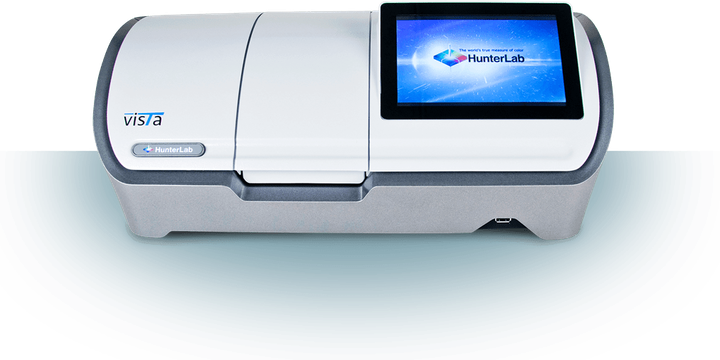
landing-machine.png

"Single Beam vs. Double Beam Spectrophotometer"

Read More

Explore Our Products

VIEW MORE

6522028931_aa010b1cc8_z.jpg

"What is the stability of the APHA/Pt-Co/Hazen liquid color standards?"

Read More
6522028931_aa010b1cc8_z.jpg

"What is the stability of the APHA/Pt-Co/Hazen liquid color standards?"

Read More
6522028931_aa010b1cc8_z.jpg

"What is the stability of the APHA/Pt-Co/Hazen liquid color standards?"

Read More
6522028931_aa010b1cc8_z.jpg

"What is the stability of the APHA/Pt-Co/Hazen liquid color standards?"

Read More
6522028931_aa010b1cc8_z.jpg

"What is the stability of the APHA/Pt-Co/Hazen liquid color standards?"

Read More
09-11-17-par5799-01-vacuum-coated-metal-on-glass-substrate.webp

"Densitometry versus Colorimetry"

Read More

Single Beam vs. Double Beam Spectrophotometer

Posted on Feb 03, 2026 by HunterLab

Spectrophotometers measure light’s wavelength distribution by providing the percentage of reflectance from an object, detecting the color of the sample. There are two types of beam spectrophotometers — single beam spectrophotometers and double beam spectrophotometers. These instruments have several key differences you should keep in mind when deciding which is best for your laboratory.

Single Beam Spectrophotometer

Single beam spectrophotometers determine color by measuring the intensity of the light sources before versus after a test sample is inserted. This light source is modulated (turned on and off) to differentiate the light coming from the light source versus the light coming from the flame.

The single light beam passes through the sample, and the single beam spectrophotometer measures the intensity of the light reflected from the reference to measure the sample.

Double Beam Spectrophotometer

Double beam spectrophotometers measure color in a sample by using two, or “double,” beams. One beam passes through the sample side, and the other beam passes through the reference side, so the reference and the sample can be read simultaneously with no need to recalibrate the instrument.

Posted in Uncategorized

What is the stability of the APHA/Pt-Co/Hazen liquid color standards?

Posted on Nov 29, 2023 by HunterLab

ASTM D1209 透明液体の色に関する標準試験方法(白金コバルトスケール)6.2項による

「適切に密封され保管された場合、規格は少なくとも1年間は安定し、2年間は著しく劣化することはない。

我々の工業的経験では、琥珀色の瓶に適切に栓をした状態で保管すれば、APHA/Pt-Co/Hazenビジュアル・カラー・スタンダードは2年以上経っても著しく劣化することはないが、これはほとんどの情報源が最適と言及している期間である。

日付の入ったAPHA/Pt-Co/Hazen 500液体色標準をお持ちの場合、ASTM D1209表1の吸光度許容限界にまだ適合しているかどうか、また効果的に透明であるかどうか(ASTM D1003 Haze% <2)を確認することが1つの検証方法となります。

APHA/Pt-Co/Hazenカラースタンダードの安定性に関する文献は、以下を参照されたい:

Scharf, W. W., Ferber, K. H., and White, R. G., "Stability of Platinum-Cobalt Color Standards," Materials Research and Standards, Vol.

Posted in Uncategorized

What is the stability of the APHA/Pt-Co/Hazen liquid color standards?

Posted on Nov 29, 2023 by HunterLab

Según la sección 6.2 de ASTM D1209 Método de prueba estándar para el color de líquidos claros (escala de platino-cobalto)

"Cuando se sellan y almacenan adecuadamente, los patrones son estables durante al menos un año y no se degradan notablemente durante 2 años".

Nuestra experiencia industrial es que, si se conservan correctamente tapados en frascos ámbar, los patrones visuales de color APHA/Pt-Co/Hazen no se degradan significativamente durante más de 2 años, pero éste es el plazo que la mayoría de las fuentes consideran óptimo.

Si dispone de un patrón de color líquido APHA/Pt-Co/Hazen 500 fechado, un método de validación sería comprobar si sigue cumpliendo los límites de tolerancia de absorbancia de la norma ASTM D1209, tabla 1, y si es efectivamente transparente (ASTM D1003 Haze% < 2).

Una referencia bibliográfica sobre la estabilidad de los estándares de color APHA/Pt-Co/Hazen puede encontrarse en:

Scharf, W. W., Ferber, K. H., y White, R. G., "Stability of Platinum-Cobalt Color Standards," Materials Research and Standards, Vol. 6, No 6, June 1966 pp 302-304.

Posted in Uncategorized

What is the stability of the APHA/Pt-Co/Hazen liquid color standards?

Posted on Nov 29, 2023 by HunterLab

Per Section 6.2 of ASTM D1209 Standard Test Method for Color of Clear Liquids (Platinum Cobalt Scale)

“When properly sealed and stored the standards are stable for at least a year and do not degrade markedly for 2 years.”

Our industrial experience is that if kept properly stoppered in amber bottles, the APHA/Pt-Co/Hazen visual color standards do not degrade significantly for longer than 2 years but this is the time frame that most sources reference as optimal.

If you have a dated APHA/Pt-Co/Hazen 500 liquid color standard, one validation method would be to see if it still meets the absorbance tolerance limits of ASTM D1209 Table 1, and is effectively clear (ASTM D1003 Haze% < 2).

A literature reference on stability of the APHA/Pt-Co/Hazen color standards can be found at:

Scharf, W. W., Ferber, K. H., and White, R. G., “Stability of Platinum-Cobalt Color Standards,” Materials Research and Standards, Vol. 6, No 6, June 1966 pp 302-304.

Posted in Uncategorized

What is the stability of the APHA/Pt-Co/Hazen liquid color standards?

Posted on Nov 29, 2023 by HunterLab

Per Section 6.2 of ASTM D1209 Standard Test Method for Color of Clear Liquids (Platinum Cobalt Scale)

“When properly sealed and stored the standards are stable for at least a year and do not degrade markedly for 2 years.”

Our industrial experience is that if kept properly stoppered in amber bottles, the APHA/Pt-Co/Hazen visual color standards do not degrade significantly for longer than 2 years but this is the time frame that most sources reference as optimal.

If you have a dated APHA/Pt-Co/Hazen 500 liquid color standard, one validation method would be to see if it still meets the absorbance tolerance limits of ASTM D1209 Table 1, and is effectively clear (ASTM D1003 Haze% < 2).

A literature reference on stability of the APHA/Pt-Co/Hazen color standards can be found at:

Scharf, W. W., Ferber, K. H., and White, R. G., “Stability of Platinum-Cobalt Color Standards,” Materials Research and Standards, Vol. 6, No 6, June 1966 pp 302-304.

Posted in Uncategorized

What is the stability of the APHA/Pt-Co/Hazen liquid color standards?

Posted on Nov 29, 2023 by HunterLab

Gemäß Abschnitt 6.2 der ASTM D1209 Standard Test Method for Color of Clear Liquids (Platinum Cobalt Scale)

"Bei ordnungsgemäßer Versiegelung und Lagerung sind die Standards mindestens ein Jahr lang stabil und verschlechtern sich zwei Jahre lang nicht merklich.

Nach unserer industriellen Erfahrung verschlechtern sich die visuellen APHA/Pt-Co/Hazen-Farbstandards bei ordnungsgemäßer Aufbewahrung in bernsteinfarbenen Flaschen nicht wesentlich über einen Zeitraum von mehr als 2 Jahren, aber dies ist der Zeitraum, den die meisten Quellen als optimal bezeichnen.

Wenn Sie einen veralteten APHA/Pt-Co/Hazen 500 Flüssigfarbstandard haben, wäre eine Validierungsmethode zu prüfen, ob er immer noch die Absorptionstoleranzgrenzen der ASTM D1209 Tabelle 1 erfüllt und tatsächlich klar ist (ASTM D1003 Haze% < 2).

Eine Literaturangabe zur Stabilität der APHA/Pt-Co/Hazen-Farbstandards finden Sie unter:

Scharf, W. W., Ferber, K. H., und White, R. G., "Stability of Platinum-Cobalt Color Standards," Materials Research and Standards, Vol. 6, No 6, June 1966 pp 302-304.

Posted in Uncategorized

Densitometry versus Colorimetry

Posted on Jan 09, 2023 by HunterLab

ガラス基板上に真空スパッタコーティングされたアルミニウム

密度は、透明または不透明な基材上のフィルム層の厚さを測定するものであり、比色測定はその層の色の知覚を測定するものである。どちらもフィルム層の光学特性の影響を受けるが、同じではない。わずかな密度の違いが、目に見える色の違いにつながることもあれば、つながらないこともある。

よくある質問清涼飲料水用アルミ缶への金属装飾インキの濃度について

「私の顧客は、清涼飲料水のアルミ缶の印刷に広く使われている金属装飾インキのサプライヤーである。彼らは、膜厚の関数である "色濃度 "を測定する装置を探しているという。彼らが探しているのは、不透明度を測定する装置である。一般的に、彼らは塗膜を通してアルミニウムが見えることを望んでいない。問題は、測定できることよりも、湾曲したアルミ缶の表面で再現性よく測定できることにあるようだ」。

あなたの顧客は、アルミの清涼飲料缶に金属装飾インクの層を印刷しているが、それでも彼らは基材にインクを印刷していることに変わりはない。

金属表面が曲面であるため、平らな紙基材にインクを塗布する場合に比べ、いくつかの課題があるが、コンセプトは同じである。平らな金属表面に同じインクの「立会クーポン」を印刷できれば、より再現性の高い測定に貢献できるだろう。

しかし一般的には、顧客が目にする最終製品、つまり缶に塗られた実際のインク層を測定したいのである。

デンシトメーターはハンターラボでは取り扱っていない製品です。

インク膜層の濃度を測定することは、表面に印刷された膜厚やインク着色剤の濃度を測定することであり、知覚される色を測定することではないことに注意してください。これには測色機が必要です。装置の精巧さにもよりますが、測色計を兼ねている濃度計もあります。

インク層が十分に厚い(反射密度が高い)場合、半透明のインク層は実質的に不透明と認識される。

よくある質問PETプラスチックフィルム上のアルミニウム密度

「PET箔上のAL層の "密度 "を測定したい。何か経験はありますか?"

ここでの基材は、表面にアルミがスパッタコーティングされた透明なポリエチレンテレフタレートプラスチックフィルムである。この柔軟なフィルムは金属的で不透明に見えるが、アルミニウムのコーティングは実質的に微細なドットであり、不透明度はドットのサイズと表面パターンに依存する。

Posted in Uncategorized
Prev
1
2
3
…
Next

Most Related Posts

  • Single Beam vs. Double Beam Spectrophotometer
  • What is the stability of the APHA/Pt-Co/Hazen liquid color standards?
  • What is the stability of the APHA/Pt-Co/Hazen liquid color standards?
  • What is the stability of the APHA/Pt-Co/Hazen liquid color standards?
  • What is the stability of the APHA/Pt-Co/Hazen liquid color standards?
  • What is the stability of the APHA/Pt-Co/Hazen liquid color standards?
  • Densitometry versus Colorimetry
View More Related Posts

Follow us on social

  • LinkedInFollow us on LinkedIn
  • YouTubeFollow us on YouTube
  • facebookFollow us on Facebook
  • XFollow us on X (formerly Twitter)
  • instagramFollow us on Instagram