About
BLOG

Interested in a little light reading?

Our blog is continually updated with helpful educational information, advises, research and insights—all in the name of helping you level-up your color and appearance needs. Grab a drink and enjoy our stories!

Explore stories

"Choosing the Right Spectrophotometer for Plastics Can Increase Production and Sales"

Read

Explore Our Products

View More

"Temperature Effects on Color Measurement: Maintaining Accuracy in Extreme Conditions"

Read

"From Smartphones to Smart Spectrophotometers: How Smart Technologies Are Changing Color Measurement"

Read

"Food Dyes — Harmless or Harmful? Why Do We Color Food?"

Read

"Food Coloring Regulations and Standards"

Read

"Exploring Color Measurement Methods for Fiber Cement Siding"

Read

"Expanding Flexibility and Color Measurement Potential with Double Beam Spectrophotometers"

Read

Choosing the Right Spectrophotometer for Plastics Can Increase Production and Sales

Posted on Apr 10, 2026 by HunterLab

New polymer products continue to flood the market, and there seems to be no end to the continued growth in plastic manufacturing. In 2024, the global molded plastics market reached a value of $541.2 million. Experts predict a compound annual growth rate of 7.5% over the next decade, which means the market's value will surge to over $1 billion by 2034. In this booming market, competition with large manufacturers may seem daunting, yet small business continues to thrive.

To stay competitive among these giants, choosing the right spectrophotometer for plastics is often the difference in product efficiency and quality. Understanding the value of color measurement in plastic production is the first step toward optimizing growth and increasing sales overall.

Utilizing Spectrophotometric Instrumentation in Plastic Production

Modern spectrophotometers measure more than the tristimulus values captured by basic equipment. They offer spectral measurement capabilities and can quantify appearance by considering the influences of gloss and texture on perception. This technology makes them an ideal choice for many plastics, which often feature various shapes, textures, and opacities.

Sample types determine the right measurement techniques for accurate color data, so understanding these characteristics that drive your approach is the first step to utilizing your color measurement solutions. For example, accurate color quantification for transparent plastic preforms requires measuring via transmission, while opaque plastics require reflectance measurements.

The device’s geometry is also critical to ensure accurate appearance data capture. A directional 0°/45° geometry illuminates the sample at a 0° angle, with the viewing angle set at 45°. Scientific studies show that these geometric principles provide the truest representation of visual color perception.

Today’s spectrophotometers/colorimeters are available in portable, benchtop, and in-line models, designed to monitor color variations and changes in real time, from start to finish. Even slight alterations in color can be detected easily and allow for simple changes to be made at any stage of production, saving wasted materials, time, and money. These simple tools are beneficial for efficiently and effectively creating quality products and increasing sales.

Spectrophotometric Applications in Plastic Manufacturing

The variety in plastic shapes, sizes, and colors can present color measurement challenges. Nonuniformity, gloss, shape, and size can all affect color quantification, so choosing the right solution is the first step in developing consistency and quality in polymer products.

Not only are spectrophotometers/colorimeters effective for enhancing the quality and production of molded plastics, but their versatility also extends to many other areas of plastic manufacturing. For example, even nonuniform plastic pellet samples and recycled polyethylene terephthalate (rPET) can be accurately measured with this equipment. Doing so helps to ensure uniform and consistent pellet color, which is used in extrusion and injection molding and directly affects final color quality.

Other spectrophotometric applications in plastics processing include quantifying color data in:

  • Opaque plastic enclosures
  • Opaque plastic plaques
  • Opaque plastic films
  • Opaque sheet plastic
  • Dark Performance plastics, such as deep blues, dark charcoal grays, indigos, and blacks
  • Vinyl siding

From the beginning stages of plastic production to the final stages of color analysis in sample plaques, spectrophotometry ensures consistency throughout every step of manufacturing. The simplicity and accuracy of today’s advanced instrumentation take the guesswork out of the process, increasing both production and quality overall.

Posted in Color In Plastics

Temperature Effects on Color Measurement: Maintaining Accuracy in Extreme Conditions

Posted on Apr 08, 2026 by HunterLab

Many quality control (QC) professionals in manufacturing focus on variables like formulations, processing impacts, and contamination when considering which factors cause color alterations in their products. But for certain applications and in extreme environments, one unseen variable can cause equal damage to color consistency — temperature.

Even minor temperature variations can quickly ruin a batch or turn QC into expensive guesswork. The fluctuations can influence a sample's optical properties, alter light interactions, and impact measurement data reliability. As a result, maintaining color confidence in extreme conditions requires both strict protocols and powerful equipment to mitigate the environmental variables and uphold data integrity.

What Causes Temperature to Alter Color Measurement Results?

Understanding how temperature alters measurement results requires examining both the material-level changes and environmental factors that impact spectrophotometric analysis.

Thermochromism

Thermochromism is the phenomenon of a material exhibiting a reversible change of color in response to temperature changes. For example, think of novelty cups that turn from blue to green when filled with hot or cold liquid. This color change isn't the result of user error, but instead a temporary alteration in the material's optical properties that causes the material to reflect or transmit different proportions of light across the visible spectrum.

As the temperature of the contents starts to normalize to room temperature, the original color gradually returns. In such products, these color alterations are the goal for the desired effect. In others, thermochromism is a consequence to avoid, making consistency the key to preventing it. 

It's important not to confuse thermochromism with thermal degradation, an irreversible color change arising from extreme temperatures that can impact long-term color stability.

Environmental Instability and Material State Changes

Extreme temperatures can trigger physical changes in many samples that impact color perception, depending on the application. For example, thermal expansion and contraction can alter surface textures, changing how light reflects off the material and, in turn, the resulting measurements.

Measuring the color of hot liquids poses similar issues. As temperatures rise in these samples, bubbles and vapor often form that cause light to scatter differently, influencing appearance.

Additionally, temperature fluctuations can create secondary effects, such as the formation of condensation on sample surfaces. This excess humidity demands well-defined surface preparation protocols to ensure accurate readings.

Posted in Color Measurement

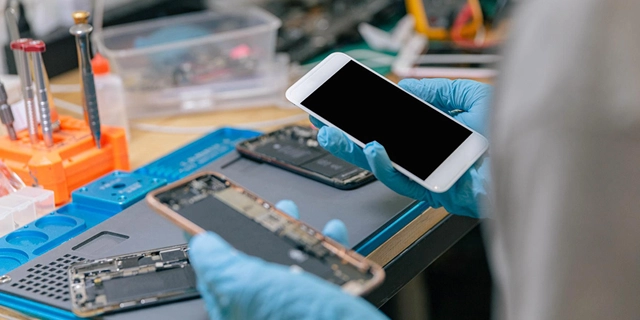
From Smartphones to Smart Spectrophotometers: How Smart Technologies Are Changing Color Measurement

Posted on Mär 19, 2026 by HunterLab

The Vista spectrophotometer includes a smart touchscreen display that requires very little operator training. Image Source: HunterLab

We rely on our smartphones for just about everything, from navigation to communication. Messaging apps and texting allow us to instantly talk to everyone from our closest friends to distant relatives, all without ever leaving the house. News and entertainment are just a few taps away, and we have the ability to research any subject imaginable within seconds. All of this is made possible in part by intuitive interfaces and operating systems that make it easy to use this advanced technology on a daily basis. In this sense, smart technology blends seamlessly into our lifestyles, both becoming part of our everyday routine and making that routine easier than ever.

Just as smartphones have changed the way we communicate and interact with the world around us, smart spectrophotometers are changing the possibilities of spectrophotometric color measurement and revolutionizing operators’ work styles. Smart screen displays, advanced data management software, and network communications have made smart spectrophotometers easier to use, enhancing usability of data and efficiency of color analysis.

However, while there have been significant advances in smart spectrophotometer technology, many operators still use outdated instruments. Using a spectrophotometer without state-of-the-art features is a bit like being forced to make calls from a rotary phone—outdated technology slows down workflows and leads to manufacturing inefficiencies and errors. This is why you should consider making the switch to smart spectrophotometers in your lab. Smart technology improves productivity, data management, and operator learning curves, allowing you to maximize your operators’ time and, ultimately, produce higher-quality products.

Smart spectrophotometers like the Aeros improve workflow by speeding up the sample preparation process and making it easier to record measurements. Image Source: HunterLab

Posted in Color Measurement

Food Dyes — Harmless or Harmful? Why Do We Color Food?

Posted on Mär 19, 2026 by HunterLab

A food dye is a chemical substance that uses artificial color to enhance the appearance of food. Though dye may make drinks, candy and other food look better, many are concerned about adverse side effects. Learn more about why we color food and how it impacts health.

The History of Food Coloring

Food coloring has been around for centuries. It was first developed around 1500 B.C. using saffron or wine. The early Romans used these natural options as well as mulberries, flowers, carrots, beets and pomegranates. The first artificial food coloring was made from coal tar in 1856. Food dyes are petroleum-based today.

Why Do We Color Food?

Food dye changes the food’s color and appearance to look more appealing to the consumer. Some food processing can remove food’s natural color. Dye adds it back so the food looks as expected. Food manufacturers typically prefer artificial food dye to natural options because it has more vibrant colors, longer shelf life and a lower production cost.

The Health Effects of Food Coloring

The safety of food coloring is a long-debated topic due to the concern about negative health effects. Out of the hundreds of developed food dyes, a select few are deemed safe for consumption because they have been tested for toxicity in animals. Yellow 5, Red 40 and Yellow 6 are the most common.

Food dye safety can be confusing because different countries have different laws about the same food coloring. For example, The Food and Drug Administration (FDA) in the United States and the European Food Safety Authority (EFSA) agree that food coloring is not harmful. However, there are food dyes approved by the FDA but banned by the EFSA, and vice versa.

Posted in Color Measurement

Food Coloring Regulations and Standards

Posted on Mär 19, 2026 by HunterLab

In the past 100 years, the amount of food coloring used in food has increased drastically. This shift is due in part to manufacturers’ growing emphasis on making food look more appealing, last longer and attract as many consumers as possible. The U.S. Food and Drug Administration (FDA) imposes strict regulations and standards for the approval of artificial food dyes and how food producers and manufacturers are permitted to use those dyes in their products. Learn more about food color standards established by the FDA, including what technology your business can use to operate within regulation.

What Is Food Coloring?

Food coloring and food dyes are chemical substances used to alter or enhance the appearance of a food product. Three color additives make up 90% of all used food dye — Red 40, Yellow 5 and Yellow 6.

Using color additives or dyes is not a new technology. Natural food colors were used to color wine as early as 300 B.C. Early dye experimentation included naturally occurring color found in some spices and metal oxides, like saffron and copper sulfate.

The first synthetic organic dye — called mauve — was discovered in 1856. Mauve was the first of many discovered synthetic dyes produced via coal processing, earning them the title “coal-tar colors.” Federal regulation of color additives began a few decades later, in the 1880s.

What Is Food Coloring Made Of?

Artificial food coloring is derived from petroleum. There are three possible classifications for a food dye:

  • Straight colors: Straight colors are free from most impurities and have not been mixed or chemically altered with other substances.
  • Lakes: Lakes are the product of a chemical reaction that takes place after combining a straight color with precipitants or substrata of things like alumina, titanium dioxide and zinc.
  • Mixtures: Mixtures are made by combining a color additive with another color additive or a non-colored diluent, which produces no chemical reaction.

Posted in Color And Appearance Theory

Exploring Color Measurement Methods for Fiber Cement Siding

Posted on Mär 19, 2026 by HunterLab

Appropriate color measurement tests can help you create fiber cement siding that is as beautiful as it is durable. Image Source: Shutterstock user Kiattisak Thongtawee

Fiber cement siding—a sturdy combination of wood pulp, fly ash, portland cement, and water—was first introduced in the construction industry just 25 years ago.1 Since then, it’s become one of the most popular materials that architects use for their projects. Almost 15 percent of all new homes have fiber cement siding, in part because this material is so durable and versatile. Although this material can be made to look just like brick, stone, or wood siding, it is actually far stronger than wood or vinyl materials, and less expensive to make than brick or stone. Quality fiber cement siding is fire resistant, termite-proof, rot-proof, and can withstand extreme weather conditions like heavy rain, strong winds or fluctuations in temperature.

But in order to achieve both the durability and beauty of fiber cement siding, manufacturers have to use appropriate color measurement methods at different points in the manufacturing process. Siding color is often the first thing that visitors notice when they look at a house, which is why it’s so important to test for color accuracy before you sell your products to customers. Even subtle inconsistencies in color could make fiber cement siding appear cheaply-made or weather-worn, and will negatively impact the overall appearance of the house. By using spectrophotometric color measurement during manufacturing, you can ensure that every piece of fiber cement siding meets your exacting standards and that your final product will appear beautifully-crafted.

Unpainted fiber cement siding is usually light grey in color. Image Source: Wikimedia user Michael Holley

Posted in Color In Building Materials

Expanding Flexibility and Color Measurement Potential with Double Beam Spectrophotometers

Posted on Mär 19, 2026 by HunterLab

Double beam spectrophotometers illuminate both a reference source and a sample simultaneously to produce more reliable, repeatable measurements. Image Source: Unsplash user Greg Becker

Spectrophotometers have revolutionized the way product color is measured across numerous industries, from maxillofacial plastics to maple syrup. By allowing for full-spectrum analysis of both reflected and transmitted light, spectrophotometers offer the most advanced method of objectively quantifying chromatic information possible today and give customers virtually endless options for obtaining accurate color measurements. However, not all spectrophotometers are created equal; recent technological advances have expanded the versatility of optical configurations and understanding your options is critical when choosing the right instrument for your purposes.

Single Beam Systems

The first spectrophotometers were based on a single beam configuration that is still in use today. The light source in this type of configuration is concentrated in a single beam, requiring discrete measurements of each object. In practice, this means calibrating the machine prior to each test by measuring a reference standard and making any necessary corrections to compensate for light source changes during the standardization process. Single beam instruments have historically suffered from deteriorating accuracy over time and unpredictable repeatability, primarily due to the instability of light sources. With advances in tungsten halogen lamp stability, single beam configurations have enjoyed increased reliability in recent years. However, standardization every 4-8 hours is still recommended to ensure accuracy, impeding efficacy and making measurements vulnerable to human error.

Historically, the instability of light sources led to increased demand for double-beam instrumentation. However, today’s advanced illuminants have dramatically improved stability to offer enhance reliability in single-beam instruments. Image Source: Flickr user Paul Hudson

Posted in Color Measurement
Prev
1
2
3
4
…
Next

Most Related Posts

  • Smart Spectrophotometers Offer a Better Way to Measure the Color of Cookies
  • A Better Method of Measuring Color and Haze in Beverages
  • From Clear to Pure: Chemical and Color Analysis in the Petrochemical Industry
  • APHA Color System: A Measurement of Liquid Purity
  • The Complete Guide to Transparent Plastic Preform Color Measurement
  • Color Confidence at Scale: How HunterLab Helped a Global Bottler Standardize Plastic Cap and Preform Color
  • Ensuring Accurate Color Measurement of Hydrochromic Textiles with Spectrophotometers
View More

Follow Us

  • LinkedInFollow us on LinkedIn
  • YouTubeFollow us on YouTube
  • facebookFollow us on Facebook
  • XFollow us on X (formerly Twitter)
  • instagramFollow us on Instagram