Additive and subtractive colour models describe how colour is created. They are not competing theories — rather, these models are the two most common and practical ways to create the perception of colour. The basis behind these colour models lies in breaking the visible light spectrum into its most dominant regions — red, green and blue. In doing so, additive and subtractive colour mixing allows the human eye to create a whole spectrum of colours.
The difference between additive vs. subtractive colour is in the ways colour is created. Let’s discover how these colour models differ, which colour models are used for what purposes and how to measure additive and subtractive colour.
What Is Additive Colour (RGB)?
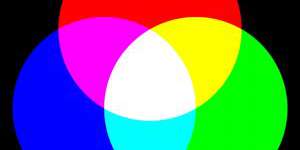
Also known as the RGB colour model, additive colour is the process of adding one set of wavelengths to another to create a new colour — thus the term additive. The visible light spectrum’s primary colours — red, green and blue — are mixed in different combinations and at varying levels of intensity to produce secondary colours.
By adding all the different wavelengths of natural light, the eye sees white light rather than each colour. When no light is present, the eye perceives black.
What Is the RGB Colour Model Used For?
Today, the additive colour model is primarily used to visualize, represent and display images in electronic systems, such as TVs, computer monitors and mobile phones. Because these are light-emissive devices, they start as black and add red, green and blue light to produce the spectrum of colours. When you create a design on your computer or tablet, you use the RGB colour model.