
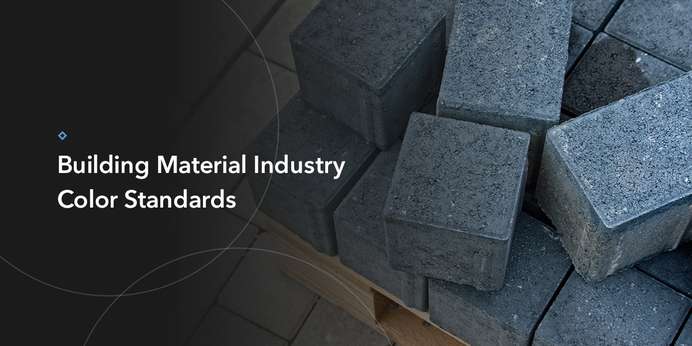
Colour standards for building materials provide material manufacturers and construction companies with a reference point to ensure their materials meet customer expectations. Companies use colour charts and matching systems to monitor colour consistency for many types of materials, from concrete to roofing shingles to interior or exterior paint. Identifying potential material defects ahead of time saves businesses significant money on replacement materials and labor.

What Are Colour Standards and Why Are They Important?

In the construction industry, companies often provide their customers with swatches or material samples specifying exact colours. These samples are vital for commercial companies that depend on a unique colour for branding and marketing purposes. In addition, many educational facilities, municipalities and governments use specific colour coding in their buildings.

Matching the samples to a particular type of building material can often be challenging for both builders and manufacturers, as many of these products have varying degrees of textures, roughness and thicknesses.

When customers choose a specific colour for their building project, the construction company is responsible for meeting all the corresponding colour matching standards. While no firm colour charts are exclusive to all building materials, various international colour standards — like the Pantone Matching System (PMS) — exist for materials like paint, wood, steel and plastic. Experienced builders will lay out the standards and consistencies they adhere to before beginning a project.

02-Meeting-building-material-industry-color-standards.jpg
Read  Temperature Effects on Colour Measurement: Maintaining Accuracy in Extreme Conditions

Meeting Building Material Industry Colour Standards

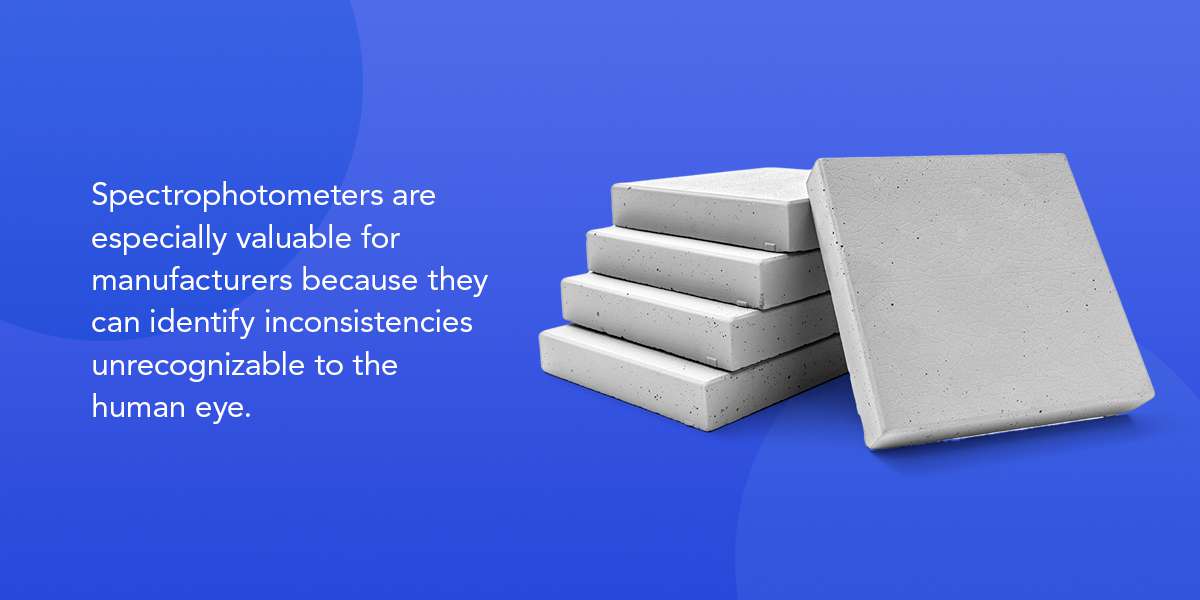
While some contractors rely on human vision to meet building material colour standards, others depend on more advanced methods like portable or handheld spectrophotometers for more accurate comparisons. Spectrophotometers are especially valuable for manufacturers because they can identify inconsistencies unrecognizable to the human eye.

Spectrophotometers work well for analyzing building materials because many designs consider unique characteristics like thickness, opacity and roughness when measuring. These devices offer superior accuracy, reliability and repeatability over methods like matching materials to a chart visually. Besides being handy tools for builders, spectrophotometers provide manufacturers with the quantitative data they need to ensure the highest accuracy levels.

At HunterLab, we design spectrophotometers for building materials based on specific properties. Our colour measuring instruments are ideal for monitoring consistency and meeting standards, whether you're performing quality control during manufacturing or ensuring colour matching during construction.

INFO  Get More Information

Trust HunterLab for Meeting Colour Standards in the Building Material Industry

To learn more about colour standards and colour matching or obtain a quote on a HunterLab spectrophotometer, contact us online today. Please also browse our extensive blog for more informative posts about spectrophotometry and colour measurement.