
The bright red colour of the tomato can tell us a lot about quality and nutrition.

Colour terminology has been changing; what we once called red is now referred to as magenta. Well, you know how the song goes: “you say tomato; I saw tomahto.” However, when it comes to colour there is only one standard by which to abide.

Colorimetric scores are an important component for quantifying colour in order to create the measurements needed to relate product quality to a grading scale. These scores have been developed through extensive research and analysis of tomato products at various stages of production to ensure colour consistency and maturity. Various colorimetric methods and spectrophotometers have been used to revolutionize the tomato industry and lead to higher standards in all tomato-based products.

The importance of colour measurement in tomato products

Research has shown that colour plays a huge role in consumer tastes and choices. Tomatoes especially are prized for their intense red — I’m sorry, magenta colour. While how we pronounce a colour doesn’t really matter, how we perceive it most certainly does. The brilliant hues of red in tomato products serve as an important gauge of the ripeness and flavor of the fruit. The intensity of red colour is also an indicator of the amount of lycopene in a tomato, and it is important to measure for this valuable antioxidant it provides. The more mature the tomato fruit is, the stronger shade of red it exhibits and the higher levels of lycopene it possesses. This serves to show why the colour grade of the product is of utmost importance in the tomato industry.

There is an objective colorimetric standard scoring system to determine product maturity and quality. Image source: Flickr user Richard Leeming

Read  Beer Colour Analysis: Setting the Standards for Quality Using Spectrophotometric Technology

Colorimetric measurement and spectrophotometry are continually developing to meet the standards set forth by the USDA (United States Department of Agriculture). The USDA Processed Products Standards and Quality Certification Program uses a minimum standard grading chart to identify product value based on colour measurement and consistencies.

Colour is such a strong indicator of product quality that 30 of the 100 points awarded to the product are solely attributed to colour alone. However, colour measurement does present its challenges and can vary throughout the different stages of development and ripening process.

Technological advancements in colorimetric measurement

There have been various changes in colour measurement of tomato products over the years. Prior to 1972, all colour acceptability ratings of raw tomato products were determined visually through the use of colour discs to compare an acceptable minimum colour standard.  The USDA has now developed a new standard of measurement, with colour tiles replacing the colored disc as the standard measurement tool. These tiles can also be used to classify tomato colour for grade development visually, but variations in individual colour perception and the amount of time consumed by this process has now made this process nearly obsolete.

Tomato values are based on specific colour scores and graded accordingly.

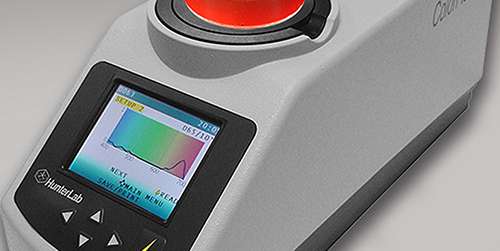
Today’s technology relies on spectrophotometers and colorimetric instrumentation to gather consistent and accurate results in an efficient manner. Most regulations require systems in which human judgment is minimized. Tools like spectrophotometers and colorimetric instrumentation help to eliminate the margin of human error and quantify results in accordance with U.S. standards for grade development in tomato products. Research and advancements continue to be made to correlate colour measurement to lycopene content. Colorimetric instrumentation must continue to advance in order to meet needs and changes, as well as to accurately quantify results to meet the USDA and market demands.

INFO  Get More Information

Choosing the right instrumentation

Objective colorimetric methods require technology that aligns with the food industry standards and provides efficient and easy to use instrumentation.HunterLab designed processors to minimize variables and provide standardized measurements that correlate with tomato-based product standards. These solutions have been created to simplify the process by usingpre-calibrated standardized tiles that match industry grade regulations. They are committed to working closely with the USDA and industry regulations through the development of high level of equipment, and can meet the needs of changing market standards.Visit HunterLab today to see what solutions they can provide for your needs.