I am a person who likes a little spice in her life, and when it comes to food, I am always willing to try something new. A new Sriracha mayo blend, a wasabi mustard combination, and a variety of hot sauces are currently lining the door of my refrigerator. With many other combinations still awaiting purchase at the supermarket, I know that I am not alone in my condiment obsession. As analysis within the condiment industry shows, there is an ongoing trend for new flavor combinations, with a growing interest in various twists on the well-known classics. As manufacturers concoct innovative recipes and flavors, production standards must be set to ensure quality and consistency among these products.

2021529900_749adc6537_z.jpg

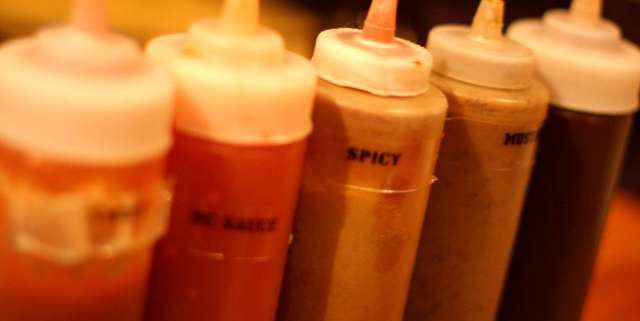
New flavor combinations are all the rage in the condiment industry, making colour measurement even more important for quality and brand name recognition. Image Source: Flickr user Bryan Mason

Read  Beer Colour Analysis: Setting the Standards for Quality Using Spectrophotometric Technology

Developing Brand Name Recognition and Quality

The condiment industry already generates revenue in the billion dollar range1, with several corporate powerhouses dominating the market. However, statistics show that consumers are drawn to new bold flavor combinations and that specialty markets are on the rise.2 With new opportunities surfacing, it is important to know what leads to success in this popular arena.

Colour is one of the primary factors that influences consumer choice. The old saying, ‘you can’t always judge a book by its cover’ is somewhat irrelevant in the food industry. In fact, appearance is exactly what buyers consider first in the search for quality food products. That is why major condiment processors depend on instrumental colour analysis to produce consistent and repeatable products that lead to brand name quality and recognition. Colour measurement standards begin with the basic ingredients and continue throughout production, to ensure that final product outcomes reflect the desired results.

21571276680_126c5c5fea_z.jpg

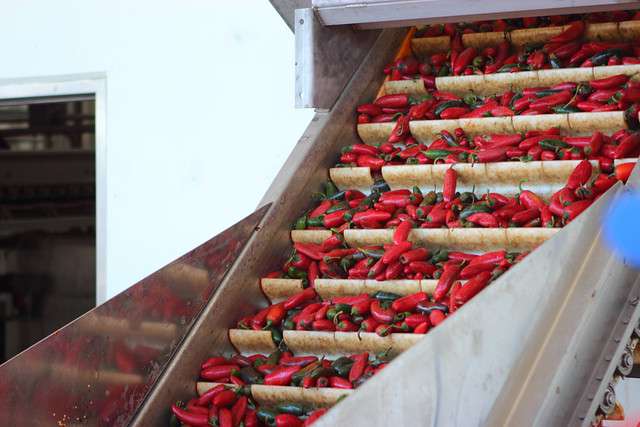
Quality products start with quality ingredients, which directly affect both colour and flavor outcomes. Spectrophotometers are used through out each stage of production to ensure quality and consistency throughout. Image Source: Flickr user Justin Ennis

INFO  Get More Information

The Various Stages of Colour Measurement

Spectrophotometers are used widely within the food production industry to measure quality and meet regulatory standards. Condiments and sauces rely on quality ingredients to produce superior colour and flavor combinations, so raw ingredients must be assessed for colour quality before making their way into the processing plant. Tomatoes, peppers, and other basic ingredients are measured according to a specific colour scale and grading system to ensure quality and colour standards are met. These raw foods are the backbone of many condiments and sauces, providing both the base for flavor and colour appeal.

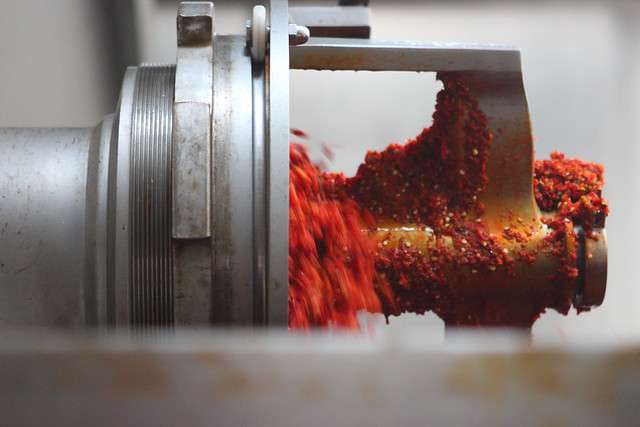
As various combinations of ingredients are blended together, a specific recipe is formulated to create a signature flavor. Repeatability depends on following this exact formulation every time, but monitoring colour is equally as important for developing a quality product. Spectrophotometers offer real-time process monitoring capabilities to guarantee consistency from batch to batch. Each step in this process opens the door to potential error, so it is important to monitor colour changes in raw ingredients and throughout each stage of production where temperature and other variables can create challenges in colour stability.

21571542058_015e846135_z.jpg

There are many variables that affect final product colour and these changes occur throughout different stages of production. Monitoring colour throughout production helps eliminate errors and allow for adjustments in colour to be made early on. Image Source: Flickr user Justin Ennis

Overcoming Challenges in Colour Appearance

Consumers judge food products by the way they appear since the ability to taste before buying is rarely an option. Condiments and sauces are often packaged in transparent containers specifically for this reason, as purchasing decisions are often based primarily on visual appeal. Final product colour changes are extremely challenging, which is why continual colour monitoring throughout each stage of production can limit colour variations and allow for changes to be made early in the processing system.

Changes in desired colour are attributed to other variables as well, such as temperature changes during transport and storage. Colour measurement instrumentation can be used to monitor colour stability and packaging flaws to safeguard products from failure at a later stage. Spectrophotometers offer the versatility to take multiple sample readings both accurately and efficiently throughout all stages of production in order to maintain the desired product colour. As the versatility of this technology continues to advance, the level of quality in the condiment industry continues to increase as well.

The Versatility of Spectrophotometric Technology

Sauces and dressings come in a wide array of colours and consistencies, ranging from opaque to translucent in colour with various levels of viscosity throughout. Understanding the proper measurement techniques for each of these variations is important in obtaining accurate results. With many options available, it is crucial to select the right instrumentation for each specific industry need.

HunterLab is a leading name is spectrophotometric technology in the food industry, with specialty options that are designed to measure both sauce and dressing colour. Many major global brands rely on our spectrophotometers to provide affordable and reliable colour measurement solutions. To learn more about the HunterLab difference, please contact us today.