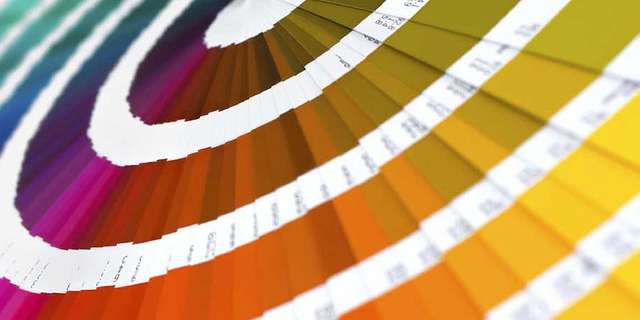
Quality and consumer satisfaction are dependent on developing a system for colour agreement. Instrumental analysis offers a simple and effective method for developing a colour tolerance system. Image Source: Flickr user John Fischer

Tolerance by definition means to accept something that you may not necessarily agree with. Everyone seems to have their own perspectives and opinions of what is right or wrong, so finding common ground can often create challenges. This concept is no exception in the world of colour measurement, where colour agreement is highly dependent on instrumental analysis to give an objective viewpoint. By creating a colour tolerance standard, an objective definition of colour can be quantified and repeated for consistency throughout a variety of manufacturing and production fields.

Read  Temperature Effects on Colour Measurement: Maintaining Accuracy in Extreme Conditions

More Than Meets the Eye

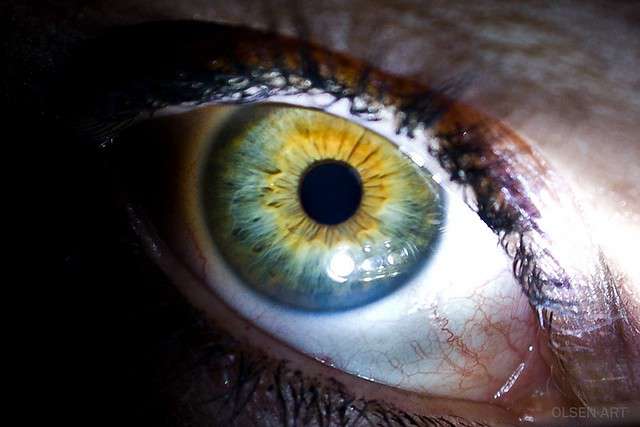
Colour perceptions vary from person to person, making colour agreement subjective to each individual observer. Not only is the human eye uniquely complex, but other environmental factors such as viewing angle, sample texture, and lighting can also affect the appearance of colour.

Colour is often mistaken as only a property of light reflectance and absorption, but studies show that the human brain is capable of distinguishing as many as 10 million colour variations based on the spectral composition of light and the way it is reflected from an object. These variations are innumerable based on each individual human experience.1 Therefore, visual colour matching systems are highly subjective and nearly impossible to repeat. Through the use of instrumental analysis, these variables can be controlled and colour can be quantified through numerical representation, eliminating variations and creating compatibility throughout the development of products that require colour specifications to be met.

10163323126_42496c83d6_z.jpg

Colour perception is more than just the brains’ response to the physical properties of light. Many factors affect colour composition and the way it is perceived by the human eye, making variations in colour nearly limitless. Image Source: Flickr user Lucky Lynda

INFO  Get More Information

Applications of Colour Tolerance Standards

Many industries rely on colour consistency and quality to meet regulatory standards and consumer expectations. Within our global manufacturing community, systematic colour representation is more important than ever. Accurately communicating colour between manufacturing plants guarantees that product compatibility is achieved, reducing wasted materials and ensuring quality from batch to batch.

A colour tolerance system is often based upon consumer expectations. The customer sets the standards for what is acceptable and what is not, based on their perception of colour variations. Spectrophotometers use a systematic approach to developing a colour tolerance standard system, allowing manufacturers to set a framework for colour standards based on quantitative and numerical data. Once a colour tolerance system is in place, spectrophotometric instrumentation can be set to monitor colour according to these specifically set values.

Playing the game of colour matching and agreement is easy with advance spectrophotometric technology. Instrumental analysis creates a simplified and systematic approach to developing colour tolerance standards. Image Source: Flickr user Thanakrit Gu

Setting Limits with the Right Technology

Spectral technology can recognize discrepancies in visual perception by identifying colour variations. Spectrophotometers quantify the Delta-E (dE) value2 to the smallest measure of difference that can be detected by the human eye. With a quantified dE value of >1, colour variations are indistinguishable to the human eye and visual perception will remain consistent within a set colour tolerance.

Delta-E is just one part of the colour tolerance system. Because texture, haze, gloss, and other physical attributes can affect three-dimensional colour in various ways, a combination of CIELAB colour space, geometric angle principles, and lighting calculations provide the most accurate representation of colour and saturation levels. Spherical technology can account for all of these variations in colour perception, providing the most accurate and efficient method of colour measurement. Applications for this technology are limitless and continue to grow as consumer demand steadily increases.

Choosing the right instrumentation for establishing a colour tolerance system is dependent on the specific needs of each industry. Whether setting realistic limits of colour variation while maintaining production demand or establishing precise colour tolerance standards for advanced colour applications, spectrophotometers offer the versatility needed to accomplish a variety of tasks. HunterLab is a recognized name in spectral technology and innovation. Our products are designed specifically to meet the various demands of each industry and address the challenges associated with each unique need. We are continually developing new products to stretch the boundaries of colour technology and take industry leaders to the next level of quality, efficiency, and value. To learn more about the HunterLab difference, please contact us today.