
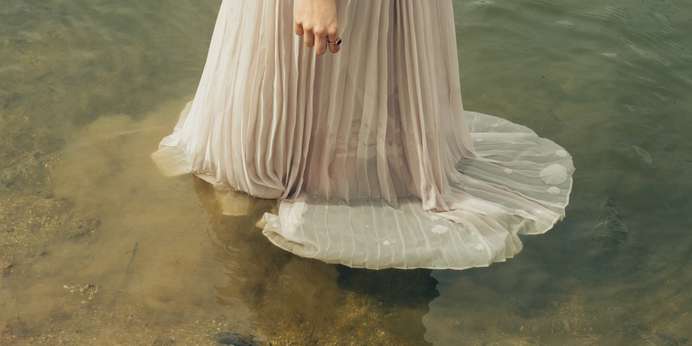
Moisture can change the colour of fabrics in deliberate, overt ways or create subtle colour shifts nearly imperceptible to the human eye. Image Source: Pexels user snapwiresnaps.tumblr.com

The Unseen Emporium in London, England is more of a laboratory than a design house. Through a daring and innovative combination of fashion, chemistry, and digital technologies, the three masterminds behind the label work to produce dynamic clothing, accessories, and lifestyle goods that respond to their environments based on specific stimulants.1 Among their most eye-catching creations are extravagantly tailored leather jackets that change colour as the humidity in the room fluctuates, the moisture level creating vivid chromatic shifts. The phenomenon of hydrochromism—colour change in response to water—has heretofore primarily been intentionally implemented in the textile industry as a novelty in the form of colour-changing umbrellas and swimwear. The Unseen Emporium, however, is bringing it to a new level of artistry.

But hydrochromic textiles are not a recent invention. Although deliberately moisture-sensitive dyes with dramatic colour changes may be in their infancy, some level of hydrochromism is inherent to most textiles already in use today, often to the consternation of textile manufacturers.
jeans-hipster-urban-will-milne-large.jpg

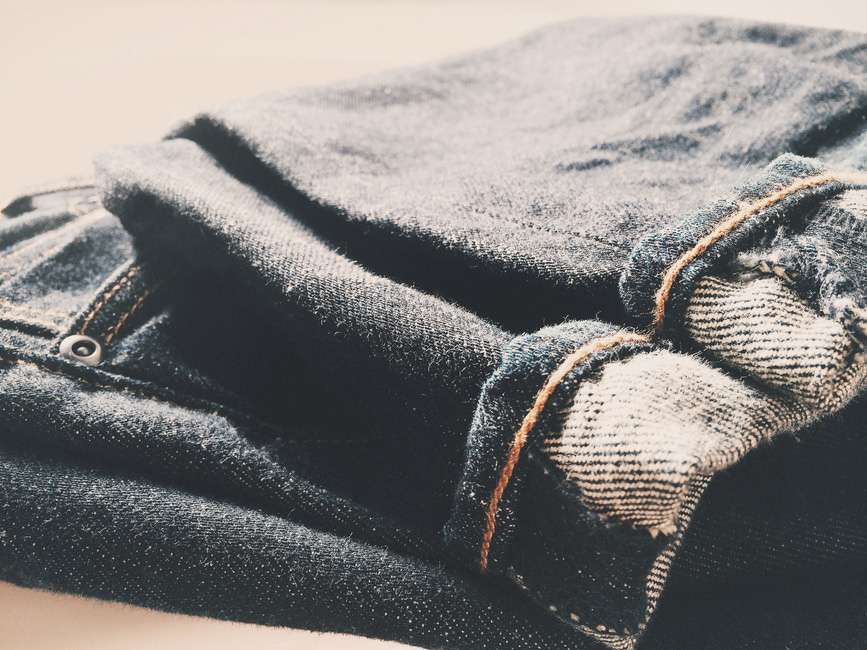
Dark cotton fabrics will display a greater degree of colour change in the presence of moisture. Image Source: Pexels user snapwiresnaps.tumblr.com

Read  Spectrophotometry in Fabric Production: Achieving Colour Conformity in Blends of Natural and Synthetic Fabrics

The Impact of Moisture on Textile Colour

While some are seeking to exploit the potential of hydrochromism to develop innovative new products, for others in the textile industry, hydrochromism is one of a variety of ordinary variables that must be accounted for when taking colour measurements. Even fabrics that do not contain dyes specifically formulated for hydrochromism are susceptible to moisture-induced colour changes both great and small depending on the qualities of the fabric, dye, and environment. Michael Thornton, product manager at Datacolor, says, “It has been technically proven that the physical colour of a sample can alter substantially if the ambient temperature and relative humidity are not stable.”2

The reason for these changes has to do with how water affects the way light acts on fabrics to create chromatic variation. As relative humidity increases, the fabric absorbs moisture, strengthening the colour of textiles and producing deeper shades. This is the result of decreased light scattering, which “provide[s] more opportunity for absorption of light in the sample and thus contribute[s] to an increase in its colour strength.”3 Different fabric and dye combinations will produce different levels of colour change; fabrics that naturally absorb moisture are more susceptible to hydrochromic variation. The effect is particularly pronounced in dark fabrics.

6018856509_5fd5a724f0.jpg

Conditioning cabinets allow you to prepare textile samples for accurate colour measurement by controlling for moisture. Image Source: Flickr user jenny downing

INFO  Get More Information

Controlling for Hydrochromism

To account for hydrochromism, the ASTM developed the D1776 ‘Standard Practice for Conditioning and Testing Textile’ method, which offers specific temperature and humidity ranges for testing fabric colour.4 Preparing samples using a conditioning cabinet that allows you to control heat and humidity enables you to adhere to standard practices as well as monitor colour shifts in a full range of conditions appropriate for your product. Once the sample has been acclimatized to your chosen environment, spectrophotometric instrumentation is used to produce precise quantification of chromatic information. The data provided by your spectrophotometer can allow you to tailor dye formulations and other processing variables to produce exactly the colour you desire as well as maintain ongoing colour monitoring within your production line to produce consistency both within and between products. The marriage between a conditioning cabinet and spectrophotometer is paramount to ensuring hydrochromic colour changes, whether integral or incidental to your product, fall within your expectations and can be reproduced across a product line.

The Highest Standard in Colour Measurement

HunterLab spectrophotometric instruments are lauded across the textile industry for their technological excellence, reliability, and ease of use. Combined with conditioning cabinets, our spectral analysis tools give you the ability to monitor hydrochomic textiles with the highest level of accuracy, whether you are developing new products that highlight the possibilities of colour change, or need precise measurements of traditional fabrics. Contact us for more information about how our range of spectrophotometers and world-class customer service can serve you.