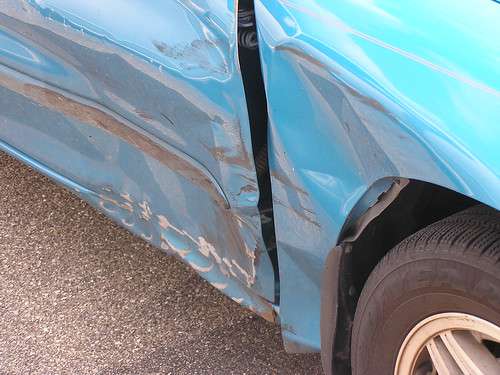
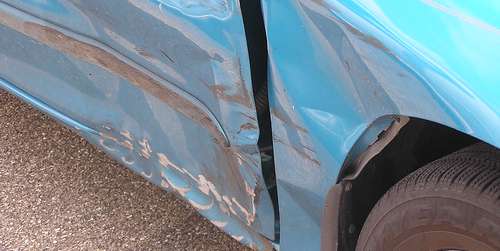
Pearlescent paint can cause some difficulty in determining the exact colour of the paint job, as the colour looks different from different angles. Image Source: Flickr User robad0b
Iridescence is one of nature’s most beautiful and mysterious phenomenon. Normally the colours we see in nature are caused by the pigmentation of a paint, of an animal’s skin, or of a colored leaf. However, with iridescent colours, the hues are created by light refracting through microstructures in the surface. This refraction creates interference patterns and, of course, the rich flux of colour that we see in peacock feathers and butterfly wings. We’ve mimicked that beautiful luster in industrial processes like paint manufacturing, by using mica particles—a type of ceramic crystal—to create a similar diffraction grating and gives the vehicle a depth and sparkle of colour that’s unmatched by traditional paints.1
Unfortunately for auto body specialists—and drivers that love their pearlescent car—the complexity of colour which is so beautiful to a car-buyer is extremely difficult to accurately measure with the unaided eye. When you have customers who bring in a vehicle with pearlescent paint, it’s important to be prepared with the right tools to accurately match their paint. The solution? 45°/0° spectrophotometers can accurately measure the true colour of a pearlescent paint, ensuring a consistent colour when you’re patching scrapes and dents. For auto body shops to be able to provide comprehensive paint touch-ups and meet the needs of their customers, it’s vital to have a spectrophotometer on hand to deal with repairs that involve pearlescent paint.