
We live in a highly globalized community where goods and services move across the world with a click of a button. With product development that spans continents, the demand for synchronization and compatibility are in high demand. Paints and coatings add the finishing touch to many of these products and are necessary to preserve and protect, as well as to create visual appeal. In order to guarantee a perfect match, pigment colour mixing depends on instrumental analysis to ensure colours are consistent no matter where they are produced and manufactured. Spectrophotometers use innovative technology to quantify colour and develop a system that warrants repeatable compatibility. Colour instrumentation is the key to quality in paint and coating development.
10842493396_9ac3f36ec8_z.jpg

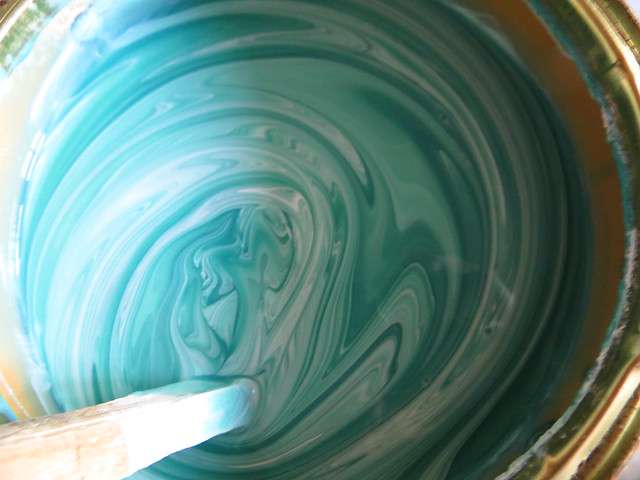
Instrumental analysis of additive and subtractive colour mixing takes the guesswork out of colour matching. Understanding the principles of pigment theory is the first step to developing a repeatable quality product. Image Source: Flickr user Rhian vK


Read  From Clear to Pure: Chemical and Colour Analysis in the Petrochemical Industry

Additive and Subtractive Colour Mixing

Understanding the physical properties of colour is the first step to developing a pigment mixing system. Pigment theory refers to the concept of additive and subtractive colour mixing where the pigments relate to the subtractive colour and light relates to additive colour.1 Variations in colours depend on this theory of tinting and shading to achieve the desired colour.

Analysis of pigment colour mixing utilizes human eye technology, where all colours are represented by light and fall within the realm of primary colours. Pigments absorb and reflect light at specific wavelengths and this is how the eye perceives colour. Instrumental analysis uses these same principles to quantify wavelengths and assign numerical values to colour. Human perception of colour is subjective, but spectral analysis can detect even the slightest changes in colour for precise colour matching capabilities.

Finding a Perfect Match with Absorption Measurements

Creating a perfect colour match extends far beyond the reflected colour that we see. Instrumental analysis is not simply assigning a colour value a name, but understanding the absorption qualities of that formula to allow for repeatability at any given time and in any location. The physical behavior of pigments are complex and reflected colour is often a combination of hues rather than the one specific colour which is perceived. By measuring the absorption qualities of paints or coatings, a more accurate representation of colour can be quantified and assigned a numerical value for repeatability. Spectrophotometers are designed to simplify this process with an easy-to-use compact tool.

12930755125_bc4a0d726f_z.jpg

Paints and coatings are often applied at various locations, so ensuring colour matching and compatibility is essential in creating a quality product. Image Source: Flickr user Dale Earnhardt Chevrolet

Precise instrumental analysis is extremely important when paints or coating are applied at various locations and must come together in an exact match for developing a completed product. For example, in the automotive industry, many parts are manufactured separately, yet colour compatibility is essential for ensuring quality and marketability. Spectral technology offers an easy and affordable solution for creating a repeatable set colour pallet.

INFO  Get More Information

Developing a Colour Index with Spectrophotometry

The paint and coating industry relies on specific sample matching technology to meet consumer demands. Developing a colour index allows manufacturers to assigns all colour formulations a numerical identification code to ensure colour sample matching.2 By using a colour sample index, manufacturers can provide a wide selection of colour samples and ensure an exact match every time.

2597149360_78742efa2e_z.jpg

Developing a colour index with spectral technology allows for numerical data to be stored for repeatability and colour quality. Image Source: Flickr’ user Dennis Hill

Specific colour formulations can be quantified and stored using spectrophotometric instrumentation and software, simplifying the colour mixing processes and sharing this information at any production facility. Instrumental analysis offers an easy and reliable method of quality control in final product development that can be repeated again and again.

Options and Variations in Colour Measurement Instrumentation

Colour measurement instrumentation is available in a variety of styles that are designed to meet specific industry needs. In the paint and coating industry, continuous process control and colour formulation monitoring are necessary for quality control. Instrumental analysis provides the numerical values needed to correlate with visual colour perception. This allows for precise colour matching capabilities and repeatability no matter where you are. HunterLab specializes in colour measurement instrumentation for paints and coatings, and our spectrophotometers are designed specifically to meet the needs and challenges of this industry. From portable and bench top models to on-line measurement systems, HunterLab offers cost effective solutions to meet the various needs of the paint and coating industry. For more information regarding the products we offer, please contact us today.