
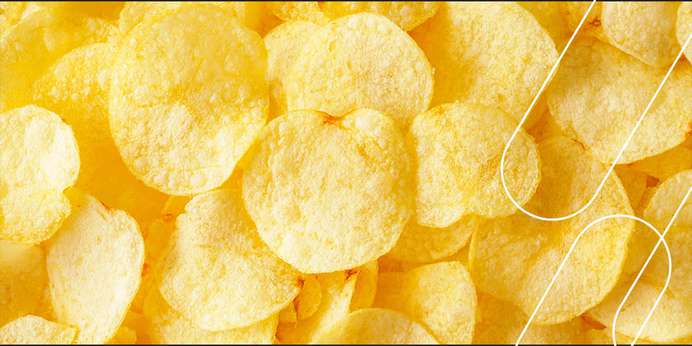
Colour quality and consistency are vital for potato chips, impacting their appeal to consumers in a competitive market. The visual colour standards reference chart for potato chips was developed to improve colour accuracy by illustrating chips ranging from light to dark. However, visual colour analyses are often inaccurate due to their subjectivity. Luckily, you can achieve precise colour measurements with spectrophotometers.

Flaws of Colour Reference Charts for Potato Chips

The potato chip colour reference chart is fully based on visual perception, which varies drastically from person to person due to:

Observer sensitivity: Colour appears differently to each person based on their natural eye sensitivity. As a result, some people see colours more vividly than others.

Lighting: Objects can look different under various light sources, which greatly impact colour.

Age: Human colour perception fades with age, meaning someone in their 20s will likely see a potato chip differently than someone in their 70s.

Retinal fatigue: The longer a person focuses on an object, the more their eyes strain, resulting in incorrect colour perception.

Object background: An object's background can impact how we view the sample due to the contrast between them.

Colour memory: Our brains use our previous experiences and expectations to identify colours, which often hinders our ability to see them correctly. For example, someone may identify an orange banana as yellow because they expect bananas to be yellow.
Read  Beer Colour Analysis: Setting the Standards for Quality Using Spectrophotometric Technology

How to Measure the Colour of Potato Chips

Colour spectrophotometers offer the most simple and accurate means of colour measurement for potato chips during the roasting and frying processes. We are talking about providing accurate colour measurement results onto the screen in less than four seconds.

Advances in spectral technologies have enabled users to accurately collect colour data while accounting for variations in potato chip texture, shape, and size. These instruments also provide a controlled environment for colour measurement by regulating the light source and viewing angle, leading to fewer errors.

From the auto-height positioning sensor to the large, rotating platform to the durable display and intelligent communication technologies, Aeros makes colour measurement as simple as three easy steps:

Prepare sample: Place the potato chips into a sample tray at a minimum of 1 inch deep, covering the bottom completely. Then, set the sample tray in the middle of the turntable.

Initiate reading: Press the “READ” button to start measuring.

Begin measuring: The Aeros sensor will flash across the sample as it rotates, providing accurate colour measurement results onto the screen.

INFO  Get More Information

Invest in Accurate Colour Measurement Solutions From HunterLab

HunterLab can help you measure potato chip colour with optimal precision. We're dedicated to achieving exceptional colour accuracy, reliability, and efficiency across our complete line of cutting-edge colour measurement products.

Learn more about our spectrophotometers for potato chips, or contact us for more information!