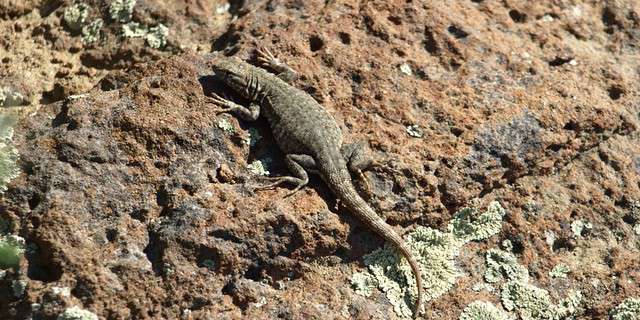
There’s a little earless lizard living in the gypsum dune fields southwest of Alamogordo, New Mexico, that can hide from its predators in broad daylight. The dune field is the White Sands National Monument, the world’s largest, at 275 square miles. Because of gypsum’s high albedo, White Sands is also one of the brightest areas in the world, in the company of massive salt flats, glaciers, and the Antarctic Plateau. Under such high-intensity light, human eyes, and the eyes of other mammals, avians, and reptiles, lose their ability to distinguish colour. That’s great for Holbrookia Maculata, the little earless lizard. Under the harsh glare of the white sands, this lizard is nearly indistinguishable from the sand when motionless. That means little by itself. Many reptiles have developed adept camouflage, even changing colours to blend in. However, when measured with a spectrophotometer, the earless lizard’s colour is revealed to diverge as much as 30%1 from the surrounding sand. And that stands out.
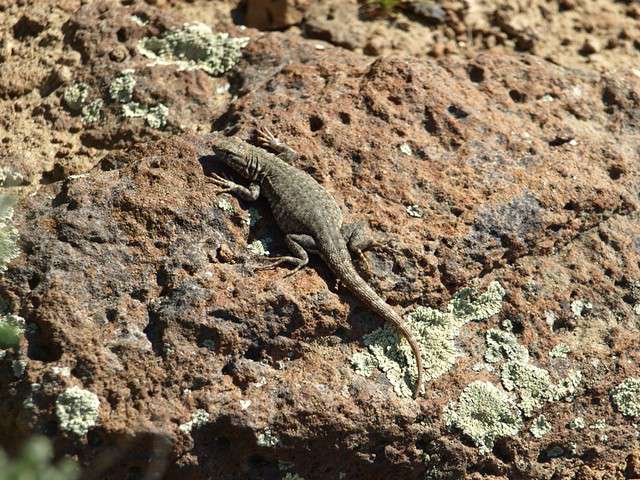
Ever play find the lizard? Image Credit: flickr user irmiller (CC BY 2.0)
Lizard Coloration Unveils Secrets of the Reptile World
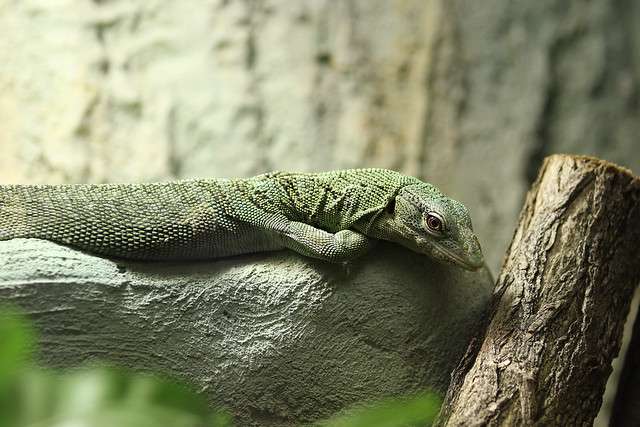
In the reptilian world, colour is essential to survival. Whether blending in with their surroundings, displaying mating fitness, or signaling toxicity to predators, reptiles have evolved a variety of colour-specific survival mechanisms. Colours differ between members of the same species living in the same area, between those living in different areas, and between different species. Understanding this can help herpetologists piece together the complex ecological puzzle of reptilian survival. So, for herpetologists to understand the social and environmental worlds of their subjects, they must have access to an accurate method of identifying the colour.
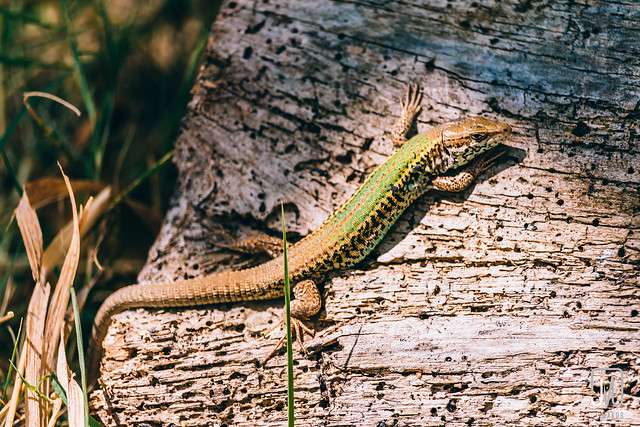
Dang, lizard, what colour are you? Image Credit: Flickr User Jim Makos (CC BY 2.0)