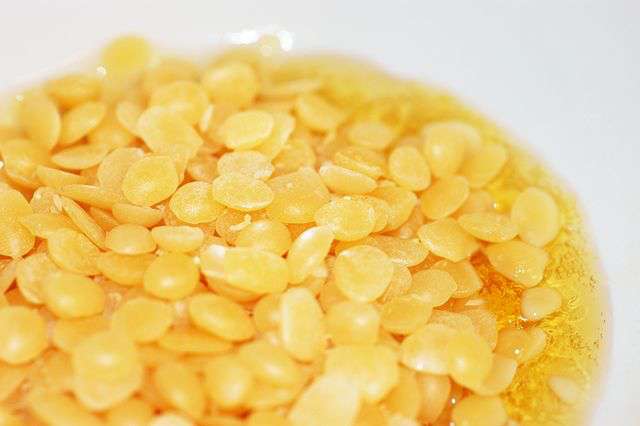
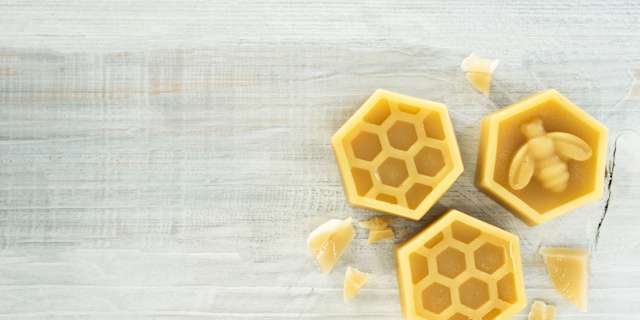
Industries that use raw beeswax need to test the wax for colour consistency in order to produce quality products. Image Source: Shutterstock user P-fotography
Raw beeswax is a key ingredient in a wide range of popular products, from lipstick to candles. However, to create products from beeswax, manufacturers have to ensure that the wax is consistent in colour and free of impurities. Any variation in colour from one batch of beeswax to another could negatively impact the final colour of the product.
The primary challenge manufacturers face when working with raw beeswax is that this material is naturally diverse in colour; unless the manufacturer consistently sources its beeswax from the same bee farm and controls every aspect of the farm’s environment, the colour of beeswax can range anywhere from pale yellow to deep orange in colour. To achieve colour consistency in their products, manufacturers must, therefore, have strict colour quality control protocols in place when using raw beeswax as an ingredient. By testing wax using a spectrophotometer, you can significantly improve the consistency of your products and achieve reliable colour results.
The Challenges of Testing Beeswax for Colour Consistency
The primary reason beeswax is such a challenging ingredient to work with is that a number of environmental factors can impact the colour of the wax.1 All beeswax is white when bees first create it. However, it doesn’t remain this colour over time; as the bees gather nectar from neighboring flowers, pollen and propolis (resin from the bark of trees) get stuck to their legs and bodies. This material latches onto the white honeycomb, causing the honeycomb to turn yellow. The darker the pollen and propolis are in a region, the darker the resulting beeswax is.
This is why many manufacturers that use beeswax source their wax from the same farm or from the same general region of the world. The bees in the area are gathering nectar from the same types of flora, so the wax they produce appears roughly the same colour. For example, Burt’s Bees sources all of its wax from four farms in East Africa, and as a result, the wax is mostly consistent from batch to batch.2 Additionally, most bee farms in Africa don’t use pesticides and have very little air pollution, both of which can alter the natural colour of beeswax. This is why many manufacturers choose to work with African beeswax, as it is considered the purest in the industry.
However, even if you source your wax from the same high-quality farm, there’s no guarantee that your wax will be completely consistent in colour. Factors like weather and available food sources on the farm could cause colour variations even in wax produced by the same population of bees. For example, if flowers with dark-colored pollen aren’t yet blooming due to poor weather, the bees will produce wax that is much lighter than usual.
This is a problem for your products because it will make them appear inconsistent. In cosmetics products, in particular, customers expect to find the same colour and texture every time; if a customer has a favorite red lipstick, any variation in this colour will reduce customer satisfaction. Beeswax that’s too dark in colour could make a red lipstick appear brown and muddy, and this will negatively impact the customer’s perception of the product.3 This is why, to ensure colour consistency, you must test for variations in colour between all of your raw beeswax shipments and filter out impurities in the raw wax until it adheres to colour standards.
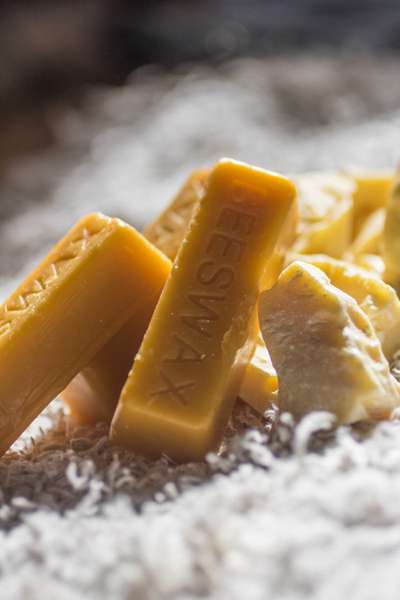
A spectrophotometer that has a large sample platform can measure a greater amount of solid beeswax compared to a spectrophotometer with a smaller platform. Image Source: Max Pixel