
Cereals and grain-based food products are a diet staple around the world. According to Today Food, “almost half of all Americans—49 percent—start their day with a bowl of cereal, and on average we consume 100 bowls a year.” That amounts to nearly 3 billion packages of cereal each year, making cereal sales and production a leading industrial market in the United States.

Colour technology plays a significant role in cereal manufacturing and development. Studies show that the visual quality of cereals can affect taste perception. Darker cereals are generally perceived as tasting burnt, while lighter cereals appear undercooked. In fact, colour is often the first step toward quality control in nearly every stage of cereal manufacturing. Colour technology instrumentation provides real-time information that alerts product developers to changes that must be made in production immediately, saving the producers both time and money.

414939826_8aff0eaa1e_z.jpg

Many American’s begin their day with a bowl of cereal. Colour perception plays a large role in consumer choice, and many leading cereal manufacturers rely on colour technology to meet consumer expectations and standards. Image Source: Flickr user musicfanatic29

Read  Beer Colour Analysis: Setting the Standards for Quality Using Spectrophotometric Technology

The importance of colour technology

There are many variables affecting colour in grain-based foods and cereals. Manufacturing processes, baking times, baking temperatures, and ingredient variables all affect the final colour outcome. Using colour technology can help to define and quantify these variables and provide specific data for the following processes:

  • Determining and monitoring the effects of various ingredients on product colour outcome
  • Monitoring colour changes in products during manufacturing, storage, and shelf-life changes
  • Quality control to meet specified standards and ensure colour consistency between batches

Human visual assessment is important in order to meet consumer expectations, but variances between viewer perception lead to inconsistencies in quality and colour. There are several variables that can interfere with colour perception, including variations in light sources, changes in texture and consistency, angle of viewing, and quality of light. Spectrophotometers have the ability to control these variables and provide accurate data. Colour technology is both rapid and repeatable, meaning that it provides multiple readings using real-time analysis. This technology allows productions teams to develop a colour average that will define quality control standards across batches and for multiple manufacturing plants. Both the USDA (United States Department of Agriculture) and AACC (American Association of Cereal Chemists) International uphold spectrophotometry as a reliable method of colour analysis in cereals and other grain-based food products as producers have come to depend on this colour technology to meet specific standards and regulations.

13984294622_417c3f2a47_z.jpg

Spectrophotometric technology provides rapid and repeatable colour measurement data, which leads to overall product consistency and quality. Image Source: Flickr user Rocco Lucia

INFO  Get More Information

Non-contact colour technology

While measuring colour in cereal and grain products is beneficial, it does present a number of challenges. In a perfect world, all colour measurement samples would be flat, even surfaces that are completely uniform in colour. However, the reality is quite different, especially when it comes to cereals and other grain-based products. Irregular samples present many challenges in colour measurement, but new colour technology instrumentation uses revolutionary methods to streamline sample preparation and improve the colour measurement process overall.

Non-contact spectrophotometers can accurately measure the colour of nearly any sample type— all without touching the sample surface. This non-contact process eliminates many of the issues that occur with standard contact-based instrumentation. Advanced colour technology features, such as automated sample height measurement, can reduce user errors and provide more accurate results. New laser technology specifically designed for sample height measurement can help to identify sample surface height by using ‘depth of field’ measurements to account for changes in non-uniform samples. This significantly reduces errors that occur between users by accounting for differences in poured product based samples.

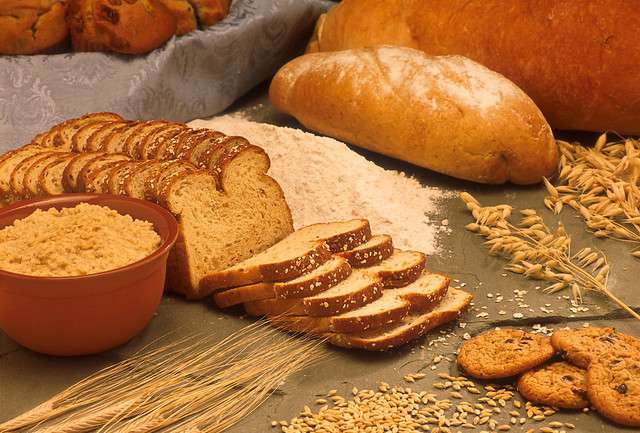
8454755399_c99a71ce97_z.jpg

Cereals and other grain-based food products are typically non-uniform and present challenges in colour measurement. Non-contact instrumentation offers the best in colour technology for addressing the challenges related to non-uniform sample measurement. Image Source: Flickr user U.S. Department of Agriculture

Leading colour technology instrumentation

Non-uniform samples present many challenges in colour measurement. At HunterLab, we specifically design our instrumentation to address these needs. Using the latest advancements in colour technology, we have been able to revolutionize the sample preparation process and to simplify overall colour measurement analysis. Our latest spectrophotometric technology offers automated measurements, reduced clean-up time, and an overall improvement in the colour measurement processes. The features that make our instrumentation unique include:

  • Non-Contact Colour Measurement: measures the sample itself, eliminating variations that are present from second surface reflectance.
  • Ambient Light Rejection: eliminates errors from these outside light sources.
  • Automated Sample Height Measurement: identifies sample surface height and uses depth of field measurement to account for changes in non-uniform samples.
  • Simplified User Interface: “One-Touch” measurement capabilities that make operation both simple and effective.

For more information on non-contact colour technology and spectrophotometric analysis in cereals and other grain-based food products, contact HunterLab today.