What Is Colour Consistency?
Colour consistency is the average variation amount of chromaticity between two samples. Chromaticity refers to a colour's quality, determined by its dominant wavelength regardless of brightness. Because not all inconsistencies are identifiable by the human eye in specific light settings, builders use precise tools to measure colour and achieve the consistency their customers require.
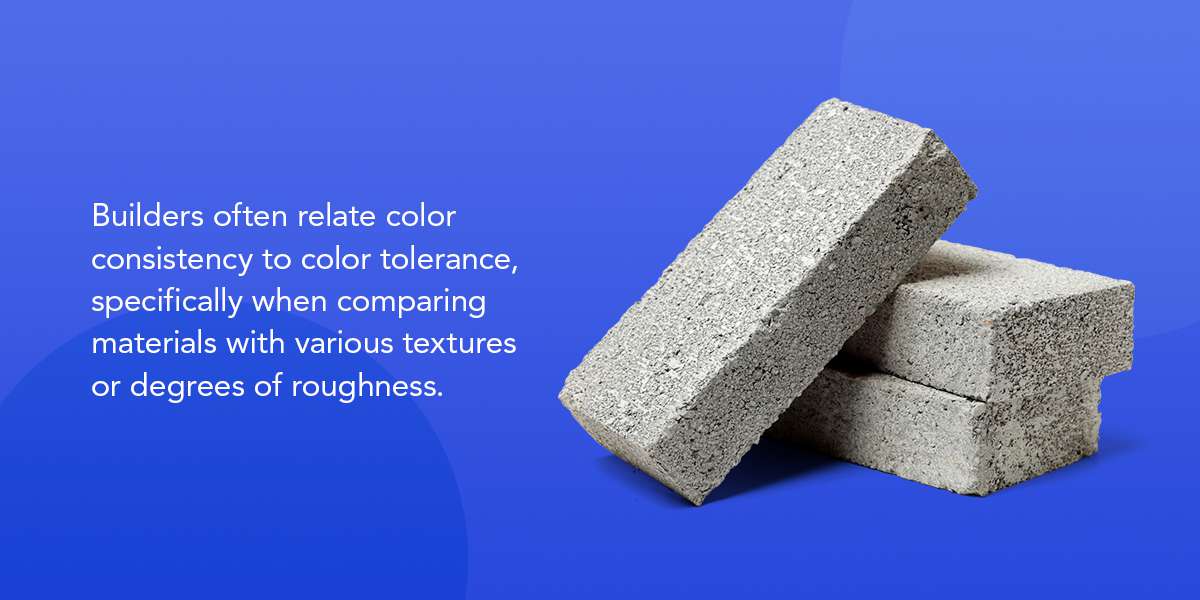
Builders often relate colour consistency to colour tolerance, specifically when comparing materials with various textures or degrees of roughness. Colour tolerance is the amount of permitted variation between a material's colour and an existing colour standard. Many colour tolerances go beyond what's detectable by the human eye in an average setting.
Why Colour Consistency Is Important in the Building Material Industry
Maintaining colour consistency is vital because it saves significant money in potential material replacement and labor should the customer discover a variation when the project is complete. Colour consistency is crucial because it can make or break a building company's or contractor's reputation.
Besides construction companies needing to measure colour consistency in all construction stages, it's equally essential for building material manufacturers to monitor colour throughout fabrication. Some materials are much more challenging to measure than others. For example, architectural glass is either reflective, transparent or a combination of both, requiring precise measuring methods.
Similarly, bricks often change colour when fired and can vary in consistency from batch to batch if exposed to different temperatures. Roofing shingles have coarse textures that make colour monitoring even more challenging.
Spectrophotometers are the perfect devices for monitoring colour consistency in building materials, particularly products with unique properties like glass, bricks, cement, tiles and shingles. These devices evaluate colour by reflecting controlled light bursts off an object's surface and analyzing the reflected light's wavelengths. Some spectrophotometers evaluate a product's texture and roughness during measurement, both vital factors for most building materials.