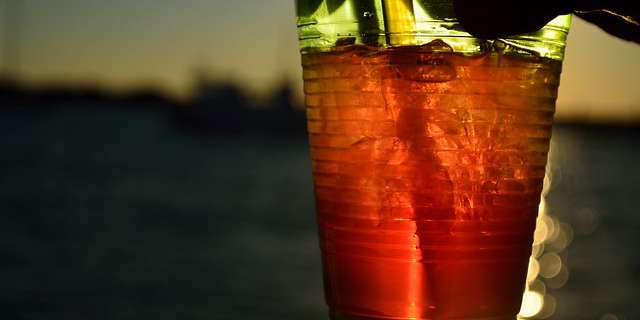
Remember those commercials from the ‘80’s where everyone was blindfolded while trying two different types of cola to determine a winner? Blind taste-tests were all the rage as the beverage industry reached its peak and commercialization hit full swing. Manufacturers were throwing millions of dollars into packaging and marketing ploys to persuade consumers to choose their product. Although brand name packaging has been shown to impact consumer preference, new studies reveal that there is even a greater influence from the ways actual beverage colour affects taste perception.
15944900790_c072f3f7d5_z.jpg

More than packaging and name brand recognition, beverage colour alone has the most significant influence over consumer taste perception and choice. Image Source: Flickr’ user Tom Hilton

New taste tests have compared results between brand name labeling and beverage colour to determine that the visual look of beverages is the dominating factor in taste perception. JoAndrea Hoegg of the University of British Columbia reported to FoodNavigator-USA.com that, “perceptual discrimination is fundamental to the rational choice in many product categories yet rarely examined in consumer research”. She also stated that study results proved that “two items that tasted the same but were different colour were perceived as more distinct in taste than two items that actually tasted different but were the same colour”1. With such conclusive evidence on the influence of colour over consumer choice, industry leaders are now looking for ways to increase the marketability of their products by utilizing colour measurement instrumentation.
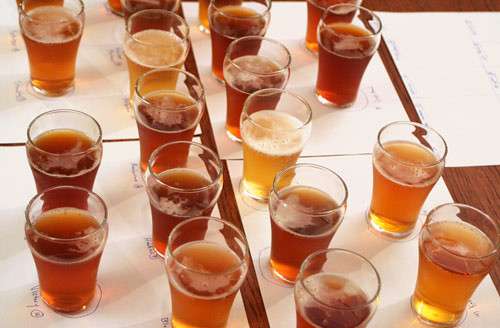
Read  Beer Colour Analysis: Setting the Standards for Quality Using Spectrophotometric Technology

The Benefits of Instrumental Analysis for Beverage Colour Quality

Although packaging and labeling still play a significant role in consumer choice, many beverages utilize clear plastic bottles to display beverage colour for marketability. This makes beverage colour quality an important factor in production and quality control. Not only does beverage colour affect taste perception, but it is also used as a visual indicator for quality and safety of foods. Because the human brain associates colour with quality and safety as a natural defense against spoiled or unsafe foods, visual assessment of a product has the greatest influence on buying power in the marketplace regardless of actual taste or quality. Manufacturers know that the first step in quality control is visual analysis.

Spectrophotometric technology has flooded the industry with new ways to improve colour control standards and monitor the quality of commercial beverage products. Throughout production, colour measurement is used to monitor base ingredients, storage changes, colour additive formulations, and ingredient changes, all of which significantly alter the base colour of a beverage. Since product selection is greatly influenced by colour perception, consumers tend to develop a “taste memory” based on colour association2. Assessment throughout every phase of production is important to ensure that both colour quality and consistency remains the same from batch to batch. Spectrophotometers offer real-time data that allows manufacturers to tackle colour changes throughout production, ensuring that any problems are addressed in a timely manner. This guarantees that colour quality is maintained from start to finish, saving both time and money.

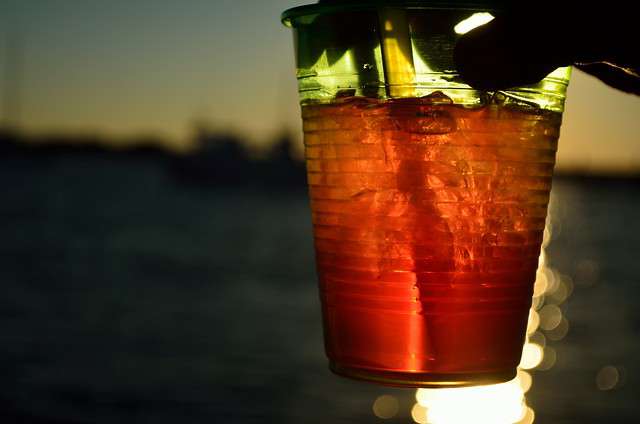
3967099443_595e3e7272.jpg

Even slight changes in colour can significantly alter the taste perception of beverages that are identical in formulation. Instrumental analysis ensures colour consistency from batch to batch, improving quality and consumer acceptance. Image Source: Flickr’ user Maggie Hoffman

INFO  Get More Information

Choosing the Right Instrumentation for Liquid Samples

Liquid beverages range in colour and consistency from carbonated soft drinks, teas and coffees, to fruit and vegetable juices, dairy product as well as spirits. Colour measurement strategies vary depending on these changes in sample properties. Beverages are often classified as opaque, translucent, or transparent and each sample requires different instrumentation and measurement techniques based upon these various attributes.

  • Opaque Liquids—Beverages such as dairy products, fruit and vegetable juices, or other liquids with high solid content tend to reflect light rather than allowing it to pass through the sample. Reflectance measurement instrumentation that utilizes a directional 45°/0° geometry provides the most accurate colour data. Diffuse d/8° sphere geometry can also accommodate opaque liquid samples.
  • Translucent Liquids—Liquids with medium solid content diffuse light as it passes through the sample. Using both reflective and transmittance measurement modes is appropriate depending on the translucency of the sample. Defining the appropriate path length depends on consumer perception, which can be determined by the thickness of the sample and where light enters and exits.
  • Transparent Liquids—Beverages with very low or zero solid content allow light to pass through with minimal or no interference. Without interruption of light, these samples can only be measured accurately with transmission instrumentation.
8394247611_97e4eaedc9_z.jpg

Choosing the right colour measurement instrumentation starts with understanding the physical properties of the beverage sample. With the right tools, colour quality can me managed both easily and effectively. Image Source: Flickr’ user Daniel Wehner

The Best Choice in Colour Measurement Instrumentation

There are many options in colour measurement instrumentation available today. New advancements in spectral analysis have taken this technology to new levels, simplifying the process and creating more versatility in spectrophotometric instrumentation. HunterLab is leading the way in innovation, becoming a trusted name in colour measurement instrumentation. We have worked with top name brand industry leaders for over 70 years to develop the best solutions for all your colour measurement needs. Our friendly staff is here to guide you in choosing the right tools, and we offer continued support to help you make the most of your colour measurement instrumentation. For more information on what sets HunterLab apart from the rest, contact us today.