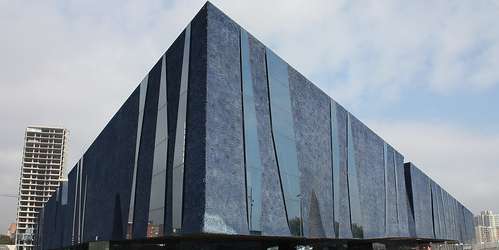
The Forum in Barcelona is a prime example of the possibilities of colored concrete. Image Source: Flickr user Rick Ligthelm
Concrete doesn’t have a reputation as a particularly colorful building material; if you were to ask most people what colour concrete is you’d get some variation on the word “gray.” In fact, concrete comes in a virtual rainbow of colours, from the white ribbon of the Guggenheim to the warm orangey browns of the Guelmim Technology School to the ocean blues of the Forum in Barcelona. Once prized primarily for its strength and durability, concrete is now increasingly being looked to for its aesthetic beauty as concrete manufacturers introduce an ever-growing array of colour options. Although historically colored concrete has been a niche market, today many producers of both ready-mix and precast concrete believe that offering pigmented options is essential to staying competitive in response to growing demand by everyone, from world renowned architects looking to create their next iconic masterpiece to suburban homeowners wanting a fresh look for their patio.
As interest in colored concrete continues to expand, so too does the need for innovative technologies that facilitate the production of attractive products. For example, liquid coloring agents added to concrete using automated liquid colour dispensing equipment are increasingly replacing traditional dry powders, allowing for “increased batch-to-batch colour consistency, reduced batching error, and the ability to produce an infinite array of colours while only keeping four or five primary colours in stock.”1 The highest level of colour control, however, can be achieved through the strategic use of spectrophotometric instrumentation, giving concrete producers and users unprecedented flexibility and quality assurance.
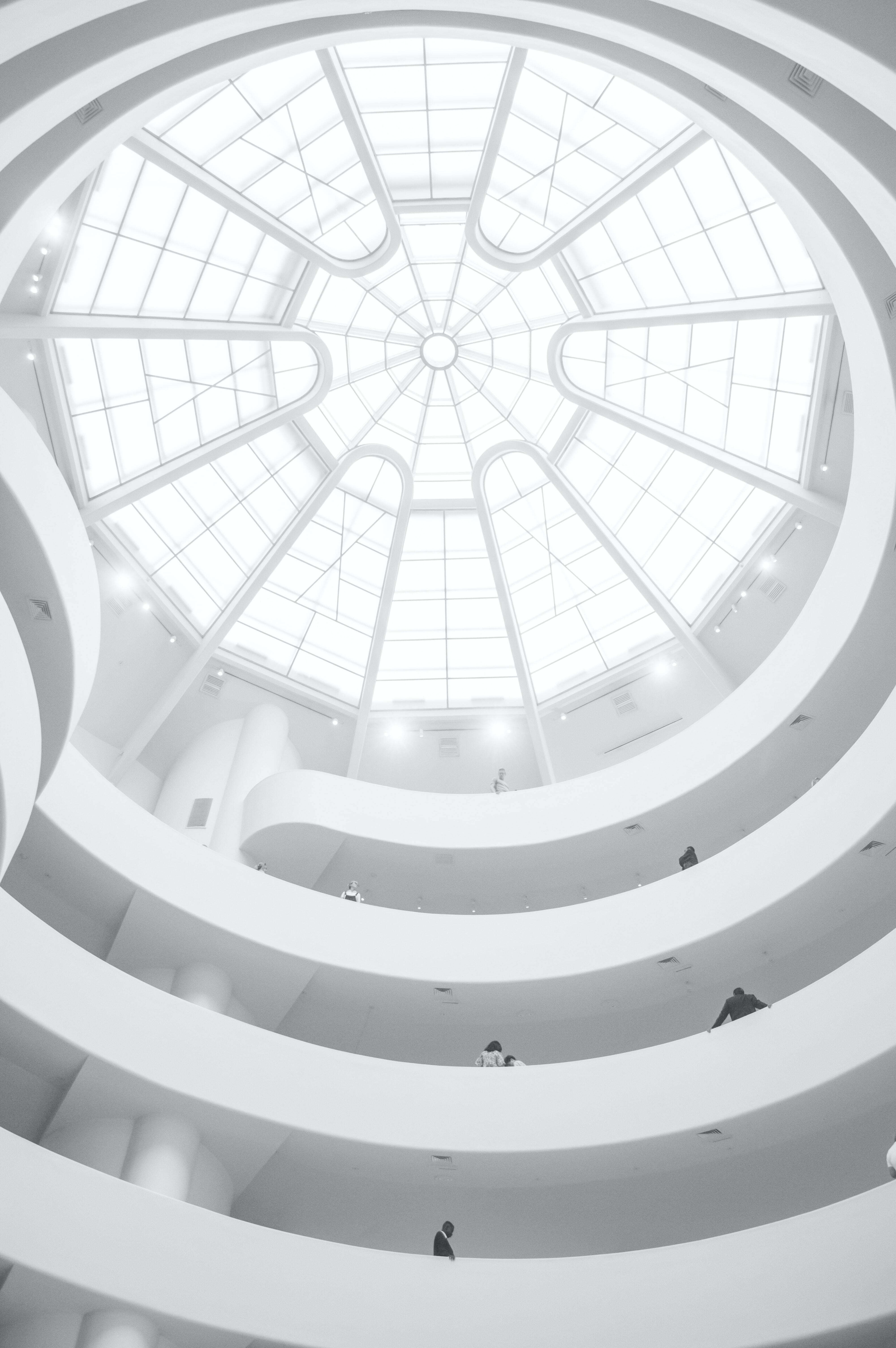
The white concrete swirls of the Guggenheim Museum makes it one of the most iconic buildings in the world. Image Source: Unsplash user Drew Patrick Miller