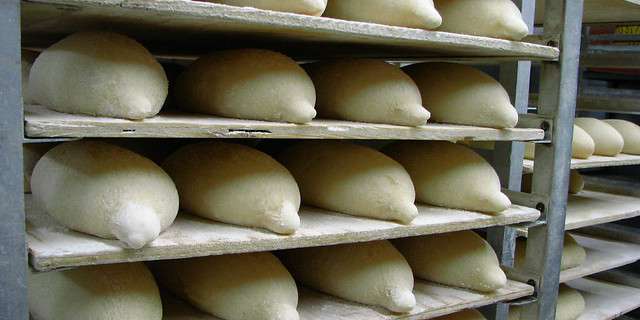
Food manufacturing and production have significantly increased over the past several decades. To maintain quality and uniformity in mass produced foods, utilizing colour measurement data is crucial. Image Source: Flickr user Michael Gil

Staying involved in my children’s education is important to me, so when the opportunity arose to join my 2nd grader on a field trip to our local bakery franchise, I was the first to volunteer. What a great experience it was to see commercial food production first hand. The rate and quantity of baked goods being produced was remarkable, but I wondered how much technology was needed to keep things running smoothly.

With my knowledge of colour measurement, I knew that production and quality control depend largely on the right instrumentation. Colour quality control plays a major role in food excellence and safety, but understanding and managing the data in today’s large-scale food manufacturing industry can be a challenge. Choosing the right colour measurement tools and utilizing data effectively is the first step towards addressing these challenges.

Read  Beer Colour Analysis: Setting the Standards for Quality Using Spectrophotometric Technology

The Importance of Colour Quality Data

Monitoring data and utilizing this information is one of the most important factors surrounding food production quality. Sam Lewis, the editor of FoodOnline stated in a recent article that “as food manufacturers’ supply chains continue to expand, so does the importance of recording, managing, and using good data in daily operations”1. Creating a good system for data control must start with accurate data collection.

Colour measurement plays a significant role in food manufacturing supply chain operations and can provide a wealth of information about food quality and safety. Colour quality monitoring delivers quantifiable and objective data through the use of advanced spectrophotometers. These measurement tools provide a simple and effective way to monitor colour quality standards and supply important data pertaining to colour consistency and uniformity. They can even look further into the molecular structure and composition of food products.

Spectrophotometers quickly assess food products and record data for real-time inspection and quality control, alerting production teams to possible abnormalities or contamination in food production supply chains. This instantaneous data can then be utilized to make necessary changes to ensure food quality and safety, preserving brand name reputation and avoiding wasted products. As quantity and production rates continue to grow, finding ways to quickly and effectively monitor colour data is essential in meeting the demands of a competitive commercial food market.

10476208095_63c7b9def7_z.jpg

Colour consistency and uniformity play a major role food quality, safety, and consumer choice. Image Source: Flickr user Breville USA

INFO  Get More Information

Addressing the Challenges of Food Colour Measurement Data

Colour analysis offers a reliable method of data collection and can be used to address a number of quality control (QC) standards in the food production industry. Colour variation data is often used to evaluate the quality of raw agricultural ingredients. Batch to batch variations can have a major impact on final colour outcomes, so monitoring even the slightest changes can eliminate problems from the start. Colour degradation presents many challenges in food production and can occur due to a number of factors. Monitoring storage conditions, temperature changes during baking or roasting, and other changes that occur during processing can significantly decrease the variability in colour outcomes2. Measuring colour variations throughout every stage of production provides the data needed to maintain quality and consistency.

Colour additives present another area of difficulty when it comes final colour quality outcomes and must be carefully monitored to meet regulatory standards. By creating a colour tolerance standard and using the right method of instrumental analysis, food manufacturers can develop a quantitative system of data that can be used to improve quality and quantity in their manufacturing supply chain.

Many foods vary in texture and require specialized instrumentation for accurate colour data. Non-contact measurement systems offer the best solution for non-uniform samples. Image Source: Flickr user See-ming Lee

Understanding the Choices in Colour Measurement Instrumentation

Colour measurement instrumentation has played an important role in commercial food production and many advancements in spectrophotometry have improved colour quality control in this industry. Spectrophotometers utilize human eye technology to provide the most pertinent data for real-world applications. Since colour observation is highly subjective, advanced instrumentation is designed to address the many variables that affect perception. Texture, lighting, viewing angle, light transmission, viscosity, and sample size can all affect the perceived colour outcome, so choosing the right spectrophotometer is extremely important for obtaining the best colour data possible.

Understanding these choices is the first step towards improving data quality and utilizing data effectively. HunterLab is an industry leader in food colour technology, providing innovative solutions for the many variations in colour measurement applications. Whether you are looking for liquid colour analysis or non-contact sample measurement, our latest product developments are designed to specifically to meet the needs and challenges of this industry. We work together with the world’s leading food manufacturers to develop products that will improve colour quality and our advanced software applications effectively record data for improvements in colour consistency, repeatability, and standardization. Contact us today to learn more about what option will best meet your requirements and find out why more major food manufacturers choose HunterLab for their colour measurement needs.