What Is Colour Measurement?

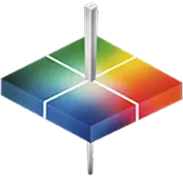
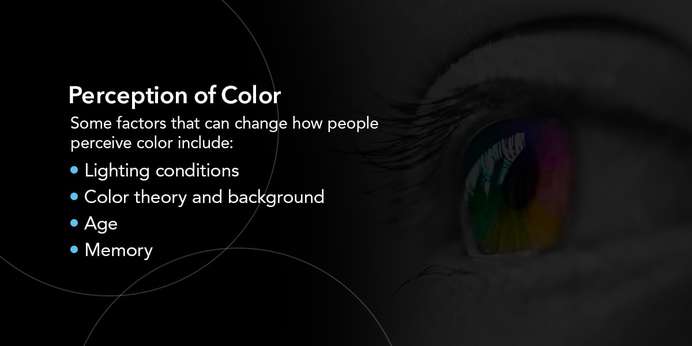
Colour measurement aims to remove human subjectivity and determine colour more accurately and consistently. With so many factors affecting how people perceive colour, colour measurement solutions can provide more concrete answers that eliminate outside influence.

When colour measurement solutions measure colour, they translate findings into numerical values you can compare against indices and codices that other organizations created. This data help teams measure shade more accurately and gain a deeper understanding of the sample they are studying.
05-Why-Do-We-Measure-Color-min.jpg

Why Do We Measure Colour?

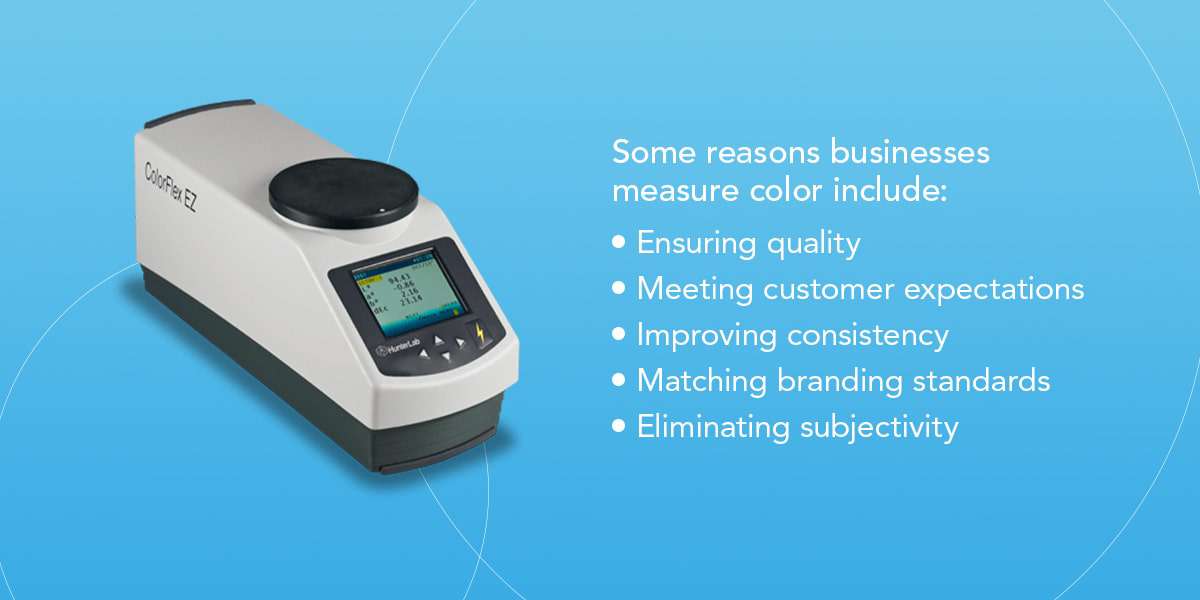
Colour measurement is essential for many industries and operations. Understanding the importance of this process can help your organization see why you need quality colour measurement solutions. Some reasons businesses measure colour include:

  • Ensuring quality: Many industries must follow strict health and quality standards before releasing their products to customers. Irregular colour might indicate something is wrong with the material. You can use colour measurement solutions to identify impurities and inconsistencies before they hit shelves, ensuring your customers only receive the highest quality products.
  • Meeting customer expectations: While your organization has a complete understanding of your products and their properties, customers often only know what products should look like. For example, they know tomatoes should be red when ripe and ready to eat. When customers use colour to judge quality, keeping products consistent can show customers that products are safe to use and consume. Using colour measurement solutions can help ensure your products meet your customers’ standards to build strong relationships and trust in your products.
  • Improving consistency: Colour measurement techniques and solutions can help your organization better understand your products and deliver increased consistency. Colour measurement equipment like spectrophotometers are very reliable and provide consistent results. When you can trust your solutions, any changes in outcomes can help you understand that your sample and its properties have changed. These processes can allow your teams to learn more about your products and how they might react to various elements.
  • Matching branding standards: Many companies have branding standards for their marketing materials, including logos, fonts, and colours. However, your products and their appearance can also improve brand recognition. Customers might associate your products with a specific design and colour, allowing them to identify them against competing brands. For example, many children’s cereal brands use bright colours to attract their audience and your colour choices can help kids identify your cereal against other options.
  • Eliminating subjectivity: People perceive colours differently and individuals might have varying definitions of colours. When working with white material, one person may consider it ivory, while another might think it’s eggshell. Colour measurement provides organizations with numerical data and colour indices to offer more objective results.

Many organizations have to meet outside compliance and quality standards. Your colour measurement equipment can provide the data you need to keep your compliance certifications.
06-What-Is-a-Spectrophotometer-and-How-Does-It-Work-min.jpg

What Is a Spectrophotometer and How Does It Work?

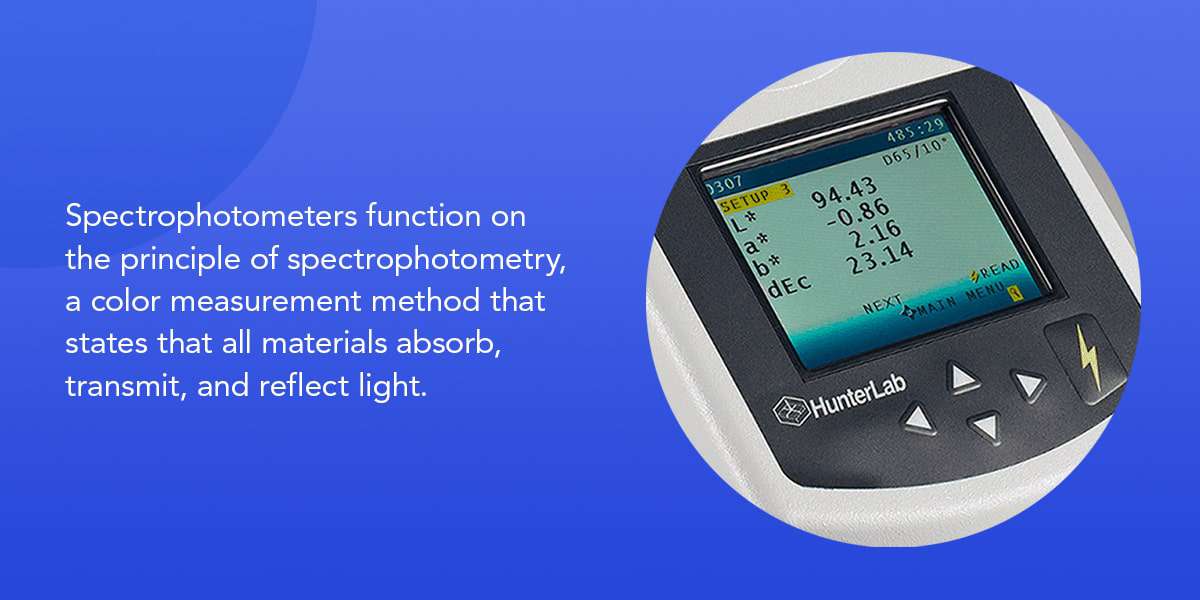
You conduct colour measurements with spectrophotometers, which use light and energy to determine your sample’s colour. The spectrometer is the first component — this part has a lens that passes a light beam through a prism to split it into the visible spectrum wavelengths. Next, the photometer determines how much light the samples absorb and sends that data to the solution’s display. You can use colour measurement units and indices to determine more exact hues.

Spectrophotometers function on the principle of spectrophotometry, a colour measurement method that states that all materials absorb, transmit, and reflect light. Measuring light’s intensity as it interacts with objects can help identify how much they absorb.

Alternatively, spectroscopy is the study of energy and radiated matter interacting. It is the basis for fields like chemistry, physics, and astronomy. When approaching colour measurement by spectrophotometer, understanding each term can help you get results using spectrophotometry.
07-A-Brief-History-of-Color-Measurement-Devices-min.jpg

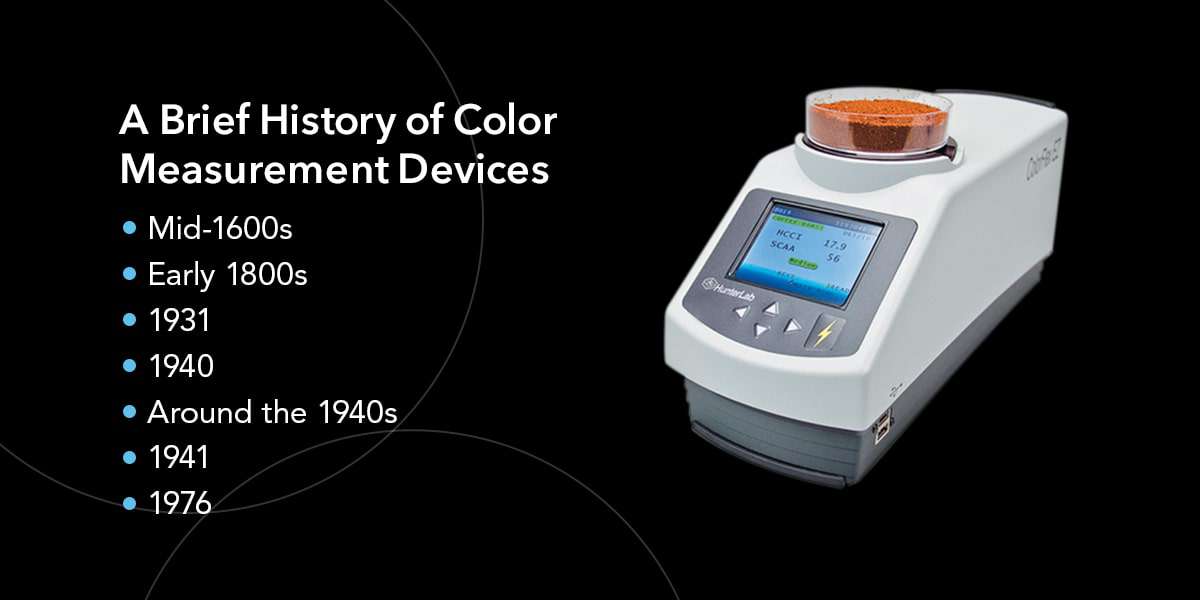
A Brief History of Colour Measurement Devices

Colour measurement and its devices have a rich history that reflects humanity’s comprehension of colour and how to quantify it. Some milestones in colour measurement and quantity include the following:

  • Mid-1600s: Colour measurement and definition started in this period, when Isaac Newton used prisms to show how white light separates into various colours. He shined a light through the prism and watched it produce the spectrum of visible colours.
  • Early 1800s: In an impressive improvement in colour comprehension, Thomas Young proposed a new theory suggesting that the red, green, and blue receptors in our eyes are responsible for the variety of colours we perceive. James Clerk Maxwell helped prove this theory by showing how many colour combinations people could create by mixing the three primary colours.
  • 1931: Organizations started to improve colour measurement quantification by developing colour spaces, which they could use to map and reproduce colours with increased accuracy. The International Commission on Illumination (CIE) created the first one this same year.
  • 1940: Arnold Beckman and colleagues at National Technical Laboratories develop the first spectrophotometer.
  • Around the 1940s: David MacAdam created the first tolerancing diagram. These colour measurement standards helped determine how much variation a colour needed before people noticed a difference.
  • 1941: Richard Hunter created a new colour model using a tristimulus system, which he named HunterLab. It uses three axes to quantify colour, creating more uniformity and consistency between samples and tests.
  • 1976: CIE updated their L*a*b* model, which many colour measurement solutions use today.

Spectrophotometers have undergone incredible changes and advancements since their initial development. The early models could only measure colour from one angle. Now, spectrophotometers can collect data from multiple spots on the sample for increased accuracy and precision. Additionally, companies developing colour measurement solutions, like HunterLab, have created no-contact models, streamlining the measurement process to avoid cleanup. This system can also protect against cross-contamination between samples.

08-6-Industries-That-Use-the-Measurement-of-Color-min.jpg

6 Industries That Use the Measurement of Colour

Colour measurement has many applications and functions across industries. You can implement these solutions into your organization’s operations for excellent results that highlight consistency and reliability.

1. Coffee and Liquid Beverages

When purchasing consumable products, customers use colour to indicate quality. Discoloration and inconsistencies might lead customers to think drinks are unsafe to consume. Additionally, many soft drink producers use specific colours for their various options, requiring consistency to deliver the desired results.

2. Pharmaceuticals

The biopharmaceutical industry needs the highest quality materials and final products because of their function and applications. Spectrophotometers can help labs understand product quality, stability, and degradation by determining the amount of active pharmaceutical ingredients (API) within products. Colour can support ingredient quality, manufacturing processes, and branding standards. You can use these processes to identify contamination and understand product properties.

3. Building Materials

Building materials can impact the perception of the final structure. Colour measurement can help construction and contractor teams create the exact aesthetic and atmosphere they want with their products.

4. Chemical Analysis

Various industries and teams rely on chemicals to carry out daily operations. Colour measurement can help identify contamination and property changes that can influence functionality, helping you ensure you’re providing quality chemicals with the correct properties.

5. Food

Like beverages, food providers and producers can use colour measurement solutions to increase quality. You can use colour measurement at the production stage to identify contamination in ingredients, ensuring your products use only the best quality materials. Colour measurement can also provide more accurate results at the quality assurance testing stages. Colour measurement solutions work on all foods, from snacks and fresh produce to oils, sugars, and grains.

6. Paint and Coatings

Paint and coatings can support aesthetics and branding standards. Clients will rely on colour precision to achieve the architectural or industrial finishes they want for their products and facilities. Colour measurement solutions can ensure your paint and coating products have the necessary properties to deliver the desired results.
09-8-Color-Measurement-Solutions-From-HunterLab-min.jpg

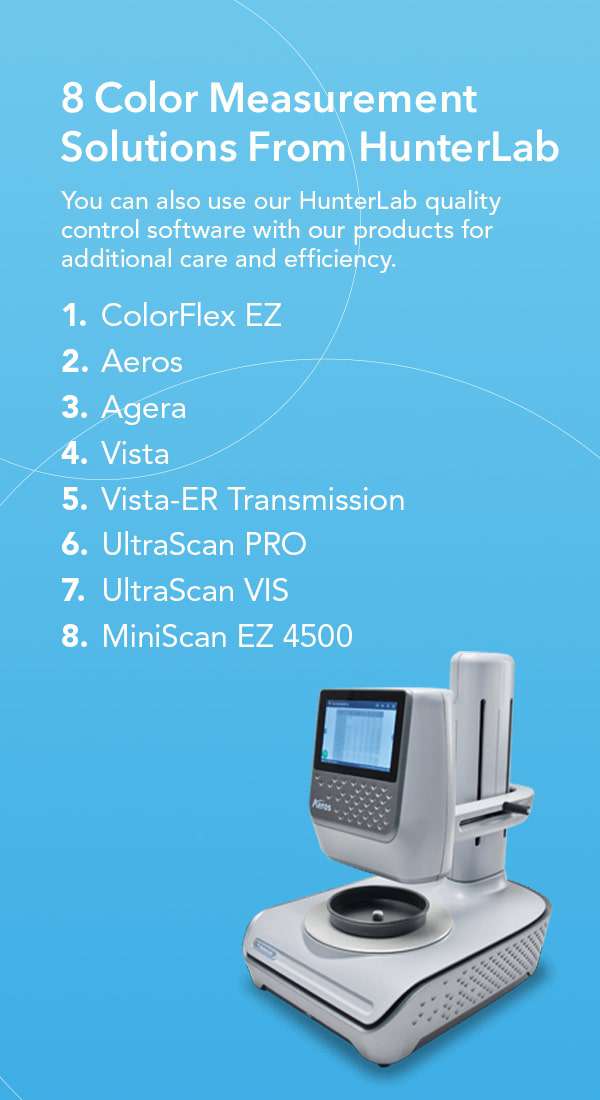
8 Colour Measurement Solutions From HunterLab

As an industry leader in colour measurement technology and advancement, HunterLab offers several compact and easy-to-use colour measurement solutions you can implement into your labs. Our solutions include various features and software compatibilities so that you can get the most from your colour measurement tools. You can also use our HunterLab quality control software with our products for additional care and efficiency.

1. ColorFlex L2

The ColorFlex L2 uses a 45°/0° geometry, measuring colour how the eye sees it for increased accuracy and consistency. It works with all samples, from solids and liquids to powders, grains, and pellets. This colour measurement instrument also comes in other models with abilities tailored to measure specific food, including:

  • Coffee: The ColorFlex EZ Coffee increases consistency when measuring coffee grounds and beans for better results and reliable data. It offers additional applications by interacting with coffee in several forms, including coffee grounds or instant coffee powder.
  • Citrus: The ColorFlex EZ Citrus is excellent for measuring the colour levels in juices and concentrates from oranges, lemons, and grapefruits. It gives companies essential metrics, including the Citrus Number and redness and yellowness levels.
  • Tomato: Tomatoes come in various forms and producers must rely on their colour measurement equipment to make consistent and reliable tomato goods. The ColorFlex EZ Tomato can measure fresh tomatoes, tomato paste, tomato sauce, tomato juice, ketchup, and tomato soup.

The ColorFlex L2 stores up to 2000 pass/fail tolerances for efficient colour and sample analysis and allows you to establish 250 sample setups for easy preparation. It can also connect to printers and PCs to share and transport your data and findings.

2. Aeros

You can improve reliability and consistency with the Aeros Spectrophotometer when working with non-uniform or highly textured samples. This colour measurement tool uses auto-height positioning and a rotating platform to provide complete and accurate colour measurement results for various sample types.

The Aeros is about efficiency and simplicity for stronger lab operations at your facilities. It measures 27.5 square inches in five seconds, and you can operate the Aeros by pushing one button, reducing training time. The auto-height option eliminates lengthy setup and cleanup processes. It is compatible with USB and Ethernet connections for increased data sharing and analysis.

3. Agera

The Agera Spectrophotometer offers comprehensive metrics and measurements to collect colour, fluorescence, gloss, and image data in one process. After measuring colour, it will store images for simultaneous results and saved data. You can choose from various plat sizes to measure samples for increased applications.

The Agera simplifies colour measurement processes. The touch screen makes it easy for operators to navigate controls and read results. You can connect this solution to USB ports and Ethernet for increased data-sharing capabilities.

4. Vista

The Vista Spectrophotometer measures colour and haze metrics accurately and reliably when measuring transparent liquids and solids. We designed this colour measurement instrument to handle liquid samples — you can streamline the cleanup process with the spill-resistant sample compartment. The Vista will automatically calibrate itself for increased setup efficiency.

With the Vista prioritizing efficiency, you can add your standards and benchmarks to understand how you meet your quality assurance standards. It offers increased connectivity features, allowing you to print, email, and stream your results.

5. Vista-ER Transmission

The Vista-ER Transmission Spectrophotometer comes with embedded Essentials-ER software. When you need to measure transmission and meet FDA compliance, you can have everything you need in one place without buying extra solutions. It also comes with a PDF version of the Validation and Compliance Notebook to help you understand the various protocols, systems, and tools.

Like the Vista Spectrophotometer, this model will collect colour and haze measurements simultaneously for increased efficiency and simplicity. It also has an accessible modern touchscreen for easy navigation and operations. You can share data from this device via USB and Ethernet ports.

6. UltraScan PRO

The UltraScan PRO helps your teams measure colour through reflection and transmission with incredible precision and reliability. It expands its colour measurement abilities into the infrared and ultraviolet wavelength ranges to collect data about whitening agents. You can measure spectral reflectance, transmission haze, and spectral transmittance.

This colour measurement instrument uses automated lens changes to collect information easily and efficiently. It has automated UV calibration for increased control when measuring colour. Because this solution’s compartment opens on three sides, you can measure larger samples for excellent transmission results.

7. UltraScan VIS

The UltraScan VIS Spectrophotometer lets you receive precise results when working with dark or highly saturated samples. This colour measurement instrument measures transmission, haze, and reflected colour of transparent, translucent, and opaque samples.

When you want to prioritize reliability and consistency, the UltraScan VIS offers incredible accuracy with its measurement. You can ensure any variability with sample results is from sample properties changing rather than equipment error. The UltraScan VIS can help colour measurement labs better understand their products and samples.

8. MiniScan EZ 4500

While HunterLab designs compact colour measurement solutions that can easily fit into your benchtop spaces, many applications might require portable solutions. The MiniScan EZ 4500 Portable Spectrophotometer has an ergonomic design that makes it easy to hold and operate in one hand. You can find navigation buttons on the handle with your thumb. The display is large and easy to read, so you can understand results wherever work takes you.

The MiniScan EZ 4500 uses a 45°/0° geometry to measure colour. It includes several common indices and scales, 100 standards, and 800 sample measurements. Operators will receive several types of information when completing measurements, including:

  • Colour data.
  • Colour plot.
  • Colour difference data.
  • Spectral data and difference.
  • Spectral plot and difference.
Read  Temperature Effects on Colour Measurement: Maintaining Accuracy in Extreme Conditions

What Is Colour Measurement?

Colour measurement aims to remove human subjectivity and determine colour more accurately and consistently. With so many factors affecting how people perceive colour, colour measurement solutions can provide more concrete answers that eliminate outside influence.

When colour measurement solutions measure colour, they translate findings into numerical values you can compare against indices and codices that other organizations created. This data help teams measure shade more accurately and gain a deeper understanding of the sample they are studying.

05-Why-Do-We-Measure-Color-min.jpg

Why Do We Measure Colour?

Colour measurement is essential for many industries and operations. Understanding the importance of this process can help your organization see why you need quality colour measurement solutions. Some reasons businesses measure colour include:

  • Ensuring quality: Many industries must follow strict health and quality standards before releasing their products to customers. Irregular colour might indicate something is wrong with the material. You can use colour measurement solutions to identify impurities and inconsistencies before they hit shelves, ensuring your customers only receive the highest quality products.
  • Meeting customer expectations: While your organization has a complete understanding of your products and their properties, customers often only know what products should look like. For example, they know tomatoes should be red when ripe and ready to eat. When customers use colour to judge quality, keeping products consistent can show customers that products are safe to use and consume. Using colour measurement solutions can help ensure your products meet your customers’ standards to build strong relationships and trust in your products.
  • Improving consistency: Colour measurement techniques and solutions can help your organization better understand your products and deliver increased consistency. Colour measurement equipment like spectrophotometers are very reliable and provide consistent results. When you can trust your solutions, any changes in outcomes can help you understand that your sample and its properties have changed. These processes can allow your teams to learn more about your products and how they might react to various elements.
  • Matching branding standards: Many companies have branding standards for their marketing materials, including logos, fonts, and colours. However, your products and their appearance can also improve brand recognition. Customers might associate your products with a specific design and colour, allowing them to identify them against competing brands. For example, many children’s cereal brands use bright colours to attract their audience and your colour choices can help kids identify your cereal against other options.
  • Eliminating subjectivity: People perceive colours differently and individuals might have varying definitions of colours. When working with white material, one person may consider it ivory, while another might think it’s eggshell. Colour measurement provides organizations with numerical data and colour indices to offer more objective results.

Many organizations have to meet outside compliance and quality standards. Your colour measurement equipment can provide the data you need to keep your compliance certifications.

06-What-Is-a-Spectrophotometer-and-How-Does-It-Work-min.jpg

What Is a Spectrophotometer and How Does It Work?

You conduct colour measurements with spectrophotometers, which use light and energy to determine your sample’s colour. The spectrometer is the first component — this part has a lens that passes a light beam through a prism to split it into the visible spectrum wavelengths. Next, the photometer determines how much light the samples absorb and sends that data to the solution’s display. You can use colour measurement units and indices to determine more exact hues.

Spectrophotometers function on the principle of spectrophotometry, a colour measurement method that states that all materials absorb, transmit, and reflect light. Measuring light’s intensity as it interacts with objects can help identify how much they absorb.

Alternatively, spectroscopy is the study of energy and radiated matter interacting. It is the basis for fields like chemistry, physics, and astronomy. When approaching colour measurement by spectrophotometer, understanding each term can help you get results using spectrophotometry.

07-A-Brief-History-of-Color-Measurement-Devices-min.jpg

A Brief History of Colour Measurement Devices

Colour measurement and its devices have a rich history that reflects humanity’s comprehension of colour and how to quantify it. Some milestones in colour measurement and quantity include the following:

  • Mid-1600s: Colour measurement and definition started in this period, when Isaac Newton used prisms to show how white light separates into various colours. He shined a light through the prism and watched it produce the spectrum of visible colours.
  • Early 1800s: In an impressive improvement in colour comprehension, Thomas Young proposed a new theory suggesting that the red, green, and blue receptors in our eyes are responsible for the variety of colours we perceive. James Clerk Maxwell helped prove this theory by showing how many colour combinations people could create by mixing the three primary colours.
  • 1931: Organizations started to improve colour measurement quantification by developing colour spaces, which they could use to map and reproduce colours with increased accuracy. The International Commission on Illumination (CIE) created the first one this same year.
  • 1940: Arnold Beckman and colleagues at National Technical Laboratories develop the first spectrophotometer.
  • Around the 1940s: David MacAdam created the first tolerancing diagram. These colour measurement standards helped determine how much variation a colour needed before people noticed a difference.
  • 1941: Richard Hunter created a new colour model using a tristimulus system, which he named HunterLab. It uses three axes to quantify colour, creating more uniformity and consistency between samples and tests.
  • 1976: CIE updated their L*a*b* model, which many colour measurement solutions use today.

Spectrophotometers have undergone incredible changes and advancements since their initial development. The early models could only measure colour from one angle. Now, spectrophotometers can collect data from multiple spots on the sample for increased accuracy and precision. Additionally, companies developing colour measurement solutions, like HunterLab, have created no-contact models, streamlining the measurement process to avoid cleanup. This system can also protect against cross-contamination between samples.

08-6-Industries-That-Use-the-Measurement-of-Color-min.jpg

6 Industries That Use the Measurement of Colour

Colour measurement has many applications and functions across industries. You can implement these solutions into your organization’s operations for excellent results that highlight consistency and reliability.

1. Coffee and Liquid Beverages

When purchasing consumable products, customers use colour to indicate quality. Discoloration and inconsistencies might lead customers to think drinks are unsafe to consume. Additionally, many soft drink producers use specific colours for their various options, requiring consistency to deliver the desired results.

2. Pharmaceuticals

The biopharmaceutical industry needs the highest quality materials and final products because of their function and applications. Spectrophotometers can help labs understand product quality, stability, and degradation by determining the amount of active pharmaceutical ingredients (API) within products. Colour can support ingredient quality, manufacturing processes, and branding standards. You can use these processes to identify contamination and understand product properties.

3. Building Materials

Building materials can impact the perception of the final structure. Colour measurement can help construction and contractor teams create the exact aesthetic and atmosphere they want with their products.

4. Chemical Analysis

Various industries and teams rely on chemicals to carry out daily operations. Colour measurement can help identify contamination and property changes that can influence functionality, helping you ensure you’re providing quality chemicals with the correct properties.

5. Food

Like beverages, food providers and producers can use colour measurement solutions to increase quality. You can use colour measurement at the production stage to identify contamination in ingredients, ensuring your products use only the best quality materials. Colour measurement can also provide more accurate results at the quality assurance testing stages. Colour measurement solutions work on all foods, from snacks and fresh produce to oils, sugars, and grains.

6. Paint and Coatings

Paint and coatings can support aesthetics and branding standards. Clients will rely on colour precision to achieve the architectural or industrial finishes they want for their products and facilities. Colour measurement solutions can ensure your paint and coating products have the necessary properties to deliver the desired results.

09-8-Color-Measurement-Solutions-From-HunterLab-min.jpg

8 Colour Measurement Solutions From HunterLab

As an industry leader in colour measurement technology and advancement, HunterLab offers several compact and easy-to-use colour measurement solutions you can implement into your labs. Our solutions include various features and software compatibilities so that you can get the most from your colour measurement tools. You can also use our HunterLab quality control software with our products for additional care and efficiency.

1. ColorFlex L2

The ColorFlex L2 uses a 45°/0° geometry, measuring colour how the eye sees it for increased accuracy and consistency. It works with all samples, from solids and liquids to powders, grains, and pellets. This colour measurement instrument also comes in other models with abilities tailored to measure specific food, including:

  • Coffee: The ColorFlex EZ Coffee increases consistency when measuring coffee grounds and beans for better results and reliable data. It offers additional applications by interacting with coffee in several forms, including coffee grounds or instant coffee powder.
  • Citrus: The ColorFlex EZ Citrus is excellent for measuring the colour levels in juices and concentrates from oranges, lemons, and grapefruits. It gives companies essential metrics, including the Citrus Number and redness and yellowness levels.
  • Tomato: Tomatoes come in various forms and producers must rely on their colour measurement equipment to make consistent and reliable tomato goods. The ColorFlex EZ Tomato can measure fresh tomatoes, tomato paste, tomato sauce, tomato juice, ketchup, and tomato soup.

The ColorFlex L2 stores up to 2000 pass/fail tolerances for efficient colour and sample analysis and allows you to establish 250 sample setups for easy preparation. It can also connect to printers and PCs to share and transport your data and findings.

2. Aeros

You can improve reliability and consistency with the Aeros Spectrophotometer when working with non-uniform or highly textured samples. This colour measurement tool uses auto-height positioning and a rotating platform to provide complete and accurate colour measurement results for various sample types.

The Aeros is about efficiency and simplicity for stronger lab operations at your facilities. It measures 27.5 square inches in five seconds, and you can operate the Aeros by pushing one button, reducing training time. The auto-height option eliminates lengthy setup and cleanup processes. It is compatible with USB and Ethernet connections for increased data sharing and analysis.

3. Agera

The Agera Spectrophotometer offers comprehensive metrics and measurements to collect colour, fluorescence, gloss, and image data in one process. After measuring colour, it will store images for simultaneous results and saved data. You can choose from various plat sizes to measure samples for increased applications.

The Agera simplifies colour measurement processes. The touch screen makes it easy for operators to navigate controls and read results. You can connect this solution to USB ports and Ethernet for increased data-sharing capabilities.

4. Vista

The Vista Spectrophotometer measures colour and haze metrics accurately and reliably when measuring transparent liquids and solids. We designed this colour measurement instrument to handle liquid samples — you can streamline the cleanup process with the spill-resistant sample compartment. The Vista will automatically calibrate itself for increased setup efficiency.

With the Vista prioritizing efficiency, you can add your standards and benchmarks to understand how you meet your quality assurance standards. It offers increased connectivity features, allowing you to print, email, and stream your results.

5. Vista-ER Transmission

The Vista-ER Transmission Spectrophotometer comes with embedded Essentials-ER software. When you need to measure transmission and meet FDA compliance, you can have everything you need in one place without buying extra solutions. It also comes with a PDF version of the Validation and Compliance Notebook to help you understand the various protocols, systems, and tools.

Like the Vista Spectrophotometer, this model will collect colour and haze measurements simultaneously for increased efficiency and simplicity. It also has an accessible modern touchscreen for easy navigation and operations. You can share data from this device via USB and Ethernet ports.

6. UltraScan PRO

The UltraScan PRO helps your teams measure colour through reflection and transmission with incredible precision and reliability. It expands its colour measurement abilities into the infrared and ultraviolet wavelength ranges to collect data about whitening agents. You can measure spectral reflectance, transmission haze, and spectral transmittance.

This colour measurement instrument uses automated lens changes to collect information easily and efficiently. It has automated UV calibration for increased control when measuring colour. Because this solution’s compartment opens on three sides, you can measure larger samples for excellent transmission results.

7. UltraScan VIS

The UltraScan VIS Spectrophotometer lets you receive precise results when working with dark or highly saturated samples. This colour measurement instrument measures transmission, haze, and reflected colour of transparent, translucent, and opaque samples.

When you want to prioritize reliability and consistency, the UltraScan VIS offers incredible accuracy with its measurement. You can ensure any variability with sample results is from sample properties changing rather than equipment error. The UltraScan VIS can help colour measurement labs better understand their products and samples.

8. MiniScan EZ 4500

While HunterLab designs compact colour measurement solutions that can easily fit into your benchtop spaces, many applications might require portable solutions. The MiniScan EZ 4500 Portable Spectrophotometer has an ergonomic design that makes it easy to hold and operate in one hand. You can find navigation buttons on the handle with your thumb. The display is large and easy to read, so you can understand results wherever work takes you.

The MiniScan EZ 4500 uses a 45°/0° geometry to measure colour. It includes several common indices and scales, 100 standards, and 800 sample measurements. Operators will receive several types of information when completing measurements, including:

  • Colour data.
  • Colour plot.
  • Colour difference data.
  • Spectral data and difference.
  • Spectral plot and difference.
INFO  Get More Information

Invest in Colour Measurement Solutions From HunterLab

HunterLab is an industry leader in colour measurement and management. With over 70 years of experience, you can trust us to provide the precision and reliability you need to receive quality results.

Request a quote today to get started with HunterLab.