Beverages

Beverage Color Measurement Solutions From HunterLab

Is color drift in your beverages risking brand identity, grade compliance, and consumer trust? In beer, sodas, juices, coffee, tea, spirits, and bottled water, even subtle shifts in color or NTU can signal oxidation, contamination, ingredient variability, or process drift — and trigger downgrades, rejections, and customer complaints.

Contact Us
Color isn't just visual — it's an indicator of freshness, formulation accuracy, ingredient quality, and process control. When you measure the color of beverages, you need objective and precise results. At HunterLab, we have beverage color measurement tools that are ideal for many different types of liquid beverages and ingredients.

Why Beverage Producers Treat Color as a Critical Quality Attribute

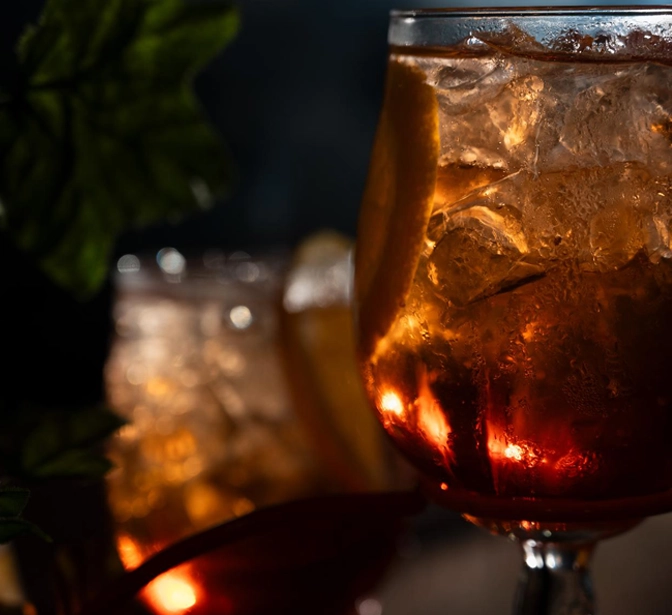
  • Brand identity and consumer trust: Consumers judge beverages by appearance before they ever taste them. Color is often the most important sensory cue setting expectations about flavor and freshness, and an unappealing color can deter purchase even when the product is perfectly safe.
  • Quality and process indicator: Color changes often signal underlying issues — unexpected browning or turbidity can indicate oxidation, contamination, spoilage, over-extraction, or excessive heat exposure.
  • Compositional indicator: Color correlates with key attributes such as ripeness, roast level, lycopene or carotenoid content, polyphenol levels, malt selection, and concentration — letting QA teams infer composition without destructive lab tests.
  • Audit-ready compliance: Align to international standards including ASBC/SRM and EBC for beer, ICUMSA for sugars and syrups, USDA grading for citrus and tomato beverages, APHA/Pt-Co (ASTM D1209) for water and clear liquids.

What's Holding You Back?

If you're still relying on visual inspection, color comparators or glass tubes, you're accepting risks the modern beverage industry can no longer absorb:

  • Subjectivity and operator drift: Human perception varies with lighting, fatigue, color vision, and expectation. Two inspectors can grade the same sample differently — and the same inspector can drift across a shift.
  • Coarse, inflexible standards: Visual comparators offer only discrete reference points and degrade over time, so subtle but meaningful color shifts go undetected until customers notice them.
  • No traceable data: Pass/fail notes don't support SPC, root-cause analysis, audits, or supplier disputes. There is no spectral record, no ΔE* trend, no audit trail.
  • Color and haze confusion: The human eye cannot reliably separate true color from cloudiness, leading to inconsistent grading of pulpy juices, unfiltered beers, and translucent products.

You deserve better.

HunterLab: Your #1 Color Measurement Solution for the Beverage Industry

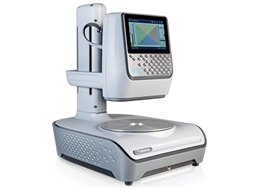
HunterLab spectrophotometers convert spectral data into standardized color values (CIE L*, a*, b* and industry-specific indices), giving beverage QA and R&D teams objective, repeatable, fully traceable data across every product type — clear liquids, cloudy juices, opaque drinks, and dry ingredients.

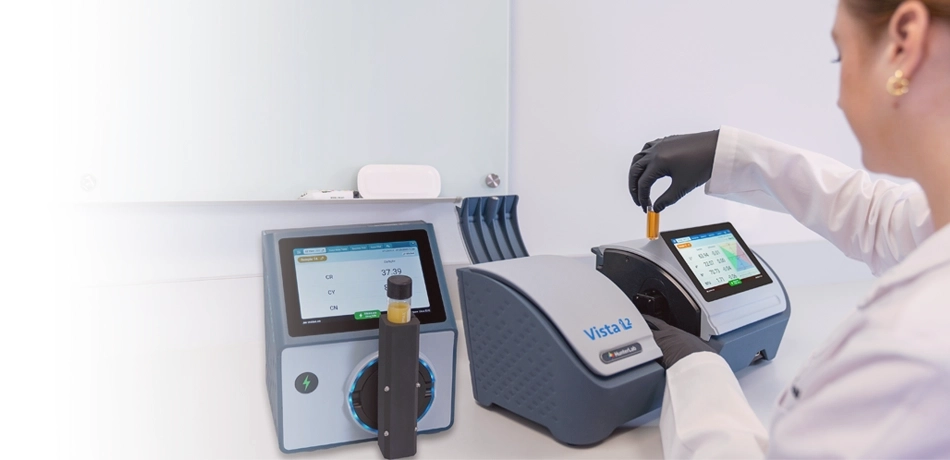
Beverages span a wide range of optical properties . Whether a beverage is transparent, translucent, or opaque depends on how suspended particles scatter light. Opaque liquids block light, while clear liquids let light pass through. This is why beverage producers must assess the right measurement mode — reflectance or transmittance — before measuring color at any stage of processing, and why a single instrument rarely fits every product. HunterLab covers the full beverage portfolio with purpose-built instruments for each sample type.

HunterLab Spectrophotometers for Beverage Color & NTU QA

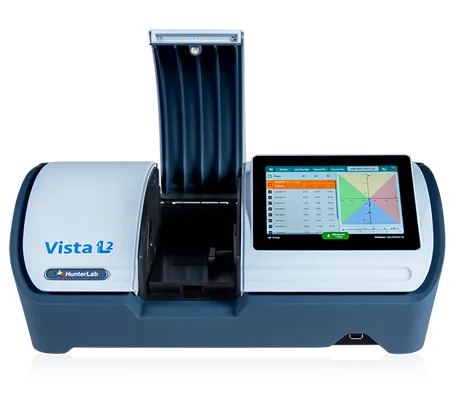
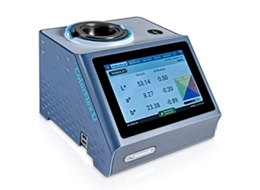
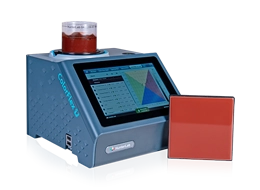
Features HunterLab Vista L2 HunterLab ColorFlex L2 HunterLab Aeros 
Geometry / Light d/0° diffuse transmission with integrating sphere; stable LED source 45°/0° annular reflectance; xenon flash lamp covering full visible range Non-contact directional reflectance with auto-height; visible spectrum
Sample Type Transparent and translucent liquids — beer, soft drinks, spirits, clear juices, Ready to Drink (RTD) tea/coffee, bottled water Opaque and semi-translucent liquids and solids — tomato juice, citrus juice with pulp, smoothies, dairy and protein drinks, ground coffee, drink powders, herbs, and spices Whole and irregular solids — green and roasted coffee beans, tea leaves, spices, and dry beverage ingredients
Color + NTU Full visible range color AND %Haze / NTU measured simultaneously in one reading (ASTM D7315) Full visible range reflectance color Full visible range reflectance color across a large rotating sample area for heterogeneous solids
Built-in Beverage Color Scales and Indices CIE L*a*b*, Hunter Lab , NTU, %Haze, ICUMSA, ASBC/SRM, EBC, APHA/Pt-Co (Hazen), Gardner, Yellowness Index CIE L*a*b*, Hunter Lab , USDA Tomato Scores (TPS/TJS), USDA Orange Juice Scores (Citrus Redness/Yellowness), HunterLab Coffee Color Index (HCCI), SCAA, YI, WI; customizable CIE L*a*b*, Hunter Lab, HCCI, SCAA
Software / Interface Integrated touchscreen with Essentials L2 software; one-touch standardization; pass/fail tolerancing; USB/HDMI/Ethernet; direct export to LIMS/SPC Integrated touchscreen with Essentials L2 software; pass/fail tolerancing; USB/HDMI/Ethernet; direct export to LIMS/SPC Touchscreen interface, non-contact measurements; pass/fail tolerancing; USB/ Ethernet; direct export to LIMS/SPC
Unique Benefits Color and NTU in a single measurement; small sample volume; spill-resistant compartment, flow-through and vial options for at-line use; stand-alone (no PC) Sealed, spill-resistant compartment with sample cup system; rugged for plant floor; stand-alone (no PC) Non-contact and hygienic; large rotating sample area averages 35 readings in ~5 seconds; auto-height eliminates positioning error, stand-alone (no PC)
Typical Beverage Use Cases Beer SRM/EBC +NTU; bottled water APHA + NTU; whiskey, vodka, gin transmission color; clear juices and concentrates Tomato juice grading; orange/grapefruit juice color score; smoothies; chocolate milk and protein drinks; ground coffee/ brewed coffee roast color; powdered drink mixes Whole green and roasted coffee beans; tea leaf grading; herbal botanicals; malted grains; dry ingredients that drive finished-beverage color

How HunterLab Stands Above the Rest

What Matters Most HunterLab Solutions Other Color Measurement Brands
User Experience Intuitive touchscreen, guided beverage workflows, pre-loaded color scales and indices for beer, juice, coffee, syrup Complex, dated interfaces requiring chemistry-lab expertise
Data Integrity Full spectral data with standardized color values; ΔE*-level precision; complete digital audit trail Limited spectral data, narrow-band measurements, or unverified indices
Color + NTU in One Vista L2 measures color and NTU simultaneously — replaces a colorimeter plus a separate turbidity meter Typically requires two separate instruments and two sample preparations
Sample Coverage Vista L2 + ColorFlex L2 + Aeros cover transparent, translucent, opaque liquids AND whole/non-homogenous solids — one vendor, one data ecosystem Niche instruments that cover only one optical state, forcing multi-vendor sourcing
Speed Results in seconds; batch averaging; automatic ΔE* trending; Aeros captures 35 readings in ~5 seconds Slower visual or comparator-based routines with manual logging
Built-in Beverage Indices NTU, ASBC/SRM, EBC, APHA/Pt-Co, ICUMSA, USDA Tomato Score, USDA Orange Juice Score, HCCI, %Haze Often partial scale support; manual conversions required
Compliance Aligned to ASBC, EBC, ICUMSA, USDA, APHA (ASTM D1209), ASTM D7315 NTU, and CIE geometries Inconsistent with international beverage methods
Inter-Instrument Agreement Tight inter-instrument agreement across global plants — a Grade A reading in one facility matches another Wide variability between units; difficult to standardize across multiple facilities

How does color correlate with beverage quality?

Color is one of the most reliable indicators of beverage quality. Slight browning often signals oxidation or excessive heat. Pale citrus juice can indicate low carotenoid content or unripe fruit. A drift in beer SRM may reflect malt-lot variability or a longer-than-target boil. Spectrophotometers quantify these shifts in CIE L*, a*, b* (and ΔE*) long before they are visible to the eye, allowing producers to act before product is downgraded or rejected.

Which HunterLab instrument should I choose for my beverage?

Use Vista L2 for transparent and translucent liquids — beer, sodas, clear juices, spirits, RTD tea and coffee, bottled water — when you need color and NTU in a single, traceable measurement. Use ColorFlex L2 for opaque and semi-translucent products such as tomato juice, citrus juice with pulp, smoothies, dairy beverages, protein drinks, ground coffee, and powdered drink mixes, where 45°/0° reflectance matches how the human eye perceives the product. Use Aeros for whole and irregular solid ingredients — green and roasted coffee beans, tea leaves, spices, and other raw materials — where non-contact, large-area, multi-point averaging eliminates sampling error.

Can I replace visual comparators and color tubes?

Yes. Instrumental measurement removes operator subjectivity, standardizes illumination, and improves sensitivity to ΔE*-level differences that visual comparators (Lovibond discs, USDA glass tubes, color cards) cannot resolve. It also generates a permanent numeric and spectral record for every batch — supporting SPC, audits, customer disputes, and continuous improvement programs.

Does HunterLab support beer SRM/EBC, USDA juice grading, ICUMSA, and roast color standards?

Yes. Vista L2 and ColorFlex L2 ship with the relevant beverage color scales pre-loaded so technicians get the official metric directly, with no manual calculation:

  • Vista L2: ASBC/SRM and EBC for beer, ICUMSA for sugar syrups and sweeteners, APHA/Pt-Co for water and clear spirits, and Gardner for syrups.
  • ColorFlex L2 Tomato: USDA Tomato scores— Tomato Paste Score (TPS), Tomato Juice Score (TJS), and Tomato a/b ratio — with the certified HunterLab Reference Standard - Certified Tomato for direct USDA Grade A/B evaluation of tomato juice, paste, and tomato-based mixers.
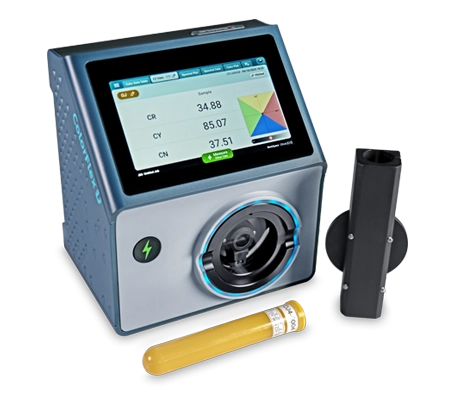
  • ColorFlex L2 Citrus: USDA Orange Juice Color Score — Citrus Redness (CR) / Citrus Yellowness (CY) indices, with an orange juice tube holder for measuring pulp-containing juice in reflectance — directly verifying USDA Grade A citrus juice color.
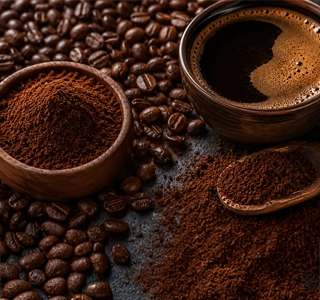
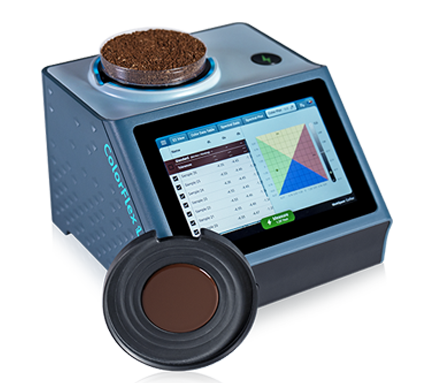
  • ColorFlex L2 Coffee: HunterLab Coffee Color Index (HCCI) and Specialty Coffee Association (SCAA) roast classifications for ground coffee and instant coffee powder, giving roasters an objective number for roast level instead of visual comparison to roast tiles.

Do HunterLab beverage instruments connect to LIMS and SPC systems?

Yes. Vista L2, ColorFlex L2, and Aeros all export spectral data and computed indices over USB and Ethernet, and integrate with plant LIMS or SPC platforms for automated trending, batch comparison, and digital color traceability.

How should beverage color results be reported for audits?

Always include geometry, scale or index, and illuminant/observer. For example: "EBC color, D65/10°, Vista L2 (d/0° diffuse transmission), 10 mm cell" or "USDA Orange Juice Score, ColorFlex L2 (45°/0° annular reflectance) with citrus tube holder, D65/10°." Reporting these together makes results comparable across plants and defensible in audits.

Why measure color AND NTU together?

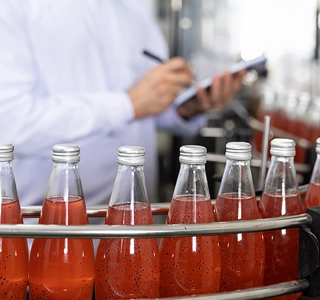
In beer, soft drinks, spirits, and clear RTD beverages, color and turbidity are inseparable quality attributes. A product can hit color spec but still appear cloudy, hazy, or dull — which consumers read as low quality. Vista L2 measures both in one reading following ASTM D7315, replacing two instruments and two sample preparations and ensuring no off-spec product reaches the consumer.

Let's Talk Results

Fewer downgrades. Tighter brand-color consistency. Faster batch release. Cleaner audits. When beverage color and turbidity become objective, repeatable, and globally aligned to ASBC, EBC, ICUMSA, USDA, APHA, and ASTM standards, you reduce risk, cut waste, and ship every bottle, can, and pack with confidence.

➔ Book your demo

Proud to power the world’s leading brands with Color Confidence

  • Unilever logo
  • Princes logo
  • PepsiCo logo
  • Niagara logo
  • Kraft Heinz logo
  • Colcafe logo
  • Coca-Cola logo

Master Your Color Quality with
HunterLab

Schedule a consultation with our experts

Schedule Now