Spectrophotometers measure wavelengths of light emitted from samples to ensure product consistency, desired color output, and other industry-relevant factors. 

What Is Reflectance?

Reflectance can be defined as the ratio of reflected to incident radiation, and it's an essential measurement in several fields. It corresponds to the amount of light that your sample reflects (emits) as compared to a specific reference material. Reflectance color measurement is required samples that are opaque as apposed to translucent or transparent. 

The percentage you get when measuring reflectance is a spectrum of reflection percentage per wavelength or nanometer (nm). For example, if you test a red sample with white light, the expected spectrum should hit the maximum reflectance, usually around 700 nanometers for red visible spectra. 

How to Measure Reflectance

A spectrophotometer attains a measurement of reflectivity by fulfilling the following actions: 

  1. The spectrophotometer transmits all the wavelengths of light while shining a light on the sample. 
  2. It measures the light that the sample reflects back. 
  3. It converts that measurement into a quantified graph showing the dominant wavelengths of the color reflectance. 

The reflectance consists of diffuse reflected light and specular reflected light. 

Diffuse reflected light is the permeating light that scatters in a variety of directions, observed when light beams reflect from microscopically rough surfaces.

Specular reflected light reflects at the same angle as the incident angle of light, creating a mirror image. Essentially, this beam of light when reflecting off of smooth surfaces remains as a beam of light. 

The Purpose of Measuring Reflectance

Reflectance measurement shows which part of the light spectrum a particular object belongs to. Humans have evolved to see a small part of the spectrum, known as visible light. The range of visible light stops at around 700 nanometers, but most of the light spectrum falls outside that continuum. 

Measuring reflectance ensures that an item meets the aesthetic and quality control requirements of various items. It shows the dominant wavelengths that allow you to check that the product meets the desired wavelength range. Here are the typical wavelength ranges of different colors: 

  • Yellow: 570-585 nm
  • Blue: 440-490 nm
  • Indigo: 420-440 nm
  • Red: 620-780 nm
  • Orange: 585-620 nm
  • Green: 490-570 nm
  • Violet: 400-420 nm
Read  Grain Industry Color Standards

How to Choose the Best Spectrophotometer for Your Needs

Finding the best spectrophotometer for measuring color reflectance depends on your unique business needs. Here are four criteria points to consider:

Sample Density, Shape, and Size

Compare your typical sample size, shape, and density with the machine's detector size, grating dispersion, and numerical aperture. Ensure that the spectrophotometer has the capacity to accommodate your products. 

Consider the size of the machine in the context of your business and ensure it fits your space. Also, think about how you'll test the products. If you plan on testing items on shelves or those distributed in different areas, a portable handheld spectrophotometer will be of better use. 

Detection Limits

Determine if the machine's detection limits are suitable for your products. Various models work for different limits of light and wavelengths. 

For example, diffuse/8° spectrophotometers can light up the sample equally from all angles. They measure the reflected light at an 8° angle from the sample surface. Diffuse/8° is best if it is important to compare specular included with specular excluded results, commonly used for color formulation. Directional geometry instruments are best suited for color quality control because they include sample surface attributes like texture and gloss, and provide results that replicate the human response to color.

Wavelength Spectrum

Ensure the machine you choose can measure the wavelength that's within your product's spectroscopic characteristics. For example, if you're looking to measure a product between 190 nm and 1,100 nm, a UV-VIS spectrometer would meet that criteria. 

The wavelength range also defines the applicable grating choice. If you're working with products with wide wavelengths, you'll want a smaller grating.

Speed 

Your speed requirements depend on the urgency within the operational environment. Speed can be crucial in production industries, where higher speed can boost productivity. However, in a research lab, there's more focus on meeting and studying data quality. 

Which Is the Best Spectrophotometer for Measuring Color Reflectance?

The HunterLab benchtop spectrophotometer selection has some of the best solutions for measuring color reflectance. 

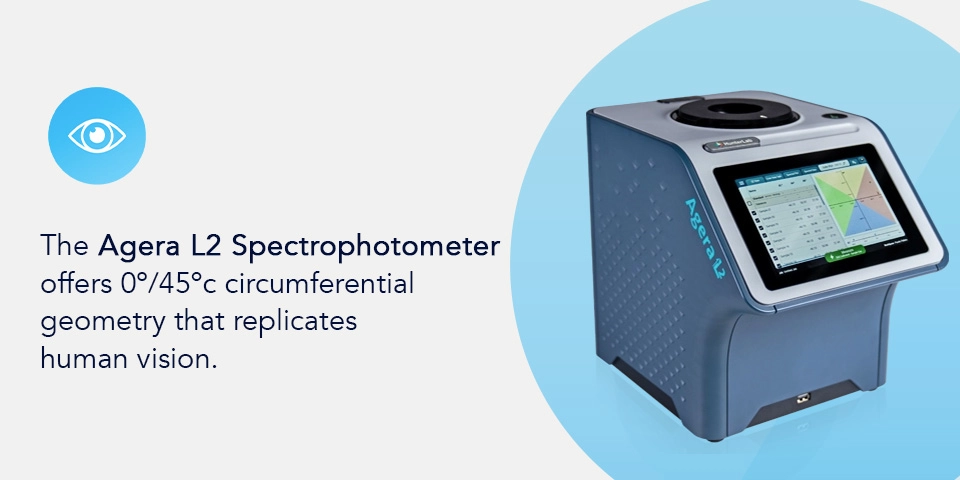
Agera L2 benchtop spectrophotometer for measuring color reflectance

The Agera L2 color spectrophotometer offers superior reflectance color measurement technology. Learn about the features and benefits below:

  • Purpose-Built Strength for Critical Industries
    Reference-grade 0°/45° circumferential instrument for accurate color measurement where tight tolerances and visual agreement are essential.
  • Powerful Color Analysis. Simple Operation.

Essentials L2 software delivers the industry's most advanced and accurate color analysis software through a touch-optimized interface — so your team makes faster, more confident decisions with minimal training.

  • PC Computing Power Built-In
    Fully self-contained workstation with huge computing power and storage for millions of measurements.
  • True D65 Daylight Illumination
    Certified Grade 'A' CIE D65 source provides consistent visual accuracy across labs, lines, and locations.
  • Enhanced Performance for Dark Samples
    6x improvement in accuracy and visual correlation on samples below 20% reflectance.
  • Precision for Fluorescent Materials
    True D65 illumination with controlled UV calibration ensures reliable measurement of retroreflective and optically brightened materials.
  • Extra-Large Area of View
    Largest single measurement area—4x to 16x larger than typical instruments—for textured, patterned, and directional materials.
  • Built-In Sample View Camera + Screen Recording
    Confirms sample alignment, captures images, and records data for traceability and training.
  • Simultaneous Color and 60° Gloss Measurement
    Reports both values in one reading to streamline workflows.
  • Built for Data Integrity and Compliance
    Role-based user management, audit logging, and 21 CFR Part 11 compliance.
  • Rugged Design for Real-World Reliability
    Sealed optical engine protects against dust, lint, powders, and spills.
  • Advanced Data Export and Communication

Ethernet, USB, and HDMI connectivity, easily integrate with LIMS and SPC systems.

INFO  Get More Information

How Are Spectrophotometers Used?

Researchers in many fields measure reflectivity for product development, quality control, and aesthetic purposes. Here are the top industries that use spectrophotometers and when they use them:

Paint and Textile

The paint and textile industry uses spectroscopy to ensure items have consistent color values. Since most of their success depends on how potential customers see their products, a spectrophotometer shows color spaces based on how the human eye sees them. 

The measuring process ensures a consistent color across the board of products. It creates high-quality, vibrant pieces that are naturally attractive to the human eye. 

Plastic 

Using spectrophotometers in the plastic industry ensures that pellets have a uniform color, directly affecting the final product. 

Manufacturers in the plastic industry frequently receive rejections due to color inconsistencies. Spectrophotometers can help them maintain the color value throughout the manufacturing process, reducing wastage and loss. They can also save time and labor costs by creating products with equal aesthetics in the first round without repeating or redoing them. 

Beverages 

The beverage industry uses reflective measurements to ensure that drinks have a consistent color. Customers must be confident about purchasing beverages like beer, wine, juices, soft drinks, and energy drinks if they want consistency. 

Pharmaceuticals

Consistently colored medications inspire confidence in consumers. Colors also play a pivotal role in medicine identification. They help patients and health care workers identify specific pills and pinpoint counterfeit or expired medications. 

There are strict standards in this industry regarding medicine colors and transparency. 

Construction Manufacturing 

Home aesthetics are important to creating the ideal environment for customers in the construction field. Mismatched pieces can make an area look clumsy and old. 

Reflectance spectroscopy confirms the uniformity of pieces and accounts for changes due to things like oxidization. 

Food 

Food industries use spectrophotometry to ensure color consistency among food products. They also use specialized spectrophotometry equipment to test industry specific color indices. For example, producers use a tomato spectrophotometer to test Tomato Paste Score (TPS), Tomato Juice Score (TJS), Tomato Ketchup Score (TKS) and other tomato products for color accuracy and consistency. 

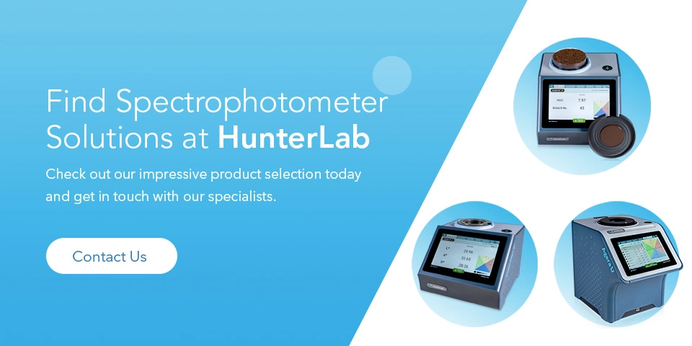
Find Spectrophotometer Solutions at HunterLab

HunterLab specializes in color measurement and testing products and services that ensure your products are the correct color. Some of the industries we serve include textiles, food, and pharmaceuticals. We help clients meet various color standards set by bodies like the United States Food and Drug Administration (FDA) and the American Society for Testing and Materials (ASTM). 

Our HunterLab Aeros spectrophotometer has more capabilities than any other spectrophotometer in the world, and we have a range of other spectrophotometer solutions to suit your business needs. All our products offer speed and convenience and are much more user-friendly than other solutions on the market. 

Check out our impressive product selection today and get in touch with our specialists.