When Portfolio Expansion Outgrows Legacy Color Control

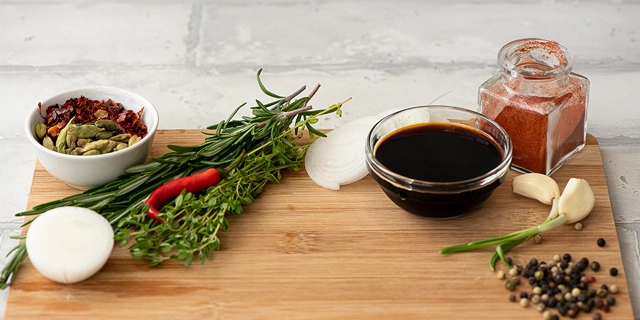
For more than a decade, this established food manufacturer relied on the ColorFlex EZ to maintain powder color consistency across its seasoning portfolio. The instrument delivered reliable reflectance measurements for dry products and supported routine QA workflows.

However, business growth brought complexity.

As the company expanded into clear broths, liquid seasonings, and transparent sauce applications, color quality control requirements evolved. Liquid applications require transmittance measurement, particularly for clear or lightly tinted products where even subtle hue differences influence consumer perception.

The QA team faced increasing challenges:

  • Reflectance-only capability limited measurement coverage
  • Separate workflows for powders and liquids increased complexity
  • Export documentation required broader color scale reporting (APHA, Gardner)

What once worked efficiently for powders was no longer sufficient for a diversified portfolio.

The company needed a full-spectrum color measurement system capable of supporting both reflectance and transmittance in one instrument — without compromising accuracy, compliance, or future scalabilit
Solution: A Unified, Full-Spectrum Approach to Food Color Measurement

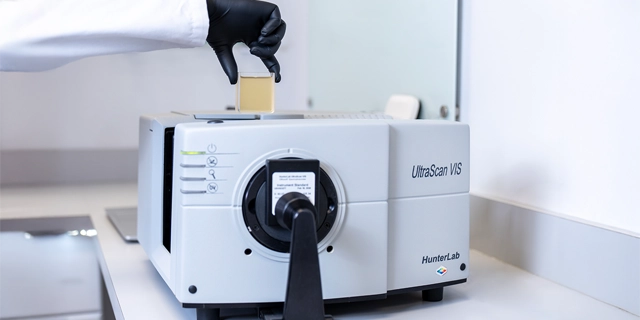
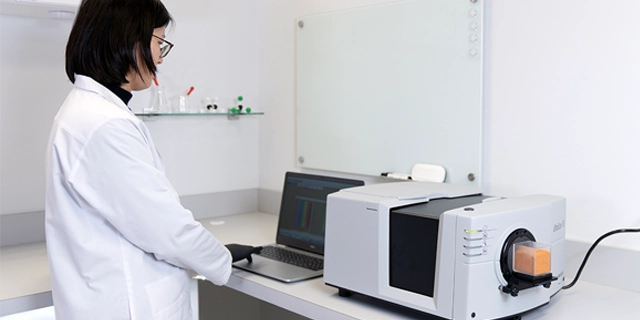
UltraScan VIS measuring seasonings

After evaluation and side-by-side validation, the manufacturer selected the UltraScan VIS from HunterLab.

The decision was based on three core priorities: versatility, precision, and long-term flexibility.

UltraScan VIS consolidates reflectance and transmittance measurement within a single spectrophotometer. This immediately eliminated the need for dual workflows and simplified quality operations across powders, broths, and sauces.

Beyond measurement modes, the instrument (UltraScan VIS) measures the full visible spectrum at 10 nm wavelength intervals, allowing subtle spectral variations to be detected and translated into measurable hue differences.

In seasoning and broth applications, small variations in roast level or formulation can influence color perception. With tighter ΔE control, the QA team gained earlier insight into process shifts — reducing the risk of rework.

The system also supports globally recognized color scales, differences and indices, including:

  • CIELAB
  • dE*
  • Gardner
  • APHA

This ensured that local requirements and export specifications could be met within a single reporting framework.

Managing separate color measurement instrument instruments for powders and liquids

Streamline your color workflow with one full-spectrum spectrophotometer.

Connect with a HunterLab Color Specialist

INFO  Get More Information

Implementation: Structured Upgrade, Minimal Disruption

Transitioning from the legacy system to UltraScan VIS was handled methodically to protect production continuity.

HunterLab conducted a full application audit and performed side-by-side comparison testing. Historical data was evaluated and aligned with the new measurement configuration to ensure reporting continuity while improving precision.

Operator training focused on practical adoption rather than technical complexity. Because the UltraScan VIS unified workflows instead of adding new ones, adoption was smooth and intuitive.

From first engagement to purchase order, the sales cycle was completed in approximately two months. Installation was finalized with minimal operational disruption.

In addition to solving immediate workflow challenges, the large sample compartment and optional accessories provided long-term flexibility. The QA lab is now positioned to support:

  • New liquid product launches
  • R&D formulation trials
  • Expanded export lines
  • Future measurement method development

The upgrade was not just operational — it was strategic.

Results with UltraScan Vis

Results: Greater Precision. Unified Control. Future-Ready Capability.

With UltraScan VIS fully integrated into daily operations, measurable improvements followed.

First, reflectance and transmittance measurements were consolidated into one consistent workflow. This eliminated redundancy and reduced variability between measurement processes.

Second, the higher full visible spectrum range strengthened ΔE tolerance control. Subtle color shifts that previously relied on visual panel interpretation are now captured instrumentally. HunterLab helped the QA team move from reactive correction to proactive control.

Third, export documentation improved significantly. Built-in APHA and Gardner scales enabled standardized reporting for international markets without additional calculations or external systems.

CIE/ASTM/ISO Conformance
Built-in features and color indices dE*, Lab*, Gardner, APHA) satisfy both local and halal requirements and stringent export specs.

Turn-Key Support
Application audit, side-by-side proof testing, method translation, and operator certification ensured a low-downtime switchover.

Future-Ready Flexibility
Large sample compartment and optional accessories (for instance cuvette holder) future-proof the QA lab for R&D launches.

Most importantly, the QA team gained confidence. Data accuracy improved, and color decisions became faster and more defensible.

The instrument now supports both current production needs and future expansion plans — aligning quality infrastructure with business growth.


Why HunterLab

HunterLab has more than 70 years of expertise in color science and serves food manufacturers worldwide.

HunterLab instruments are designed to:

  • Replicate human visual perception with objective spectral data
  • Deliver strong inter-instrument agreement
  • Provide durability for demanding production environments
  • Support international regulatory compliance
  • Scale with evolving product portfolios

For food manufacturers expanding from powders into liquid and complex applications, color measurement must evolve as well.

By upgrading to UltraScan VIS, this leading seasoning manufacturer transformed its quality control from a single-mode legacy workflow into a modern, unified, full-spectrum color system.

HunterLab helped elevate food color measurement from routine inspection to strategic quality assurance.

Talk to our color experts to create a roadmap for your Food Color Quality Control.