About
BLOG

Lust auf eine kleine Lektüre?

Unser Blog wird ständig mit hilfreichen Informationen, Ratschlägen, Forschungsergebnissen und Einblicken aktualisiert – alles mit dem Ziel, Ihnen dabei zu helfen, Ihre Bedürfnisse in Bezug auf Farbe und Aussehen zu verbessern. Holen Sie sich etwas zu trinken und genießen Sie unsere Geschichten!

Explore Our Stories
shutterstock_1397330885.jpg

"Colorimeter vs. Spectrophotometer: What’s the Difference?"

Read More

Explore Our Products

VIEW MORE

shutterstock_1397330885.jpg

"Colorimeter vs. Spectrophotometer: What’s the Difference?"

Read More
13-04-29-msez-450-d8-geometry-ports.webp

"Instrument Geometry – Directional 45°/0° or Diffuse d/8° Sphere?"

Read More
13-04-29-msez-450-d8-geometry-ports.webp

"Instrument Geometry – Directional 45°/0° or Diffuse d/8° Sphere?"

Read More
13-04-29-msez-450-d8-geometry-ports.webp

"Instrument Geometry – Directional 45°/0° or Diffuse d/8° Sphere?"

Read More
13-04-29-msez-450-d8-geometry-ports.webp

"Instrument Geometry – Directional 45°/0° or Diffuse d/8° Sphere?"

Read More
13-04-29-msez-450-d8-geometry-ports.webp

"Instrument Geometry – Directional 45°/0° or Diffuse d/8° Sphere?"

Read More

Colorimeter vs. Spectrophotometer: What’s the Difference?

Posted on Feb 04, 2026 by HunterLab

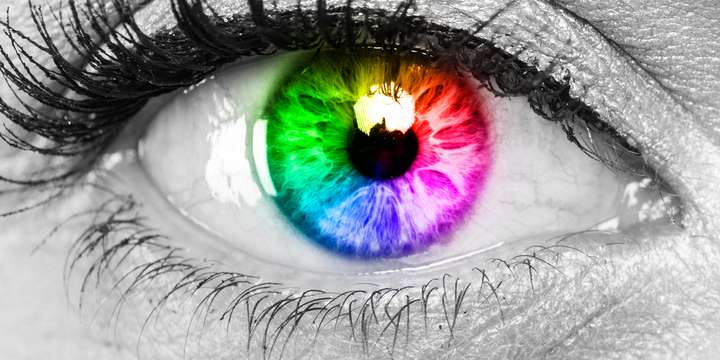
Color surrounds us every moment of our lives and affects our emotions, behaviors and beliefs in large and small, conscious and unconscious ways. Color can set a mood, warn us of danger, give us critical information and even bring us joy. Despite the universal presence of color, describing it remains elusive, in part due to variations in color perception from person to person and in part due to a lack of descriptors for each of the millions of shades seen by the human eye.

Instrumental color measurement moves beyond the limits of human perception and vocabulary and allows us to capture color information as objective data, creating a common language of color that is essential for communication within and between industries around the world, ranging from food and beverage to pharmaceuticals. The two most advanced color measurement instrument types are colorimeters and spectrophotometers, both of which use sophisticated technologies to accurately and precisely quantify and define color.

While closely related, these instruments have unique qualities that may make one more suitable than the other for a particular type of measurement. Understanding the characteristics of a colorimeter vs. spectrophotometer can help you select the best tool for your application.

What Is a Colorimeter?

A colorimeter is designed to perform a type of psychophysical sample color analysis, which means its measurements correlate to human color perception. In other words, it is designed to see color the way we do.

Its results are direct and read as tristimulus values. A tristimulus value is one that identifies a color with characters that represent different dimensions of its visual appearance. A tristimulus value may contain values like X, Y and Z or L, a and b. The “gold standard” for tristimulus colors is the CIE Color System, developed by the International Commission on Illumination — the CIE in the title stands for the French version of their name.

There are a few unique components involved in a colorimeter.

  • Illuminant: The illuminant represents a specific light source, such as daylight or incandescent light, to project consistent brightness onto the object. In a colorimeter, an illuminant is fixed.
  • Observer: The standard observer offers a specific field of view with which to analyze the colors. A colorimeter usually uses a 2-Degree Standard Observer, which is suitable for color evaluation and quality control.
  • Tristimulus absorption filter: The absorption filter isolates specific wavelengths to be applied to the sample.

Types of Colorimeters

Colorimeters are essential in determining color objectively and accurately. Their different varieties measure color to varying depths and degrees. Types include:

  • Densitometers: These measure the darkness level, or density, of semi-transparent material.
  • Photometers: Color photometers measure how color is transmitted and reflected.

How Does a Colorimeter Work?

A colorimeter’s usage is often based on the Beer-Lambert law, which tells us that the concentration of a solute is proportional to its absorbance. The colorimeter starts with a simple light source. With the help of a lens and tristimulus absorption filters, the beam of light becomes a single, focused wavelength which then moves through to the sample solution. On the other side of the solution is a photocell detector that identifies how much of the wavelength got absorbed. The detector is connected to a processor and digital display that offers a readable output of the results.

Now that you know how it works, let’s take a look at the pros and cons of a colorimeter.

Posted in Color And Appearance Theory

Colorimeter vs. Spectrophotometer: What’s the Difference?

Posted on Feb 03, 2026 by HunterLab

Color surrounds us every moment of our lives and affects our emotions, behaviors and beliefs in large and small, conscious and unconscious ways. Color can set a mood, warn us of danger, give us critical information and even bring us joy. Despite the universal presence of color, describing it remains elusive, in part due to variations in color perception from person to person and in part due to a lack of descriptors for each of the millions of shades seen by the human eye.

Instrumental color measurement moves beyond the limits of human perception and vocabulary and allows us to capture color information as objective data, creating a common language of color that is essential for communication within and between industries around the world, ranging from food and beverage to pharmaceuticals. The two most advanced color measurement instrument types are colorimeters and spectrophotometers, both of which use sophisticated technologies to accurately and precisely quantify and define color.

While closely related, these instruments have unique qualities that may make one more suitable than the other for a particular type of measurement. Understanding the characteristics of a colorimeter vs. spectrophotometer can help you select the best tool for your application.

What Is a Colorimeter?

A colorimeter is designed to perform a type of psychophysical sample color analysis, which means its measurements correlate to human color perception. In other words, it is designed to see color the way we do.

Its results are direct and read as tristimulus values. A tristimulus value is one that identifies a color with characters that represent different dimensions of its visual appearance. A tristimulus value may contain values like X, Y and Z or L, a and b. The “gold standard” for tristimulus colors is the CIE Color System, developed by the International Commission on Illumination — the CIE in the title stands for the French version of their name.

There are a few unique components involved in a colorimeter.

  • Illuminant: The illuminant represents a specific light source, such as daylight or incandescent light, to project consistent brightness onto the object. In a colorimeter, an illuminant is fixed.
  • Observer: The standard observer offers a specific field of view with which to analyze the colors. A colorimeter usually uses a 2-Degree Standard Observer, which is suitable for color evaluation and quality control.
  • Tristimulus absorption filter: The absorption filter isolates specific wavelengths to be applied to the sample.

Types of Colorimeters

Colorimeters are essential in determining color objectively and accurately. Their different varieties measure color to varying depths and degrees. Types include:

  • Densitometers: These measure the darkness level, or density, of semi-transparent material.
  • Photometers: Color photometers measure how color is transmitted and reflected.

How Does a Colorimeter Work?

A colorimeter’s usage is often based on the Beer-Lambert law, which tells us that the concentration of a solute is proportional to its absorbance. The colorimeter starts with a simple light source. With the help of a lens and tristimulus absorption filters, the beam of light becomes a single, focused wavelength which then moves through to the sample solution. On the other side of the solution is a photocell detector that identifies how much of the wavelength got absorbed. The detector is connected to a processor and digital display that offers a readable output of the results.

Now that you know how it works, let’s take a look at the pros and cons of a colorimeter.
Posted in Color And Appearance Theory

Instrument Geometry – Directional 45°/0° or Diffuse d/8° Sphere?

Posted on Ene 27, 2026 by HunterLab

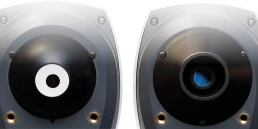
Directional or Diffuse?… just look in the port.

Differentiating Between Directional 45°/0° and Diffuse d/8° Sphere Geometries in Instruments

The geometry of an instrument is the relative position of the light source, sample plane and detector, and is one of the 6 key parameters that define a color measurement. There are two general categories of instrument geometries – directional 45°/0°(or 45°/0°) and diffuse d/8° sphere.

To tell the difference between directional and diffuse instrument geometries, look in the port. If the inside is black, when the lights are on, the instrument has a CIE directional 45°/0°(or 45°/0°) geometry. If the inside is white, then it is a CIE diffuse  d/8° sphere geometry instrument.

While both geometries can be used for color measurement, it is best to measure some samples with a directional 45°/0° geometry instrument and others with diffuse d/8° sphere. More information in our Application Notes at AN 1033.00 Color versus Appearance.

Posted in Color And Appearance Theory

Instrument Geometry – Directional 45°/0° or Diffuse d/8° Sphere?

Posted on Ene 27, 2026 by HunterLab

指向性か拡散性か......ポートの中を見てください。

機器における指向性45°/0°と拡散性d/8°の球面形状の区別

装置の形状とは、光源、試料面、検出器の相対的な位置のことで、カラー測定を定義する6つの重要なパラメータの1つです。機器の形状には、指向性45°/0°(または45°/0°)と拡散性d/8°球の2つの一般的なカテゴリーがあります。

指向性形状と拡散性形状の違いを見分けるには、ポートの中を見てください。照明が点灯しているときに内側が黒ければ、CIE指向性45°/0°(または45°/0°)ジオメトリの測定器です。内側が白なら、CIE拡散d/8°球面形状の測定器です。

どちらのジオメトリーもカラー測定に使用できますが、あるサンプルは指向性45°/0°ジオメトリーの装置で測定し、他のサンプルは拡散性d/8°球で測定するのが最適です。詳細はAN 1033.00 Color versus Appearanceのアプリケーションノートをご覧ください。

Posted in Color And Appearance Theory

Instrument Geometry – Directional 45°/0° or Diffuse d/8° Sphere?

Posted on Ene 27, 2026 by HunterLab

Gerichtet oder diffus?... schauen Sie einfach in den Hafen.

Unterscheidung zwischen gerichteten 45°/0°- und diffusen d/8°-Kugelgeometrien in Instrumenten

Die Geometrie eines Messgeräts ist die relative Position der Lichtquelle, der Probenebene und des Detektors und ist einer der 6 Schlüsselparameter, die eine Farbmessung definieren. Es gibt zwei allgemeine Kategorien von Instrumentengeometrien - gerichtete 45°/0° (oder 45°/0°) und diffuse d/8°-Kugel.

Um den Unterschied zwischen gerichteten und diffusen Instrumentengeometrien zu erkennen, schauen Sie in die Öffnung. Ist die Innenseite bei eingeschalteter Beleuchtung schwarz, so handelt es sich um ein CIE-Instrument mit gerichteter 45°/0°-Geometrie (oder 45°/0°-Geometrie). Wenn die Innenseite weiß ist, handelt es sich um ein Instrument mit diffuser d/8°-Kugelgeometrie nach CIE.

Obwohl beide Geometrien für die Farbmessung verwendet werden können, ist es am besten, einige Proben mit einem Instrument mit gerichteter 45°/0°-Geometrie und andere mit einer diffusen d/8°-Kugel zu messen. Weitere Informationen finden Sie in unseren Anwendungshinweisen unter AN 1033.00 Farbe und Erscheinungsbild.

Posted in Color And Appearance Theory

Instrument Geometry – Directional 45°/0° or Diffuse d/8° Sphere?

Posted on Ene 27, 2026 by HunterLab

¿Direccional o difuso?... basta con mirar en el puerto.

Diferenciación entre las geometrías de esfera direccional 45°/0° y difusa d/8° en los instrumentos

La geometría de un instrumento es la posición relativa de la fuente de luz, el plano de la muestra y el detector, y es uno de los 6 parámetros clave que definen una medición del color. Existen dos categorías generales de geometrías de instrumentos: direccional 45°/0°(o 45°/0°) y difusa d/8° esfera.

Para diferenciar las geometrías direccional y difusa de los instrumentos, mire en el puerto. Si el interior es negro, cuando las luces están encendidas, el instrumento tiene una geometría CIE direccional 45°/0°(o 45°/0°). Si el interior es blanco, entonces se trata de un instrumento con geometría de esfera CIE difusa d/8°.

Aunque ambas geometrías pueden utilizarse para la medición del color, es mejor medir algunas muestras con un instrumento de geometría direccional 45°/0° y otras con esfera difusa d/8°. Más información en nuestras Notas de aplicación en AN 1033.00 Color frente a apariencia.

Posted in Color And Appearance Theory

Instrument Geometry – Directional 45°/0° or Diffuse d/8° Sphere?

Posted on Ene 27, 2026 by HunterLab

Directional or Diffuse?… just look in the port.

Differentiating Between Directional 45°/0° and Diffuse d/8° Sphere Geometries in Instruments

The geometry of an instrument is the relative position of the light source, sample plane and detector, and is one of the 6 key parameters that define a color measurement. There are two general categories of instrument geometries – directional 45°/0°(or 45°/0°) and diffuse d/8° sphere.

To tell the difference between directional and diffuse instrument geometries, look in the port. If the inside is black, when the lights are on, the instrument has a CIE directional 45°/0°(or 45°/0°) geometry. If the inside is white, then it is a CIE diffuse  d/8° sphere geometry instrument.

While both geometries can be used for color measurement, it is best to measure some samples with a directional 45°/0° geometry instrument and others with diffuse d/8° sphere. More information in our Application Notes at AN 1033.00 Color versus Appearance.

Posted in Color And Appearance Theory
Prev
1
2
3
…
Next

Most Related Posts

  • Spectrophotometer vs. Colorimeter: What’s the Difference?
  • Spectrophotometer vs. Colorimeter: What’s the Difference?
  • Instrument Geometry – Directional 45°/0° or Diffuse d/8° Sphere?
  • Instrument Geometry – Directional 45°/0° or Diffuse d/8° Sphere?
  • Instrument Geometry – Directional 45°/0° or Diffuse d/8° Sphere?
  • Instrument Geometry – Directional 45°/0° or Diffuse d/8° Sphere?
  • Instrument Geometry – Directional 45°/0° or Diffuse d/8° Sphere?
View More Related Posts

Follow us on social

  • LinkedInFollow us on LinkedIn
  • YouTubeFollow us on YouTube
  • facebookFollow us on Facebook
  • XFollow us on X (formerly Twitter)
  • instagramFollow us on Instagram