About
BLOG

Interested in a little light reading?

Our blog is continually updated with helpful educational information, advises, research and insights—all in the name of helping you level-up your color and appearance needs. Grab a drink and enjoy our stories!

Explore Our Stories
food-dinner-lemon-rice-large.jpg

"Spectrophotometric Determination of Fish Freshness Protects Consumer Health"

Read More

Explore Our Products

VIEW MORE

food-dinner-lemon-rice-large.jpg

"Spectrophotometric Determination of Fish Freshness Protects Consumer Health"

Read More
dark-brown-milk-candy.jpg

"Measuring the Color of Chocolate Sweetens Appeal in a Changing Market"

Read More
amber-ale-1.jpg

"How to Measure Beer Opacity and Color in Amber Ales and Other Medium Roast Malts"

Read More
amber-ale-1.jpg

"How to Measure Beer Opacity and Color in Amber Ales and Other Medium Roast Malts"

Read More
amber-ale-1.jpg

"How to Measure Beer Opacity and Color in Amber Ales and Other Medium Roast Malts"

Read More
amber-ale-1.jpg

"How to Measure Beer Opacity and Color in Amber Ales and Other Medium Roast Malts"

Read More

Spectrophotometric Determination of Fish Freshness Protects Consumer Health

Posted on Mar 18, 2026 by HunterLab

Der Mensch hat sich zu einem sehr visuell orientierten Wesen entwickelt, für das Farbe eines der wichtigsten Zeichen für Sicherheit ist. Von einer roten Ampel bis hin zu einer bunten Schlange fungiert Farbe als sofortige und instinktive visuelle Warnung, die uns vor potenziellen Gefahren warnt. Diese Verwendung von Farbe als Indikator für Sicherheit zeigt sich vielleicht am deutlichsten, wenn man ein Stück Fisch aus dem Kühlschrank holt und fragt: „Sieht das für dich in Ordnung aus?“

Im Gegensatz zu vielen anderen Zusammenhängen zwischen Farbe und Wahrnehmung ist der Zusammenhang zwischen der Farbe von Fisch und seiner Lebensmittelsicherheit relativ linear; auch wenn selbst Experten bei Blindverkostungen möglicherweise nicht zwischen Weiß- und Rotweinen unterscheiden können, kann man ziemlich sicher sein, dass ein Fisch, der schlecht aussieht, auch schlecht ist. Die Farbveränderung selbst ist ein Indikator für eine bestimmte Abfolge biologischer Vorgänge, und der Prozess beginnt fast unmittelbar nach dem Tod. Wie Nollet und Foldra im Handbook of Seafood and Seafood Product Analysis hervorheben:

„Das Aussehen eines frisch gefangenen Fisches ist unvergesslich, denn das Zusammenspiel subtiler, wunderschöner Farbtöne macht ihn zu einer Augenweide und als Nahrungsmittel unwiderstehlich. Doch schon wenige Stunden nach dem Tod verliert er etwas von seiner offensichtlichen Attraktivität, und seine nun ‚gewöhnlichen‘ Farben sind der breiten Öffentlichkeit weitaus vertrauter.“1

Ebenso bekannt ist das Aussehen verdorbener Fischprodukte: matt, leblos, verfault und mit dem Risiko einer Lebensmittelvergiftung verbunden.

Die Beurteilung der Frische von Fisch liegt jedoch nicht allein in der Verantwortung der einzelnen Verbraucher; die gesamte Fisch- und Meeresfrüchteindustrie muss großen Wert darauf legen, die Qualität und Sicherheit der Produkte entlang der gesamten Lieferkette zu gewährleisten, insbesondere in einer Zeit, in der die Rückverfolgbarkeit zunehmend an Bedeutung gewinnt.

Spektralphotometrische Messgeräte bieten eine objektive Grundlage für die Bestimmung der Frische von Fisch. Bildquelle: Pexels-Nutzer Steyn Viljoen

Posted in Color In Food Industry

Spectrophotometric Determination of Fish Freshness Protects Consumer Health

Posted on Mar 18, 2026 by HunterLab

Humans have evolved as highly visual creatures, using color as one of the most important signifiers of safety. From a red stop light to a brightly colored snake, color acts as an instant and instinctual visual alarm bell warning us of potential dangers. This use of color as an indicator of safety is perhaps most clearly evidenced by the act of pulling out a piece of fish from the refrigerator and asking, “Does this look okay to you?”

Unlike many color/perception relationships, the one between fish color and food safety is relatively linear; although even experts may not be able to distinguish between white and red wines in blind taste tastes, you can be pretty sure that if a fish looks bad, it is bad. The color change itself is an indicator of a specific sequence of biological events and the process begins almost immediately following death. As Nollet and Foldra point out in the Handbook of Seafood and Seafood Product Analysis:

“The appearance of a newly landed fish is unforgettable, in that the interplay of subtle shades of beautiful colors make it a joy to behold and irresistible as an item of food. Just a few hours after death, though, it begins to look less obviously attractive, and its now ‘ordinary’ colors are much more familiar to the majority of the public.”1

Just as familiar is the look of spoiled fish product: dull, lifeless, decaying, and carrying the potential for food poisoning.

But the determination of fish freshness isn’t just up to individual consumers; the seafood industry as a whole must take great care to assess the quality and safety of products throughout the supply chain, particularly at a time when traceability is a growing concern.

Spectrophotometric instrumentation provide an objective basis for the determination of fish freshness. Image Source: Pexels user Steyn Viljoen

Posted in Color In Food Industry

Measuring the Color of Chocolate Sweetens Appeal in a Changing Market

Posted on Mar 18, 2026 by HunterLab

The changing chocolate marketplace is raising the bar for quality and opening up opportunities for experimentation. Image Source: Pexels user Kaboompics

Late last month, chocolate lovers received welcome news: a new study published in Heart revealed that chocolate reduces the risk of developing atrial fibrillation, a common form of heart arrhythmia.1 By examining data from the Danish Diet, Cancer and Healthy study, researchers found that people who consumed 1-3 servings of chocolate once a month had a 10% lower rate of new atrial fibrillation diagnosis than those who ate less than one serving a month. What’s more, the rate of diagnosis reduced “17% for one weekly serving, 20% for two to six weekly servings, and 14% for one or additional daily servings.”[“Chocolate May Reduce Risk of Developing Common Heart Arrhythmia”, May 24, 2017, Forbes]

These findings add to a growing body of research suggesting that chocolate has the potential to protect cardiovascular health. Although most research thus far has focused on dark chocolate, the new study included both dark and milk chocolate. This follows data published in 2015 indicating that any type of chocolate reduces the risk of heart disease.2  And while doctors aren’t entirely sure why chocolate appears to benefit heart health, but they do have guesses. As Dr. Howard LeWine, chief medical editor of Harvard Health Publications, says, “It may be related to flavonoids, a type of antioxidant produced by plants. Flavonoids have been shown to help lower blood pressure, improve blood flow to the brain and heart, and fight cell damage.”3

This new recognition of the health benefits of chocolate also has clear benefits for the chocolate industry, allowing for new product and marketing opportunities and changing the way the public perceives sweet treats. Dark chocolate is already outpacing milk in terms of growth, attributed largely to growing awareness of its impact on cardiovascular health. But Katrina Markoff of artisan chocolatier Vosges Chocolate believes there’s more to the story. “Dark chocolate has health benefits and that is a source of appeal, but I also believe people’s palettes are really becoming more sophisticated,” she says. “There is more awareness and curiosity about milk and dark and even different specific varietals.”4 Indeed, the high-end chocolate market has exploded in recent years, spurring major players like Nestle to develop premium offerings while also opening up the door for a niche bean-to-bar industry.

In this changing environment, there is more pressure on both industry old-timers and newcomers to produce chocolates of the highest quality. At the same time, public acceptance of new and novel products means there is also plenty of room for experimentation. And whether you are refining traditional treats or inventing new concoctions, measuring the color of chocolate is now more important than ever before.

The color of chocolate gives consumers important clues about taste and quality. Image Source: Pexels user Pixabay

Posted in Color In Food Industry

How to Measure Beer Opacity and Color in Amber Ales and Other Medium Roast Malts

Posted on Mar 10, 2026 by HunterLab

“Amber beer” is a catchall term that refers to any medium-opacity beer, ranging from bright red to caramel brown in color. Image Credit: Unsplash user Julia Nastogadka

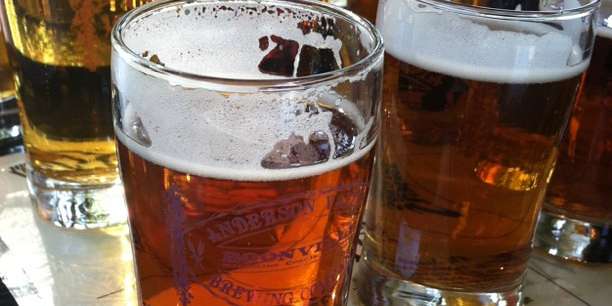
I used to believe that all amber beer looked about the same: a bold, almost cranberry-colored brew with a hint of frothy, cloudy opacity. Everything changed for me when I went to my first amber beer tasting. I saw a long tasting table lined from end-to-end in every amber style imaginable, from the bright red ale that I was used to seeing, to the deep caramelized browns of American amber ale. It was clear that the brewers were proud of their glasses — each ale had an unmistakable color unlike any other sitting next to it. When I looked closely at each glass, side-by-side, I could see the subtle differences between them. I saw flecks of gold in one light red beer, whereas its neighbor had deeper, almost rose-like color qualities.

These subtle differences in color and opacity make your brew absolutely unique. That’s why it’s important to measure your amber beer’s opacity and color consistency throughout the brewing process. When it comes to red or amber ale, your color is your signature, and it will keep your customers coming back year after year.

Brewers often find it difficult to measure their amber beer’s color by eye, since this beer style has a wide range of possible color variations. Image Credit: Pixabay CC user PeterKraayvanger

Posted in Color In Food Industry

How to Measure Beer Opacity and Color in Amber Ales and Other Medium Roast Malts

Posted on Mar 10, 2026 by HunterLab

「アンバー・ビール」とは、鮮やかな赤色からキャラメル・ブラウンまで、中程度の濃さのビールを指す総称である。画像出典:UnsplashユーザーJulia Nastogadka

私は以前、琥珀色のビールはどれも同じように見えると思っていた。初めて琥珀ビールの試飲会に行ったとき、すべてが変わった。長いテイスティングテーブルの端から端まで、私が見慣れた真っ赤なエールから、アメリカン・アンバー・エールの深いキャラメル色のブラウンまで、想像しうるあらゆる琥珀色のスタイルが並んでいた。どのエールも紛れもない色で、隣にある他のどのエールとも違っていた。それぞれのグラスを並べてよく見ると、微妙な違いがわかった。ある薄紅色のビールには金色の斑点が見えたが、隣のビールには深みがあり、ほとんどバラのような色をしていた。

色と不透明度のこれらの微妙な違いが、あなたのビールを絶対にユニークなものにします。そのため、醸造工程を通してアンバービールの不透明度と色の一貫性を測定することが重要なのです。レッドエールやアンバーエールに関して言えば、あなたの色はあなたの特徴であり、あなたの顧客を毎年リピートさせるでしょう。

このビアスタイルには様々な色のバリエーションがあるため、醸造家はアンバービールの色を目測するのが難しいと感じることが多い。画像出典:Pixabay CC user PeterKraayvanger

Posted in Color In Food Industry

How to Measure Beer Opacity and Color in Amber Ales and Other Medium Roast Malts

Posted on Mar 10, 2026 by HunterLab

"Bernsteinbier" ist ein Sammelbegriff für alle Biere mit mittlerer Trübung, die von leuchtend roter bis karamellbrauner Farbe reichen. Bildnachweis: Unsplash-Nutzer Julia Nastogadka

Früher war ich der Meinung, dass alle bernsteinfarbenen Biere in etwa gleich aussehen: ein kräftiges, fast preiselbeerfarbenes Gebräu mit einem Hauch von schaumiger, trüber Trübung. Alles änderte sich für mich, als ich zu meiner ersten Bernsteinbierverkostung ging. Ich sah einen langen Verkostungstisch, der von einem Ende zum anderen mit allen erdenklichen bernsteinfarbenen Biersorten bestückt war, vom leuchtend roten Ale, an das ich gewöhnt war, bis hin zu den tief karamellisierten Brauntönen des amerikanischen Amber Ale. Es war klar, dass die Brauer stolz auf ihre Gläser waren - jedes Bier hatte eine unverwechselbare Farbe, die sich von allen anderen, die neben ihm standen, unterschied. Als ich die Gläser genau nebeneinander betrachtete, konnte ich die feinen Unterschiede zwischen ihnen erkennen. Ich sah goldene Flecken in einem hellroten Bier, während sein Nachbar eine tiefere, fast rosafarbene Farbe hatte.

Diese subtilen Unterschiede in Farbe und Trübung machen Ihr Gebräu absolut einzigartig. Deshalb ist es wichtig, die Opazität und Farbkonsistenz Ihres Bernsteinbiers während des gesamten Brauprozesses zu messen. Wenn es um rotes oder bernsteinfarbenes Bier geht, ist Ihre Farbe Ihr Markenzeichen, und sie wird Ihre Kunden Jahr für Jahr wiederkommen lassen.

Für Brauer ist es oft schwierig, die Farbe ihres bernsteinfarbenen Bieres mit dem Auge zu bestimmen, da es bei diesem Bierstil eine große Bandbreite an möglichen Farbvariationen gibt. Bildnachweis: Pixabay CC Benutzer PeterKraayvanger

Posted in Color In Food Industry

How to Measure Beer Opacity and Color in Amber Ales and Other Medium Roast Malts

Posted on Mar 10, 2026 by HunterLab

"Cerveza ámbar" es un término comodín que se refiere a cualquier cerveza de opacidad media, que va del rojo brillante al marrón caramelo. Crédito de la imagen: Unsplash user Julia Nastogadka

Solía creer que todas las cervezas ámbar eran iguales: una cerveza atrevida, casi de color arándano, con un toque de opacidad espumosa y turbia. Todo cambió para mí cuando fui a mi primera cata de cerveza ámbar. Vi una larga mesa de degustación alineada de punta a punta con todos los estilos de cerveza ámbar imaginables, desde la ale roja brillante que estaba acostumbrado a ver, hasta los marrones caramelizados profundos de la cerveza ámbar americana. Estaba claro que los cerveceros estaban orgullosos de sus copas: cada cerveza tenía un color inconfundible, distinto de cualquier otra que estuviera a su lado. Cuando miré de cerca cada vaso, uno al lado del otro, pude ver las sutiles diferencias entre ellos. Vi motas doradas en una cerveza de color rojo claro, mientras que su vecina tenía un color más profundo, casi rosado.

Estas sutiles diferencias en color y opacidad hacen que su cerveza sea absolutamente única. Por eso es importante medir la opacidad y la consistencia del color de su cerveza ámbar durante todo el proceso de elaboración. Cuando se trata de una cerveza roja o ámbar, el color es su firma, y hará que sus clientes vuelvan año tras año.

A los cerveceros a menudo les resulta difícil medir el color de su cerveza ámbar a ojo, ya que este estilo de cerveza tiene una amplia gama de posibles variaciones de color. Crédito de la imagen: Pixabay CC user PeterKraayvanger

Posted in Color In Food Industry
Prev
1
2
3
…
Next

Most Related Posts

  • Spectrophotometric Determination of Fish Freshness Protects Consumer Health
  • Spectrophotometric Determination of Fish Freshness Protects Consumer Health
  • Measuring the Color of Chocolate Sweetens Appeal in a Changing Market
  • How to Measure Beer Opacity and Color in Amber Ales and Other Medium Roast Malts
  • How to Measure Beer Opacity and Color in Amber Ales and Other Medium Roast Malts
  • How to Measure Beer Opacity and Color in Amber Ales and Other Medium Roast Malts
  • How to Measure Beer Opacity and Color in Amber Ales and Other Medium Roast Malts
View More Related Posts

Follow us on social

  • LinkedInFollow us on LinkedIn
  • YouTubeFollow us on YouTube
  • facebookFollow us on Facebook
  • XFollow us on X (formerly Twitter)
  • instagramFollow us on Instagram