About
BLOG

Interested in a little light reading?

Our blog is continually updated with helpful educational information, advises, research and insights—all in the name of helping you level-up your color and appearance needs. Grab a drink and enjoy our stories!

Explore Our Stories
Global Technology Leader Enhances Display Precision with HunterLab UltraScan Pro

"Choosing the Right Spectrophotometer for Plastics Can Increase Production and Sales"

Read More

Explore Our Products

VIEW MORE

640px-Government_Center_Miami_color_balance_comparison.jpg

"Color Variations in Plastics: You Say Lime, I Say Chartreuse -- What Is It Really?"

Read More
640px-Government_Center_Miami_color_balance_comparison.jpg

"Color Variations in Plastics: You Say Lime, I Say Chartreuse -- What Is It Really?"

Read More
640px-Government_Center_Miami_color_balance_comparison.jpg

"Color Variations in Plastics: You Say Lime, I Say Chartreuse -- What Is It Really?"

Read More
640px-Government_Center_Miami_color_balance_comparison.jpg

"Color Variations in Plastics: You Say Lime, I Say Chartreuse -- What Is It Really?"

Read More
640px-Government_Center_Miami_color_balance_comparison.jpg

"Color Variations in Plastics: You Say Lime, I Say Chartreuse -- What Is It Really?"

Read More
beverage packaging materials

"How HunterLab Helped a Global Bottler Standardize Plastic Cap and Preform Color"

Read More

Choosing the Right Spectrophotometer for Plastics Can Increase Production and Sales

Posted on Apr 10, 2026 by HunterLab

New polymer products continue to flood the market, and there seems to be no end to the continued growth in plastic manufacturing. In 2024, the global molded plastics market reached a value of $541.2 million. Experts predict a compound annual growth rate of 7.5% over the next decade, which means the market's value will surge to over $1 billion by 2034. In this booming market, competition with large manufacturers may seem daunting, yet small business continues to thrive.

To stay competitive among these giants, choosing the right spectrophotometer for plastics is often the difference in product efficiency and quality. Understanding the value of color measurement in plastic production is the first step toward optimizing growth and increasing sales overall.

Utilizing Spectrophotometric Instrumentation in Plastic Production

Modern spectrophotometers measure more than the tristimulus values captured by basic equipment. They offer spectral measurement capabilities and can quantify appearance by considering the influences of gloss and texture on perception. This technology makes them an ideal choice for many plastics, which often feature various shapes, textures, and opacities.

Sample types determine the right measurement techniques for accurate color data, so understanding these characteristics that drive your approach is the first step to utilizing your color measurement solutions. For example, accurate color quantification for transparent plastic preforms requires measuring via transmission, while opaque plastics require reflectance measurements.

The device’s geometry is also critical to ensure accurate appearance data capture. A directional 0°/45° geometry illuminates the sample at a 0° angle, with the viewing angle set at 45°. Scientific studies show that these geometric principles provide the truest representation of visual color perception.

Today’s spectrophotometers/colorimeters are available in portable, benchtop, and in-line models, designed to monitor color variations and changes in real time, from start to finish. Even slight alterations in color can be detected easily and allow for simple changes to be made at any stage of production, saving wasted materials, time, and money. These simple tools are beneficial for efficiently and effectively creating quality products and increasing sales.

Spectrophotometric Applications in Plastic Manufacturing

The variety in plastic shapes, sizes, and colors can present color measurement challenges. Nonuniformity, gloss, shape, and size can all affect color quantification, so choosing the right solution is the first step in developing consistency and quality in polymer products.

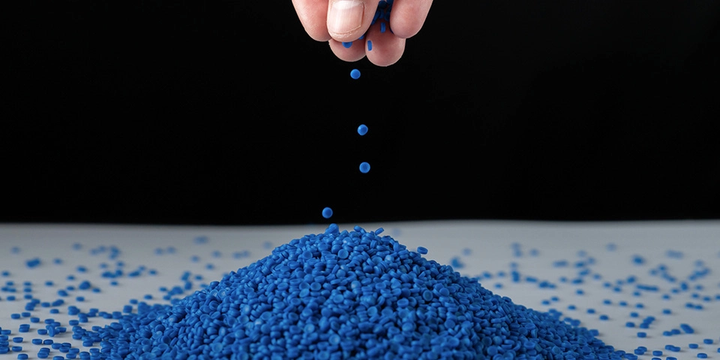
Not only are spectrophotometers/colorimeters effective for enhancing the quality and production of molded plastics, but their versatility also extends to many other areas of plastic manufacturing. For example, even nonuniform plastic pellet samples and recycled polyethylene terephthalate (rPET) can be accurately measured with this equipment. Doing so helps to ensure uniform and consistent pellet color, which is used in extrusion and injection molding and directly affects final color quality.

Other spectrophotometric applications in plastics processing include quantifying color data in:

  • Opaque plastic enclosures
  • Opaque plastic plaques
  • Opaque plastic films
  • Opaque sheet plastic
  • Dark Performance plastics, such as deep blues, dark charcoal grays, indigos, and blacks
  • Vinyl siding

From the beginning stages of plastic production to the final stages of color analysis in sample plaques, spectrophotometry ensures consistency throughout every step of manufacturing. The simplicity and accuracy of today’s advanced instrumentation take the guesswork out of the process, increasing both production and quality overall.

Posted in Color In Plastics

Color Variations in Plastics: You Say Lime, I Say Chartreuse -- What Is It Really?

Posted on Mar 19, 2026 by HunterLab

Many variables affect color and visual appearance. Light, angle, and/or background all affect visual analysis and cause major variations in color perception. Image Source: Daniel Christensen via wikimedia.org

The human eye is a remarkable tool in identifying color variations. In fact, the human eye can actually distinguish over 7,000,000 different color variations in our known spectrum of colors. Science and technology have explored the eye-to-brain connection of how light is absorbed and reflected, and these results have shown that the human eye is capable of distinguishing even the slightest deviations in color.

Despite how amazingly accurate and complex human vision can be, the eye and the brain do have their limitations. Optical inputs of color variations are altered by a variety of causes that lead to problems with visual analysis, especially in plastic manufacturing. Manufactures have to be incredibly precise when creating their products, to account for the variations in the way we see things, and to mitigate against their negative effects. Spectrophotometry tools are incredibly useful in this process.

Limitations of the human eye

In the same way that no two people are alike, color perception also varies greatly from person to person. Color variations have also been noticed in many individuals between left-eye and right-eye differentiation. Even as you look at this screen, if you shut one eye and then alternate viewpoints with the other, you may notice the slight variations in color from your own unique perspective.

Though we all view colors in relatively the same way, our unique genetic make-up also plays an important role in how we differentiate between color variations. Just like any other physical ability or trait, vision varies in aptitude as well. It can range from highly effective to somewhat defective in its ability to classify color. From good to poor color vision or even color blindness, everyone has limitations when it comes to color analysis.

Take for instance the ability to see in the dark. The human eye is not able to distinguish color at all without some source of light. Even with minimal lighting, our brain will interpret color using only a limited scale of grey. It is certain that the human eye is a powerful tool, but despite its amazing competencies, we can see that there are a number of other factors that limit our abilities in perceiving color variations. Only with advanced spectrophotometric technology and controlled conditions can the brain accurately and consistently decipher variations in color.

Posted in Color In Plastics

Color Variations in Plastics: You Say Lime, I Say Chartreuse -- What Is It Really?

Posted on Mar 19, 2026 by HunterLab

多くの変数が色と視覚的外観に影響を与えます。光、角度、および/または背景はすべて視覚分析に影響を与え、色の知覚に大きな変化をもたらします:ダニエル・クリステンセン via wikimedia.org

人間の目は、色のバリエーションを識別するための驚くべきツールである。科学技術は、光がどのように吸収され反射されるかという目と脳のつながりを探求し、その結果、人間の目は色のわずかなずれさえも見分けることができることを示している。

人間の視覚は驚くほど正確で複雑であるにもかかわらず、目と脳には限界がある。色の変化に関する光学的な入力はさまざまな原因によって変化し、特にプラスチック製造においては視覚分析の問題につながる。製造業者は製品を作る際、私たちのものの見え方のばらつきを考慮し、その悪影響を軽減するために、非常に正確でなければならない。分光光度計のツールは、このプロセスで非常に役立ちます。

人間の目の限界

左目と右目の色の違いも、多くの個人で指摘されている。この画面を見ているときでも、片目をつぶってもう片方の目と交互に見ることで、自分独自の視点による色のわずかな変化に気づくかもしれない。

私たちは皆、比較的同じように色を見るが、色のバリエーションをどのように区別するかには、私たち独自の遺伝的構成も重要な役割を果たしている。他の身体能力や特質と同じように、視力にも適性がある。色を分類する能力は、非常に効果的なものから、やや欠陥のあるものまでさまざまです。色覚が良い人から悪い人、あるいは色覚異常まで、色の分析に関しては誰もが限界を持っています。

例えば、暗闇で見る能力を考えてみよう。人間の目は、何らかの光源がなければまったく色を識別することができない。最小限の明るさでも、私たちの脳は限られたグレーのスケールだけで色を解釈する。人間の目が強力な道具であることは確かだが、その驚くべき能力にもかかわらず、色のバリエーションを知覚する能力を制限する他の要因が数多くあることがわかる。高度な分光測光技術と管理された条件下でのみ、脳は色のバリエーションを正確かつ一貫して解読することができる。

Posted in Color In Plastics

Color Variations in Plastics: You Say Lime, I Say Chartreuse -- What Is It Really?

Posted on Mar 19, 2026 by HunterLab

Viele Variablen beeinflussen Farbe und visuelles Erscheinungsbild. Licht, Winkel und/oder Hintergrund wirken sich alle auf die visuelle Analyse aus und verursachen große Unterschiede in der Farbwahrnehmung. Bildquelle: Daniel Christensen via wikimedia.org

Das menschliche Auge ist ein bemerkenswertes Werkzeug zur Erkennung von Farbvariationen. Tatsächlich kann das menschliche Auge über 7.000.000 verschiedene Farbvariationen in unserem bekannten Farbspektrum unterscheiden. Wissenschaft und Technik haben die Verbindung zwischen Auge und Gehirn erforscht, wie Licht absorbiert und reflektiert wird, und diese Ergebnisse haben gezeigt, dass das menschliche Auge in der Lage ist, selbst die geringsten Farbabweichungen zu erkennen.

Trotz der erstaunlichen Genauigkeit und Komplexität des menschlichen Sehens haben das Auge und das Gehirn ihre Grenzen. Die optischen Eingaben von Farbvariationen werden durch eine Vielzahl von Ursachen verändert, die zu Problemen bei der visuellen Analyse führen, insbesondere bei der Kunststoffherstellung. Die Hersteller müssen bei der Entwicklung ihrer Produkte äußerst präzise vorgehen, um die Schwankungen in unserem Sehverhalten zu berücksichtigen und ihre negativen Auswirkungen abzumildern. Spektralphotometrische Instrumente sind in diesem Prozess unglaublich nützlich.

Die Grenzen des menschlichen Auges

So wie kein Mensch dem anderen gleicht, ist auch die Farbwahrnehmung von Mensch zu Mensch sehr unterschiedlich. Bei vielen Menschen wurden auch Farbunterschiede zwischen dem linken und dem rechten Auge festgestellt. Selbst wenn Sie auf diesen Bildschirm schauen, können Sie, wenn Sie ein Auge schließen und dann den Blickwinkel mit dem anderen Auge wechseln, die leichten Farbabweichungen aus Ihrer eigenen Perspektive feststellen.

Obwohl wir alle Farben relativ gleich wahrnehmen, spielt auch unsere einzigartige genetische Veranlagung eine wichtige Rolle bei der Unterscheidung von Farbvarianten. Wie jede andere körperliche Fähigkeit oder Eigenschaft variiert auch das Sehvermögen in seiner Begabung. Die Fähigkeit, Farben zu klassifizieren, kann von sehr gut bis eher schlecht reichen. Von gutem bis zu schlechtem Farbsehen oder sogar Farbenblindheit, jeder Mensch hat seine Grenzen, wenn es um die Farbanalyse geht.

Nehmen wir zum Beispiel die Fähigkeit, im Dunkeln zu sehen. Das menschliche Auge ist nicht in der Lage, Farben ohne eine Lichtquelle zu unterscheiden. Selbst bei minimaler Beleuchtung interpretiert unser Gehirn Farben nur anhand einer begrenzten Grauskala. Es steht fest, dass das menschliche Auge ein leistungsfähiges Werkzeug ist, aber trotz seiner erstaunlichen Fähigkeiten gibt es noch eine Reihe anderer Faktoren, die unsere Fähigkeiten zur Wahrnehmung von Farbvariationen einschränken. Nur mit fortschrittlicher spektrophotometrischer Technologie und unter kontrollierten Bedingungen kann das Gehirn Farbvariationen genau und konsistent entschlüsseln.

Posted in Color In Plastics

Color Variations in Plastics: You Say Lime, I Say Chartreuse -- What Is It Really?

Posted on Mar 19, 2026 by HunterLab

Muchas variables afectan al color y al aspecto visual. La luz, el ángulo y/o el fondo afectan al análisis visual y provocan importantes variaciones en la percepción del color. Fuente de la imagen: Daniel Christensen vía wikimedia.org

El ojo humano es una herramienta extraordinaria para identificar las variaciones de color. De hecho, el ojo humano puede distinguir más de 7.000.000 de variaciones de color diferentes en nuestro espectro de colores conocido.La ciencia y la tecnología han explorado la conexión ojo-cerebro de cómo se absorbe y refleja la luz, y estos resultados han demostrado que el ojo humano es capaz de distinguir incluso las más mínimas desviaciones de color.

A pesar de lo asombrosamente precisa y compleja que puede llegar a ser la visión humana, el ojo y el cerebro tienen sus limitaciones. Las entradas ópticas de las variaciones de color se ven alteradas por una serie de causas que provocan problemas en el análisis visual, sobre todo en la fabricación de plásticos. Los fabricantes tienen que ser increíblemente precisos a la hora de crear sus productos, para tener en cuenta las variaciones en nuestra forma de ver las cosas y mitigar sus efectos negativos. Las herramientas de espectrofotometría son increíblemente útiles en este proceso.

Limitaciones del ojo humano

Del mismo modo que no hay dos personas iguales, la percepción del color también varía mucho de una persona a otra.Variaciones de color también se han observado en muchas personas entre la diferenciación del ojo izquierdo y el derecho. Incluso mientras mira esta pantalla, si cierra un ojo y luego alterna los puntos de vista con el otro, puede notar las ligeras variaciones de color desde su perspectiva única.

Aunque todos vemos los colores relativamente igual, nuestra composición genética única también desempeña un papel importante a la hora de diferenciar las variaciones de color. Al igual que cualquier otra capacidad o rasgo físico, la visión también varía en aptitud. Puede variar de muy eficaz a algo defectuosa en su capacidad para clasificar el color. Desde una buena visión del color hasta una visión deficiente o incluso ceguera al color, todo el mundo tiene limitaciones a la hora de analizar los colores.

Por ejemplo, la capacidad de ver en la oscuridad. El ojo humano no es capaz de distinguir el color en absoluto sin alguna fuente de luz. Incluso con una iluminación mínima, nuestro cerebro interpretará el color utilizando sólo una escala limitada de grises. Es cierto que el ojo humano es una herramienta poderosa, pero a pesar de sus asombrosas competencias, podemos comprobar que hay otra serie de factores que limitan nuestras capacidades para percibir las variaciones de color. Sólo con tecnología espectrofotométrica avanzada y en condiciones controladas puede el cerebro descifrar con precisión y coherencia las variaciones de color.

Posted in Color In Plastics

Color Variations in Plastics: You Say Lime, I Say Chartreuse -- What Is It Really?

Posted on Mar 19, 2026 by HunterLab

Many variables affect color and visual appearance. Light, angle, and/or background all affect visual analysis and cause major variations in color perception. Image Source: Daniel Christensen via wikimedia.org

The human eye is a remarkable tool in identifying color variations. In fact, the human eye can actually distinguish over 7,000,000 different color variations in our known spectrum of colors. Science and technology have explored the eye-to-brain connection of how light is absorbed and reflected, and these results have shown that the human eye is capable of distinguishing even the slightest deviations in color.

Despite how amazingly accurate and complex human vision can be, the eye and the brain do have their limitations. Optical inputs of color variations are altered by a variety of causes that lead to problems with visual analysis, especially in plastic manufacturing. Manufactures have to be incredibly precise when creating their products, to account for the variations in the way we see things, and to mitigate against their negative effects. Spectrophotometry tools are incredibly useful in this process.

Limitations of the human eye

In the same way that no two people are alike, color perception also varies greatly from person to person. Color variations have also been noticed in many individuals between left-eye and right-eye differentiation. Even as you look at this screen, if you shut one eye and then alternate viewpoints with the other, you may notice the slight variations in color from your own unique perspective.

Though we all view colors in relatively the same way, our unique genetic make-up also plays an important role in how we differentiate between color variations. Just like any other physical ability or trait, vision varies in aptitude as well. It can range from highly effective to somewhat defective in its ability to classify color. From good to poor color vision or even color blindness, everyone has limitations when it comes to color analysis.

Take for instance the ability to see in the dark. The human eye is not able to distinguish color at all without some source of light. Even with minimal lighting, our brain will interpret color using only a limited scale of grey. It is certain that the human eye is a powerful tool, but despite its amazing competencies, we can see that there are a number of other factors that limit our abilities in perceiving color variations. Only with advanced spectrophotometric technology and controlled conditions can the brain accurately and consistently decipher variations in color.

Posted in Color In Plastics

How HunterLab Helped a Global Bottler Standardize Plastic Cap and Preform Color

Posted on Mar 19, 2026 by HunterLab

In beverage packaging, color goes beyond appearance, it’s an unspoken promise of quality and consistency. For one global bottling company, color variation in PET preforms and plastic caps was becoming a costly risk. A shift in shade could erode brand trust, slow production, or trigger costly rework.

That’s when they turned to HunterLab.

Struggling with color variation across sites? Request a HunterLab demo and take control of your packaging color.

Why Color Consistency is a Bottler’s Business Advantage

  • Brand Integrity: Consumers recognize visual differences—even minor inconsistencies in color can influence perception and purchasing behavior.
  • Process Confidence: Consistent color signals stability in formulation, additives, and processing.
  • Operational Efficiency: Catching out-of-spec color in real-time prevents rework, scrap, and costly downtime.

Functional additives like oxygen scavengers further complicated color control. The challenge was clear: measure preforms and caps with accuracy, no matter the size, material, or additive load.

Customer Challenge: Varying Tools, Oversized Preforms, and Manual Workflows

This global bottler operated across multiple plants, each using different tools:

  • Most relied on ColorFlex EZ for caps
  • Some sites used Vista® for beverage color, with limited preform measurement

Please note: ColorFlex EZ is no longer in production. Meet the upgraded ColorFlex L2, the industry's most advanced color spectrophotometer.

But the brand’s large-format PET preforms didn’t fit standard holders, compromising measurement consistency. Additive effects on color weren’t clearly quantified, and operators selected workspaces manually, increasing variability.

⚠️ Operational Risk: Inconsistent color across production lines can mean inconsistent quality on store shelves.

Posted in Color In Plastics
Prev
1
2
3
…
Next

Most Related Posts

  • Choosing the Right Spectrophotometer for Plastics Can Increase Production and Sales
  • Color Variations in Plastics: You Say Lime, I Say Chartreuse -- What Is It Really?
  • Color Variations in Plastics: You Say Lime, I Say Chartreuse -- What Is It Really?
  • Color Variations in Plastics: You Say Lime, I Say Chartreuse -- What Is It Really?
  • Color Variations in Plastics: You Say Lime, I Say Chartreuse -- What Is It Really?
  • Color Variations in Plastics: You Say Lime, I Say Chartreuse -- What Is It Really?
  • Color Confidence at Scale: How HunterLab Helped a Global Bottler Standardize Plastic Cap and Preform Color
View More Related Posts

Follow us on social

  • LinkedInFollow us on LinkedIn
  • YouTubeFollow us on YouTube
  • facebookFollow us on Facebook
  • XFollow us on X (formerly Twitter)
  • instagramFollow us on Instagram