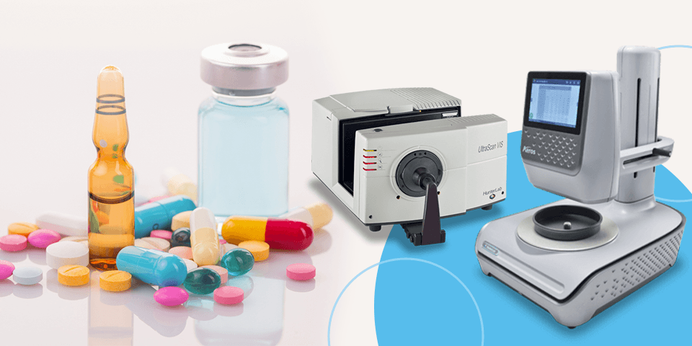

Color is a key indicator of product quality, safety, and efficacy in pharmaceutical manufacturing. As a result, this critical attribute demands precise control to meet consumer expectations and regulatory mandates. Yet, manufacturers must carefully balance color measurement needs with sterility to preserve safety and hygiene. Many still rely on visual color assessment, but this method is subjective, hard to track over the long term, and error-prone, increasing your risks of batch rejections and compliance failures.

Understanding the potential costs of outdated measurement approaches and how spectrophotometers/colorimeters address the challenges can help you achieve repeatability and preserve sample integrity.

The High Costs of Uncertainty — and How to Avoid Them

Where visual assessment fails, spectrophotometry excels, helping you build a more reliable quality system.

Visual Assessments Create Risks

Color measurement in the pharmaceutical industry requires precision that visual methods simply cannot deliver. Human observers often deliver inconsistent results, influenced by their fatigue, color perception, and environmental variations. These factors make that approach unreliable for the data-driven quality systems pharmaceutical manufacturing demands.

Subjective assessments become potential liabilities where the business consequences may compound quickly:

  • Subjective color data can be challenging to substantiate during regulatory audits or inspections. While some regulatory authorities recognize visual assessment, documentation without objective numerical data could lack the rigor expected.
  • Batch-to-batch color variations that pass visual checks may fail when instrumentally quantified against EP 2.2.2 or USP 1061 standards. That reality can translate into increased batch rejections, costly rework, and expensive API wastage.
  • Tracking color shifts over time with subjective data is an issue. A lack of exact quantification makes it harder to identify patterns before they trigger failures.

Spectrophotometry Is the Best Color Measurement Solution for Pharmaceutical Manufacturing

Spectrophotometry eliminates the trade-offs. These powerful solutions capture precise, objective color data while preserving sterility. Unlike visual assessment methods, this equipment delivers numerical color data that represents objective evidence of appearance. The technology quantifies color variations that the human eye cannot consistently detect, providing the documentation pharmaceutical quality systems require. This measurement approach also integrates seamlessly with existing laboratory workflows while maintaining the sterile conditions pharmaceutical manufacturing demands.

Various colorful liquids stored in a lab
Lesen Sie  Color Measurement of Wet vs. Dry Samples: Handling Moisture Variables

How Can I Build a Modern Framework for Measuring Color Without Compromising Sterility?

The framework is simpler than most facilities expect, and it starts with matching your sterile color measurement method to your sample type. This targeted approach delivers better accuracy than generic measurement methods while reducing contamination risks specific to each sample type.

Isolate Sterile Liquids With Transmission Measurement

Sterile liquids, like injectable solutions, liquid APIs, and IV fluids, demand measurement methods that preserve container integrity. Transmission spectrophotometry measures color by passing light through a contained sample. The device captures color and appearance characteristics that indicate degradation, oxidation, or formulation inconsistencies. You can use this data for stability testing programs and formulation development where tracking color changes over time reveals critical product behavior.

You also maintain complete sterility while capturing the scientific data needed for compliance and product confidence. The spectrophotometer never contacts the liquid, as the sample remains in a sterile vial, cuvette, or sealed vessel throughout measurement. This approach delivers reliable color data analysis for high-value pharmaceutical products where sample preservation is critical. 

The UltraScan VIS spectrophotometer from HunterLab is designed specifically for transparent to translucent samples or solutions in applications like:

The system complies with EP 2.2.2, USP 1061, and other pharmaceutical color standards, so you can validate measurement while upholding sterility. Plus, this equipment offers precise measurement in both total transmission (TTRAN) and regular transmission (RTRAN) modes. That versatility drives value for multiple sample types, ranging from clear IV solutions to biologics with suspended proteins.

Use Non-Contact Measurement for Bulk Color Assessment and Sample Averaging in Solids

Measuring pharmaceutical solids — especially in bulk or on those with irregular shapes — presents a different challenge, since these samples require surface color evaluation. Traditional contact-based methods risk cross-contamination between samples and demand extensive cleaning between measurements. Non-contact technology eliminates both concerns.

The HunterLab Aeros spectrophotometer is the market's only smart, non-contact solution for pharmaceutical solid measurement. It automatically rotates the sample, adjusts sensor height, and averages multiple readings into a single result. This equipment captures color data without ever touching the product, reducing cross-contamination potential and cleanup time between measurements.

The technology averages color data across 35 measurements and 27.5 square inches. As a result, Aeros compensates for surface texture and minimally perceptible differences in samples where slight irregularities might otherwise skew single-point measurements. These features make this solution ideal for opaque tablets, pills, and capsules, including those with coated or embossed surfaces. 

Aeros also quantifies average sample data in irregularly shaped products with highly textured surfaces, like pharmaceutical gummies. This approach provides more representative color data for those challenging materials, delivering consistent, repeatable measurements while maintaining the contamination-free workflow your processes demand.

INFO  Mehr Informationen erhalten

Ensure Compliance With Validated Measurement Protocols

Precise color measurement is only half the equation — pharmaceutical quality control for color also demands validated protocols and absolute data integrity. That means ensuring that your measurement systems and defined processes:

  • Satisfy FDA 21 CFR Part 11 requirements for electronic records and electronic signatures.
  • Create audit-ready trails that document every measurement, modification, and data export.
  • Support role-based access control to prevent unauthorized changes to validated methods or historical data.

HunterLab's pharmaceutical color measurement software delivers these capabilities as standard features:

  • An Electronic Records (ER) system ensures secure, tamper-evident data storage.
  • Data Integrity protocols provide comprehensive audit trails that document user actions, time stamps, and system changes.
  • Electronic Signatures validate that authorized personnel performed measurements according to approved protocols.
  • Role-Based Access Control restricts method modifications and data access based on user credentials and responsibilities.

These features transform color measurement from a simple quality check into a fully validated, compliance-ready process. Your color data becomes more defensible during regulatory audits, demonstrating measurement consistency across shifts, operators, and facilities. Statistical process control also becomes easier because you're tracking objective numerical data instead of subjective visual assessments.

Measure Confidently in Sterile Environments With HunterLab

For over 70 years, HunterLab has pioneered pharmaceutical color measurement technology that balances precision with practical sterility requirements. Our spectrophotometers/colorimeters deliver validated data that meets regulatory standards while preventing contamination. Plus, our compliant software ensures data integrity through audit trails, electronic signatures, and role-based access control.

Your quality assurance protocols deserve solutions engineered for the demands of pharmaceutical manufacturing. Get in touch with HunterLab today to discuss validated color measurement for your facility.