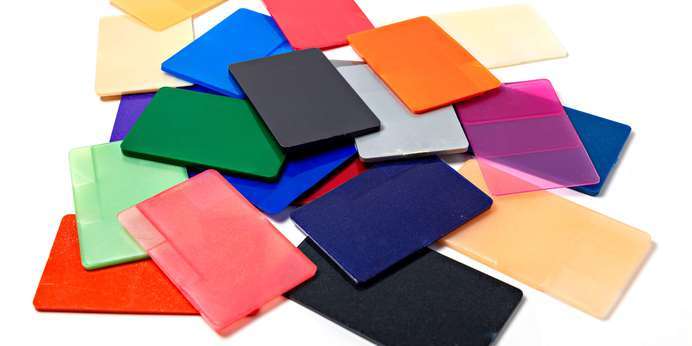
Plastic plaques play a crucial role in evaluating the colour and appearance of plastic pellets, serving as a reliable medium to transform raw materials into a tangible, uniform surface for precise analysis. These plaques are pressed under controlled conditions, allowing manufacturers to assess how the pellets' colour manifests when formed into a flat, consistent shape. To further enhance their utility, plaques can be produced with varying surface characteristics, such as different gloss levels and textures, to evaluate the visual impact of these properties on colour perception. This process ensures that the final product meets both aesthetic and functional requirements, providing a critical quality check in industries where appearance consistency is paramount, such as automotive, consumer goods, and packaging. 

Opacity and Colour Measurement

Opacity refers to a material's ability to prevent light from passing through. When measuring colour in opaque materials, we focus on reflectance. Reflectance is how light interacts with the plastic's surface and reflects to our eyes. Visual colour comparisons are unreliable due to limitations in human colour perception and the inability to account for texture variations. Spectrophotometers can standardize conditions to ensure the measurement is consistent and repeatable. 
01-visual-color-comparisons-are-unreliable.jpg
Read  Temperature Effects on Colour Measurement: Maintaining Accuracy in Extreme Conditions

Best Practices for Accurate Colour Measurement

Several factors contribute to achieving accurate colour measurements in opaque plastic plaques. Some of these factors include:

Calibration 

Regularly calibrate your spectrophotometer according to the manufacturer's instructions. Consistent calibration ensures the instrument maintains its accuracy and provides reliable data.

Sample Preparation
Ensure consistent sample preparation by cleaning the surface and orienting the sample in the same direction for each measurement. Dust, debris, or fingerprints can affect the reflected light and distort the colour reading.

Define Your Colour Space
Choose a standard colour space, like CIE L*a*b, to represent your colour data. This establishes a common language for communication throughout the production chain. As a result, everyone involved understands the colour specifications.

Colour Quality Control Software
Integrate your spectrophotometer with colour quality control software. This allows you to compare measured colours to target shades or existing plaques, facilitating the identification of perfect matches for replacements.

Reflectance 
Consider the viewing geometry for colour measurement depending on your application. Two types of instrument geometry to consider are:

  • Directional reflectance (45°/0°): This geometry mimics how the human eye perceives colour and is suitable for most applications where replicating human visual appearance is crucial.
  • Diffuse reflectance (d/8°): This geometry minimizes the impact of gloss and texture on the colour measurement. It provides a more objective representation of the plastic's total colour. This is useful for applications requiring colour consistency across different glosses and textures.
INFO  Get More Information

HunterLab's Solutions Contribute to Sustainable Manufacturing Practices

Government standards encourage the use of recycled Polyethylene Terephthalate (rPET) to manufacture plastic products. Opaque plastic plaque manufacturers can produce high-quality items while minimizing environmental impact. HunterLab's powerful colour measurement technology helps companies achieve these sustainability goals. Our technology enables them to identify colour inconsistencies in the following areas:

  • Feedstock
  • Raw materials
  • Chemicals and pigments
  • Recycled pellets
  • Consumer products

Recycled content tends to undergo yellowing, which can be fixed by using optical brighteners. Our technology allows for accurate colour assessment of rPET, virgin PET, and any blend of the two. This accuracy ensures the correct usage of optical brighteners to counteract yellowing and minimizes reworks and unnecessary energy consumption. 

This proactive approach prevents the production of defective items and reduces waste generation. By reducing waste generation, HunterLab promotes a more sustainable production process and responsible recycling practices.

Choose a Trusted Colour Measurement Solution Provider

At HunterLab, we have a range of spectrophotometers that are suitable for measuring the colour of opaque plastics. Our equipment meets the specific needs of the opaque plaque industry. We have a highly skilled team of colour measurement professionals who are ready to help you find the right solution. 

Contact us today and experience service tailored to your requirements.