
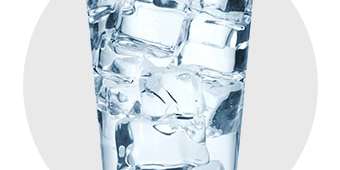
High-quality water is essential for health and safety, but it can be challenging to determine its quality. Many of the particles in water are microscopic and should be removed for health compliance and hygiene reasons, such as nitrates and arsenic. Customers rightly equate water clarity with water quality, preferring clear, pure water.

Some people would rather have minerals in their water to prevent it from tasting flat, so you may have to add these in if they aren't already present. When you're measuring water colour, striking that balance between turbidity and quality is critical.

Determine the Turbidity in Water

Turbidity is an umbrella term for a lack of transparency in water. When water appears unclear, tiny particles are present — these particles reflect light to your eye or elsewhere, reducing clarity. The less turbidity in water, the more light can penetrate it, giving it a clear appearance. It's important to note that some turbidity occurs naturally, and some minerals can be beneficial for taste. To maintain colour consistency, you should measure the colour of water throughout the production process.
Read  Temperature Effects on Colour Measurement: Maintaining Accuracy in Extreme Conditions

Ensure Your Water Meets Industry Colour Standards

Some of the different organizations regulating the colour of water include the American Public Health Association (APHA), which created the APHA (or Hazen) Colour Scale, and the American Dye Manufacturer's Institute (ADMI). The Gardner Colour scale works in conjunction with their regulations, as it also measures the colour of water.

The APHA Scale measures the yellowness in water, and the ADMI measures clear liquids of any colour. The Gardner Scale can measure water that's much more murky in appearance. Your water should have a zero score to be appealing to customers.

Understand the Difference Between True Colour and Apparent Colour

You want to measure the true colour of water, not the apparent colour. Before testing for true colour, remove the particles that cause turbidity in the water. The particles that cause cloudiness present the apparent colour. Once you've removed the suspended materials, you can move on to testing for the water's actual colour. This distinction is crucial, as you can save time and money by measuring the water's colour in its purer form.

INFO  Get More Information

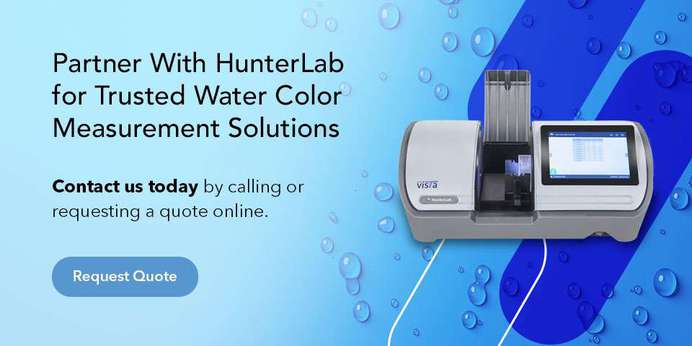
Partner With HunterLab for Trusted Water Colour Measurement Solutions

With over 70 years of experience providing colour measurement solutions, we at HunterLab have a range of spectrophotometers to meet your lab's needs. Partner with us for accurate and speedy water colour measurements every time. Our easy-to-use, compact spectrophotometers quantify colour measurements objectively, allowing you to assess your results for better production processes. Contact us today by calling or requesting a quote online, and one of our experts will follow up with you promptly.