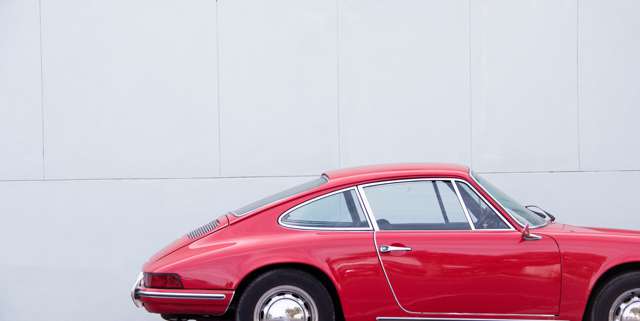
Being able to match a vehicle colour perfectly is the mark of a high-end auto body repair shop. Image Source: Unsplash user Josh Rinard

When a consumer turns to a body shop for car repairs after a crash, their goal is to get their vehicle back in the best condition possible. Ideally, they want it to look like their vehicle was never in an accident in the first place. In part, this is driven by financial considerations; after a vehicle is in an accident, its value can drop by as much as 10%.1 This diminished value can be a significant issue and a point of contention between car owners and insurers, as it limits resale options for a vehicle. Of course, even owners who want to keep their vehicle typically also want to remove any indications of damage, particularly if the car is rare, valuable, or has sentimental value. As a result, the auto shops that can return a car to its pre-accident condition are in high demand.

A significant part of the post-accident repair process is ensuring a seamless paint job without requiring the entire vehicle be repainted. For body shops, this means that paint matching must be a top priority. While you may have a good idea of the base colour of the vehicle, matching that colour identically virtually impossible without the use of modern technology. As such, spectrophotometers are essential to pinpoint the perfect colour match.

spectrophotometer-auto-paint-2.jpg

Without proper colour matching, a seamless collision repair job is not possible. Image Source: Unsplash user Ivan Sean


Read  Temperature Effects on Colour Measurement: Maintaining Accuracy in Extreme Conditions

Challenges in Auto Paint Matching

Colour matching is often the first step that a body shop undertakes when dealing with the repair of a vehicle due to the lengthy nature of the process. A car will have a base colour that’s listed on its initial spec sheet, but that paint will fade over time as the result of environmental influences, which means that simply selecting the same base colour will likely not generate a perfect match.2 When that’s the case, auto shops repairing a paint job have one of three options:

  • Accept a slight mismatch: If the area to be fixed is not particularly noticeable, a customer may be willing to tolerate a small mismatch in paint colour. Accepting the mismatch is the least desirable option to the customer, however, as the repairs will be apparent.  
  • Repaint the entire vehicle: In cases where a mismatch would be very noticeable, the body shop may instead choose to repaint the whole vehicle. The issue here is that repainting the whole vehicle is expensive and customers—or, more likely, insurance companies—may not be willing to pay this cost.
  • Create a custom colour: Creating a custom colour to perfectly match the paint can be a challenge but tends to be the most cost-effective and aesthetically pleasing option for repair. However, this step can also be time-consuming, requiring extensive trial and error to ensure a precise result if relying solely on visual colour assessment.

While creating a custom colour is often the best alternative for repairing a vehicle’s finish, it’s also the process that has the highest potential for error. Even a slight variation between the existing finish and the new paint will be noticeable and likely unsatisfactory to the customer. To ensure a perfect repair, auto body shops should therefore employ modern spectrophotometric technologies in finding and creating the right colour.

spectrophotometer-auto-paint-3.jpg

Vintage car colours can be particularly challenging to match in auto repair. Image Source: Unsplash user Robin Vet

INFO  Get More Information

Spectrophotometers Offer Fast, Accurate Colour Matching

To minimize the need for trial and error in the colour creation process, many auto repair shops use portable spectrophotometers to replace visual colour assessment. These instruments are becoming standard tools in auto body shops, as they allow for rapid and accurate colour readings of any vehicle, even in cases where a custom, vintage, or other challenging paint job needs to be repaired. The process for using spectrophotometric colour measurement in your colour matching process works as follows:

  1. Clean the panel to be matched: This is an important step, as spectrophotometers are very accurate and even small amounts of dust or dirt may affect the colour data.
  2. Take multiple readings with the spectrophotometer: Numerous readings should be taken to accurately capture the colour data from the vehicle and ensure a precise result.
  3. Test sample colours based on spectrophotometric results: After the user finds the exact shade of the vehicle, they can create a new colour and use the spectrophotometer to test that colour against the vehicle colour to ensure a perfect match. This allows for a significantly higher degree of accuracy than visual assessment alone.

A portable spectrophotometer offers a body shop the ability to provide tech-forward, aesthetically pleasing repairs even in cases where the exact shade is no longer commercially available. It allows a body shop to essentially return a vehicle to pre-accident condition, which is exactly what consumers and insurance companies are looking for when they choose an auto body shop. As such, a shop that can provide perfect colour matching via spectrophotometric analysis, is a valuable resources for customers, helping them restore their vehicles to their original state.

HunterLab Quality

HunterLab has been a leader in spectrophotometric colour measurement for over 60 years. Today, we produce a comprehensive line-up of spectrophotometers ideally suited to the varied needs of our customers. Our product range includes state-of-the-art dual beam portable instruments ideal for paint matching in the auto body industry, drawing on decades of experience to provide accurate results time after time. Contact us to learn more about our renowned instruments and let us help you take your shop’s paint matching capabilities to the next level.