HunterLab
  • Products
    • Benchtop Spectrophotometers
    • Portable Spectrophotometers
    • Quality Control (QC) Software
    • In-Process / In-Line
  • Industries
    • Food
    • Beverages
    • Plastics
    • Chemicals
    • Bio-Pharma
    • Building Products
    • Paints & Coatings
    • Paper
    • Textiles
  • Learn
    • Measurement Methods
    • Glossary
    • Application Notes
    • Customer Stories
    • Product User Manuals
  • Company
    • About
    • History
    • Careers
  • Resources
    • Blog
    • Certifications
    • Customer Stories
    • Video Gallery
  • Contact
    • Support Website
    • Support, Services and Parts Queries
    • Product Queries
    • Our Location
  • Get Quote
  • Search
About
BLOG

Interested in a little light reading?

Our blog is continually updated with helpful educational information, advises, research and insights—all in the name of helping you level-up your colour and appearance needs. Grab a drink and enjoy our stories!

Explore Stories
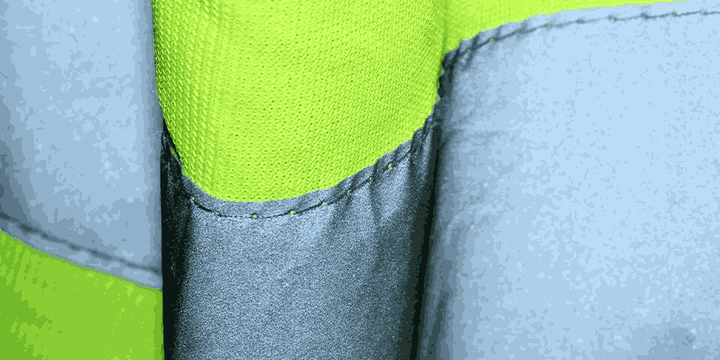
A close up of high-visibility safety apparel

"Spectrophotometry Ensures Colour Quality Control of High-Visibility Safety Apparel"

Read

Explore Our Products

View More

"Instrumental Colour Analysis Ensures Military Textiles Manufacturers Meet Berry Amendment Standards"

Read

"Spectrophotometry in Fabric Production: Achieving Colour Conformity in Blends of Natural and Synthetic Fabrics"

Read

"Spectrophotometers Ensure Supply Chain Quality Control for Garment Manufacturers"

Read

"Off Goods Reduced by Spectrophotometer Use in Post-Dye Tufted Carpet"

Read

"Spectrophotometers Allow Bridal Lace Manufacturers to Maintain Consistent Colour and Quality"

Read

"Spectrophotometry Is Refining Eco-Friendly Dye Technologies and Protecting Water Supply"

Read

Spectrophotometry Ensures Colour Quality Control of High-Visibility Safety Apparel

Posted on Jan 21, 2026 by HunterLab

Conspicuity is the essential function of High Visibility Safety Apparel (HVSA), protecting workers across the nation who depend on being easily seen to prevent accidents. Highway workers, construction crews, airport personnel, firefighters, and many others rely on the enhanced visibility these garments provide when performing their duties in dangerous areas with low visibility conditions.

HVSA can be important in civilian life as well, for bikers, hunters, or anyone outdoors during hunting season.

While garment manufacturers have a stake in the correct coloration of their products, in the case of HVSA, the obligation has actually been codified into law. According to the U.S. Occupational Safety and Health Administration, workers performing dangerous tasks requiring conspicuity, such as roadside workers, must wear garments that conform to the requirements established in ANSI/ISEA 107-2015. The ANSI standards require that a garment’s material must be tested by an accredited laboratory and certified by the manufacturer with a Declaration of Conformity.

Without proper testing and the ability to guarantee that their HVSA meets ANSI standards, manufacturers face significant risks in sending these products to market. To remain competitive, manufacturers must invest in colour quality control equipment and processes, including spectrophotometers/colorimeters.

How Do Spectrophotometers Ensure Compliance With High-Visibility Safety Standards?

Colour measurement devices that ascertain the exact colour of opaque materials by measuring reflected light are known as reflectance spectrophotometers. HVSA manufacturers depend on these solutions to ensure their clothing meets the colour standards prescribed in ANSI 107. The extraordinary degree of colour measurement accuracy offered by reflectance spectrophotometers makes them essential to determining the colour of these garments and a standard part of safety testing.

ANSI/ISEA standards explicitly require the use of spectrophotometers/colorimeters for both colour and colorfastness testing of HVSA. While third-party laboratories perform final certification, manufacturers must incorporate spectrophotometric measurement into their own quality control processes to ensure compliance. These devices prevent costly rejections and delays by confirming garments meet colour requirements before they're submitted for certification or shipped to distributors.

Manufacturers can use modern spectrophotometers or colorimeters with dedicated colour-measurement software to check how closely production colours align with their specified standards. The software expresses colour as numerical values, making it easier to monitor small shade differences and document whether batches fall within defined tolerances.

You can also save standards in the device's memory, so technicians can quickly select the framework they need when testing different batches of clothing.

Posted in Color In Textiles

Instrumental Colour Analysis Ensures Military Textiles Manufacturers Meet Berry Amendment Standards

Posted on Nov 29, 2023 by HunterLab

U.S. Soldiers celebrating at the Armed Forces Classic game day in South Korea. Image Credit: Flickr User USAG – Humphreys

The U.S. military and uniformed services purchase their textiles based on specifications that have been enshrined in a series of laws1. The Berry Amendment and the Kissell amendment detail exactly what fabrics and colours are suitable, for everything from camouflage and dress uniforms to tarps and vehicle coverings. For U.S. textile manufacturers, this presents an opportunity to lock down steady contracts, whose requirements do not change as often as those of the ever-evolving world of fashion. With approximately 31,000 line items purchased every year, these contracts can provide a significant amount of revenue for textile makers. Companies manufacturing textiles for U.S. allies must meet similar legal requirements and are presented with similar opportunities.

This is a double-edged sword, however, requiring rigorous quality control systems from manufacturers. If a batch of textiles should fail to meet the standards prescribed by law, it will be rejected and manufacturers must eat the cost of materials, labor, and delivery. Even more alarming, repeated failures could cause the Defense Logistics Agency to end the contract. This would have an immediate, chilling effect on a company’s operations. Fortunately for manufacturers, this is a simpler standard to meet than the whims of designers. It’s an open book test; all manufacturers need to do to ensure they meet requirements is look up the specifications and test their products before delivery to make sure they match. The requirements should be included with the contract paperwork, and if not, will be available on request.

Military textiles like camouflage are designed to protect warfighters and help them blend into their surroundings. Image Credit: Flickr User Program Executive Office Soldier

Posted in Color In Textiles

Spectrophotometry in Fabric Production: Achieving Colour Conformity in Blends of Natural and Synthetic Fabrics

Posted on Nov 29, 2023 by HunterLab

He’s looking mad, today. Well, he looks mad every day, that’s his look, mad, but today he looks like he means it. “Scott!” he shouts. It isn’t even 8 AM yet. “Yessir?” I ask. “Scott, do I look like a fool to you?” he asks. “No sir,” I say. “You look mad. That’s your look. Mad.” This was all so much easier back when he was just making rap music. But you try telling him fashion was a bad idea. “I am mad!” he shouts. “My warm brown cotton/nylon Meggings line don’t look warm brown to me. They look cool brown! I can’t sell cool brown cotton/nylon Meggings, Scott! I’m gonna look like a fool!” “You don’t look like a fool,” I try. “You look mad.” But he’s not even listening anymore. “We gotta send it back,” he’s telling himself. “We gotta send the whole shipment back. Why would they send me cool brown? Why would they play me like that?” He drops his sunglasses to his nose and stares me in the eyes. “Scott,” he asks. “Do people not take me seriously?”

Garment manufacturers take the colour of the clothing they produce seriously because their clients take the colour of their clothing seriously. Achieving correct, consistent colour in blended natural and synthetic fibers is inherently difficult. So serious garment manufacturers incorporate objective, spectrophotometric colour measurement into their manufacturing process. Because until you put a number on it, there’s no real way to tell what a designer wants when they say warm brown.

Don’t they know those are Meggings? Image Credit: Flickr User fervent-adepte-de-la-mode (CC BY 2.0)

Posted in Color In Textiles

Spectrophotometers Ensure Supply Chain Quality Control for Garment Manufacturers

Posted on Nov 29, 2023 by HunterLab

By 3:00 am, it’s already on Twitter. At 7:00 the phone is ringing, and the morning just got hectic. Your primary cotton source, a Vietnamese plantation, lost its storage facilities and much of its crop to a major mudslide. Nobody was hurt, but you’ve got to find a new supplier to have any hope of completing the orders already in your pipeline.

That’s no problem. Saved in your files is a three-page list of cotton suppliers, from New Zealand to Spain. A quick look and you find a Turkish plantation that can ship bales down the Mediterranean and across the Atlantic, without a significant price difference. But it’s too bad—you’ve been buying from the same company for years, and you already know that the Turkish cotton will require you to adjust your dyeing process.

It’s not exactly a secret that colour consistency can be affected by any change in the location in which a fiber is grown, made, or dyed.1 And if garment manufacturers have more opportunities than ever in a global marketplace, they also have more competition—should you deliver a late or unsatisfactory order, there is always another manufacturer eager to step in and demonstrate their reliability. Every time you lose productivity because of colour discrepancies, you risk losing business.

Spectrophotometers Increase Lab Dye Efficiency

But objective colour measurement is achievable with spectrophotometric technology. Samples of incoming fabric shipments from suppliers can be scanned and their colour assigned an objective numerical value using the Hunter l*a*b coordinate system.

Knowing the colour of a fabric before it enters the lab for dyeing allows you to save time by reducing trial-and-error waste. Previous dips might yield information on how a given fabric—Moroccan wool, for example—reacts with specific dyes. Access to this data allows you to more accurately predict which dyes will render a colour to match your standard. And by positively identifying that an incoming fabric sample is exactly the same colour as a previous sample, you can produce a standard-matching dye in very few trials.

By systematically reducing colour disagreement with spectrophotometric analysis, the number of lab dye cycles can be reduced, opening up days or weeks in your lab dye schedule—and perhaps even allowing you to take on a larger volume of orders.

The dyeing process is made easier by having data from previous batches on hand. Image credit: Flickr user Kevin Jarrett (CC BY 2.0)

Posted in Color In Textiles

Off Goods Reduced by Spectrophotometer Use in Post-Dye Tufted Carpet

Posted on Nov 29, 2023 by HunterLab

It happens. An employee makes a mistake and the carpet doesn’t come out the way it’s supposed to. A whole roll gets pulled off the line, marked down, and taken off to be piled up with all the other off goods waiting in the truck behind the warehouse. Not the truck that makes you money; the truck to the discount buyer, who will make their cut on the rugs you can’t bring anywhere else. Each truckload represents days’ worth of machine time and thousands of dollars in materials. It’s a shame—especially each time a roll is lost to something preventable, like inaccurate colour measurement.

But accurate measurement isn’t always a simple matter, nor is it guaranteed by running each strikethrough under a spectrophotometer. The unique material properties of tufted carpet can cause significant difficulties for these machines, and only by systematically adhering to proper techniques can you generate consistent colour quality—and cut down on waste.

Challenges Inherent in Tufted Carpet

Spectrophotometers reflect controlled wavelengths and intensities of light off physical materials at specific angles and record the alteration of that light’s reflections with finely tuned sensors, using the process to generate a measured, objective reading of colour. The only variables the machine does not control are the physical properties of the object it’s measuring. Objects of the same colour but with differences in texture, luster, or opacity can return different readings.

Tufted carpet, unfortunately, contains differences in texture, luster, and opacity within each sample. Because looped yarn does not cover 100% of the carpet’s surface, the gaps between the fibers will produce different readings on different backgrounds. Depending on the materials you use, the backing might also be translucent, compounding the margin for error.

The tufting and dyeing process can also result in colours that are directionally oriented or otherwise non-homogenous across a given sample. This means that readings taken from different angles can vary, as can readings taken from different parts of the same sample. While one section of the carpet might pass colour tolerance standards, another section might not, and a perfectly good rug could be rated non-first quality and condemned to the off goods pile.

Posted in Color In Textiles

Spectrophotometers Allow Bridal Lace Manufacturers to Maintain Consistent Colour and Quality

Posted on Nov 29, 2023 by HunterLab

It was mid-October. I found myself wandering the aisles of an NYC garment district lace shop, running my fingertips over bolts of the most beautiful lace I had ever seen. In a vast sea of what most would call “white,” my untrained eye appreciated subtle differences in tone, shimmer, and hue. Knowing precisely which shade of white was on the bolt before me required more than the naked eye and much more than I happened to have in my purse. Such precision required the use of superior quality tools, such as a spectrophotometer.

Bridal lace manufacturers know all too well the difference between ivory, bone, cream, and eggshell. They live in those differences (and make a living on them). To accompany a fall line of wedding gowns influenced by warm-tone ivory brocades, you must produce the correct corresponding accent fabrics—in just the right colours.

The true colour saturation of a sheer or net fabric can’t be evaluated with the naked eye—it requires tools, such as a spectrophotometer. Image: Flickr CC user Wedding Dress Factory Outlet

Posted in Color In Textiles

Spectrophotometry Is Refining Eco-Friendly Dye Technologies and Protecting Water Supply

Posted on Nov 29, 2023 by HunterLab

Innovative new dye technologies are reducing dependence on scarce natural resources and protecting our water supply. Image Source: Unsplash user Griffin Keller

Textile dyeing is one of the oldest art forms in existence, dating back to at least the Neolithic period. Since that time, dyeing methods have become infinitely more sophisticated, allowing us to create an astounding array of hues using both natural pigments from plants, insects, and clays and artificial dyes concocted in the most high-tech labs. However, some of the most revolutionary advancements in dyeing are just now beginning to enter the marketplace. In response to growing concerns about the environmental impact of traditional, water-heavy dyeing processes that create extraordinary amounts of pollution, ColorZen and DyeCoo have introduced ways of dyeing fabrics using little or no water while drastically reducing energy consumption and minimizing use of toxic chemicals. Although still in their infancy, these exciting dye technologies could be the way of the future and fundamentally change the way the textile industry—which currently has “one of the largest water footprints on the planet”—functions.1

Dyeing methods that use minimal or no water could offer significant protections to lakes, rivers, streams, and oceans, protecting wildlife and public health with guarding against water shortage. Image Source: Pexels user Terry V. Artt

Posted in Color In Textiles
Prev
1
2
3
Next

Most Related Posts

  • Spectrophotometry Ensures Colour Quality Control of High-Visibility Safety Apparel
  • Instrumental Colour Analysis Ensures Military Textiles Manufacturers Meet Berry Amendment Standards
  • Spectrophotometry in Fabric Production: Achieving Colour Conformity in Blends of Natural and Synthetic Fabrics
  • Spectrophotometers Ensure Supply Chain Quality Control for Garment Manufacturers
  • Off Goods Reduced by Spectrophotometer Use in Post-Dye Tufted Carpet
  • Spectrophotometers Allow Bridal Lace Manufacturers to Maintain Consistent Colour and Quality
  • Spectrophotometry Is Refining Eco-Friendly Dye Technologies and Protecting Water Supply
View More

Follow Us

  • LinkedInFollow us on LinkedIn
  • YouTubeFollow us on YouTube
  • facebookFollow us on Facebook
  • XFollow us on X (formerly Twitter)
  • instagramFollow us on Instagram

HunterLab

703.471.6870

Corporate Headquarters
11491 Sunset Hills Road
Reston, Virginia 20190

  • Products
    • Benchtop Spectrophotometers
    • Portable Spectrophotometers
    • Quality Control (QC) Software
    • In-Process / In-Line
  • Industries
    • Food
    • Beverages
    • Plastics
    • Chemicals
    • Bio-Pharma
    • Building Products
    • Paints & Coatings
    • Paper
    • Textiles
  • Learn
    • Measurement Methods
    • Glossary
    • Application Notes
    • Customer Stories
    • Product User Manuals
  • Company
    • About
    • History
    • Careers
  • Resources
    • Blog
    • Certifications
    • Customer Stories
    • Video Gallery
  • Contact
    • Support Website
    • Support, Services and Parts Queries
    • Product Queries
    • Our Location

Get in touch

  • Instagram
  • Facebook
  • LinkedIn
  • Twitter
  • Certifications
  • Terms and Conditions
  • Privacy Policy
  • Sitemap
  • Code of Conduct