
Not all “red” is created the same and accurately producing these subtle differences in colour is important for maintaining brand integrity in the sports and fashion worlds. Image source: Flickr user kennethkonica

Anyone who isn’t convinced that colour accuracy in textiles is important simply needs to check out the tailgate areas at college football games. Say you’re at a Nebraska-Oklahoma pregame tailgate. (Yes, these rivals no longer play in today’s changing college football landscape, but please play along for the sake of this example.) If you think the school colours for both teams are red and white, chances are pretty good you’re going to be rejected by both sides and miss out on some great food, beverages, and company. As any good Cornhusker knows, Nebraska is scarlet and cream, while the Sooners are crimson and cream. Those two colours may be very close to each other on the colour wheel1, but on Saturdays it’s almost as if they’re on opposite ends. The subtle differences in uniform colours matter—and this idea carries over to all areas of textile colour accuracy. When testing the colour accuracy of textiles, spectrophotometers offer an ideal method of evaluation. And when using spectrophotometric instrumentation, how you prepare the textiles to ensure an accurate colour reading is crucial.
4484315350_a6efcb3a33_e.jpg

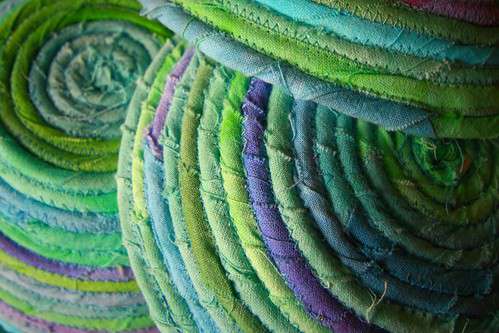
Dyeing different types of textiles require different techniques because of the differences in the texture of the fabrics. Image source: Flickr user jillyspoon
Read  Spectrophotometry in Fabric Production: Achieving Colour Conformity in Blends of Natural and Synthetic Fabrics

Protecting a Brand’s Integrity

In the fashion industry, the key to finding customers with brand loyalty is delivering a consistently great product. Consistency is required in many different aspects when it comes to clothing and other fashion items. This includes using materials of a high quality, achieving consistency through sizes and cuts, and maintaining colour accuracy.

A fashion brand may be able to define itself through a particular colour, for example, if that colour runs through several different pieces of clothing and accessories. But if the brand doesn’t have colour accuracy throughout all pieces, the customer is going to be confused or look elsewhere. The purple shirt you want to purchase from one brand had better match the purple in the accessory you also want from the same brand. There’s no room for subtle differences in colour accuracy in the fashion industry. Maintaining the desired colour throughout all aspects of the brand can be a significant challenge for a few different reasons.

  • Dyes: The dye in use and the dye application process must be the same every time. For example, if a textile manufacturer doesn’t create its own dyes, it will need a way to measure the dyes it purchases, ensuring that colour is exactly the same from batch to batch.
  • Textiles: If different items within a brand consist of different types of textiles, it becomes challenging to apply dye consistently. For example, dyeing denim is a far different process than dyeing silk.2
  • Location: Most manufacturers have multiple locations for the production of clothing and textiles. This means that the colour application and colour measurement process must be carried through and duplicated precisely at each site.

Manufacturers can achieve success in these areas through a variety of measures, but consistency is the key. Any techniques that a manufacturer uses for colour measurement and for sample textile preparation must be repeatable from location to location. Employing consistent training procedures can aid in this process.

INFO  Get More Information

Measuring Colour Differences

Colour errors inevitably lead to scrapped products, wasted time, and extra expense for brands. To achieve the greatest textile colour accuracy, manufacturers need to make use of the precise measurements available from the use of spectrophotometers. And to make the best use of a spectrophotometer for colour accuracy, it’s vital that a manufacturer properly prepares the samples. Even a slight variation in the sample could lead to inaccurate readings. Different textiles often require different methods of measurement, as discussed below.

  • Crosshatch: Many types of fabric have crosshatch patterns, such as denim. Measuring such fibers with a spectrophotometer may require an averaging technique, where you’ll place the fabric on a skein holder and then rotate it 90 degrees after each colour measurement. Calculating an average of the four results determines the colour measurement.
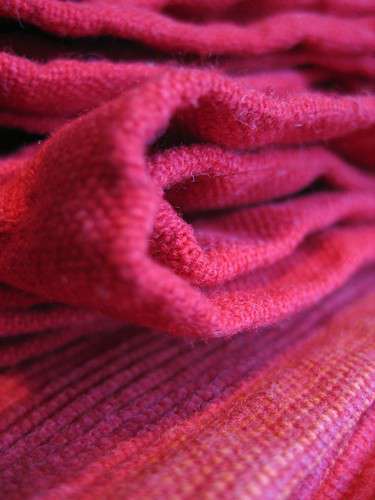
  • Layering: When performing a colour measurement on a thin fabric, consider using multiple layers to prevent inaccurate results. Start with a few layers and then add layers until the measurement result becomes static.
  • Stretching: When working with a fabric where the fibers all tend to lie in the same direction, you have to use caution in the way the fabric is placed on a skein holder, as the fabric tends to stretch. If it’s stretched too much, the spectrophotometer may read the colour of the backing material along with the fabric.
  • Yarn: To measure wound yarn, you may want to use a bobbin adapter with the spectrophotometer, which is a curved attachment that matches the curvature of the bobbin and allows the device to maintain tightness to the surface of the wound yarn.
1972323172_896c82b9b5_e.jpg

To achieve proper colour measurement when using a spectrophotometer, you may need to layer a thin type of fabric. Image source: Flickr user janetmck

The Flexibility of a Spectrophotometer

Having numerous options for textile colour accuracy measurement is one of the best features of a spectrophotometer. However, just as important is preparing each specific textile sample properly to help avoid colour measurement errors. HunterLab’s history of deploying the right spectrophotometer for the colour measurement needs of the textile industry is unmatched. We are also dedicated to helping our customers learn how to prepare accurate textile samples and get the most out of their instrumentation. Please contact us today to learn more about the use spectrophotometers in the textile industry.