
People have been working to understand colour for centuries. Because colour plays such a large role in many aspects of life — from art to commerce — people need reliable ways to communicate about colour. Colour measurement instruments make it possible to consistently quantify, compare and reproduce colours, essentially eliminating miscommunication between designers, manufacturers and organizations that need to define specific shades.

The possibilities colour measurement offers today arose from years of study and development. When you understand the history of colour measurement devices, you can better understand how they work and the benefits they offer. Let’s take a look at how far the colour measurement field has come.

Early Discoveries in Colour Measurement

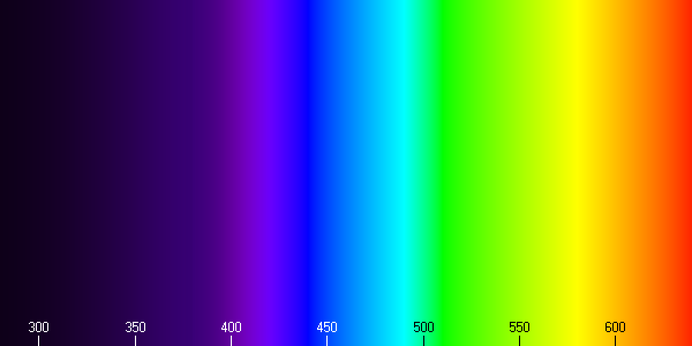
Before people could develop ways to measure colour, they needed to understand what colour is and how it is perceived. As a result, some of the earliest discoveries in colour measurement involve the nature of light. In the mid-1600s, Isaac Newton used prisms to show that refraction could break white light into the constituent components of the visible light spectrum — red, orange, yellow, green, blue, indigo and violet. In 1692, he would write “Opticks,” which would serve as a basic, if imperfect, foundation for colour research.

In the early 1800s, Thomas Young proposed the idea that red, green and blue colour receptors in the human eye work together to create the wide variety of colours we perceive. Later, James Clerk Maxwell furthered this theory by showing that red, green and blue light could combine to create almost any desired colour. Although Maxwell was not the first person to suggest that light acts as a wave, he did show that those wavelengths could be quantified as a form of electromagnetic energy in nanometers.

Read  Temperature Effects on Colour Measurement: Maintaining Accuracy in Extreme Conditions

Colour Spaces and Tolerancing

The next step toward more accurate colour measurement came with the development of colour spaces. Colour spaces are mathematical organizations of colour that allow for the mapping and accurate reproduction of specific colours. In 1931, the International Commission on Illumination (CIE) published the 1931 XYZ colour space.

In 1941, Richard Hunter developed an improved tristimulus colour model called Hunter Lab, which quantifies colour on three axes to represent colour differences uniformly. CIE published an updated version of the L*a*b* model in 1976, and most colour measurement instruments use it today.

Around the same time that Richard Hunter was developing the Hunter Lab colour space, David MacAdam created the first tolerancing diagram, defining the level of variation in colour needed before observers notice a difference.

INFO  Get More Information

A History of Colour Measurement Devices

The earliest colour measurement devices were colorimeters. These expensive devices mimicked the human eye’s tristimulus response, quantifying the red, green and blue components of a sample’s colour to determine its location in colour space. As we have deepened our understanding of colour, colorimetry devices have improved dramatically, becoming more accurate and accessible. Today, most people use spectrophotometers to measure colour. These instruments filter light into narrow bands for analysis across the visible spectrum.

Spectrophotometers have seen several technological improvements over the years. Modern colour measurement instruments feature geometries that allow them to measure a wide variety of surfaces, including reflective, transparent and curved. Today’s spectrophotometers can even take measurements from multiple angles. In the future, we will likely see colour measurement technology improve further as devices become more interconnected.

At HunterLab, we offer a variety of cutting-edge colour measurement solutions for modern applications. To learn more about improvements in colour measurement, read our other blog posts or contact us today.