

My driving habits changed when I got my commercial driver’s license. I started parallel parking like I was shooting pool. I slowed way down. And I started paying much more attention to traffic signs. Large vehicles react more slowly than smaller ones. An accident involving a large vehicle will be more serious. To drive safely, I needed to make decisions well ahead of time. With my attention divided between the condition of my vehicle, other vehicles, pedestrians, road conditions, and navigation, I needed to quickly and easily identify traffic signs. Colour differences and reflectivity of signs made this possible. Without them, the roads would be far less safe to drive.

Warning signs are colour coded to keep motorists safe. Image Credit: Flickr User Jay Galvin (CC BY 2.0)

Read  Exploring Colour Measurement Methods for Fiber Cement Siding

Retroreflective Sheeting for Traffic Signs Must Meet Federal Colour Standards

For this reason, traffic signs must conform to the standards established by the Federal Highway Administration1 regarding colour and reflectivity. So, manufacturers of retroreflective sheeting for traffic signs must meet rigid colour control standards. Whether supplying client companies or the next division of a vertically integrated company, colour quality control is an essential stage of traffic sign manufacturing.

This is a matter of simple dollars and sense. In either case, rejections at delivery costs more than problems corrected on the production floor. Not only are time and materials wasted, but so are delivery costs and the energy needed to run the machinery. For busy shops, the capacity lost to rework comes with an opportunity cost as well. That time could have been used to fill a new, profitable contract.

4208112060_af25190f2e_z.jpg

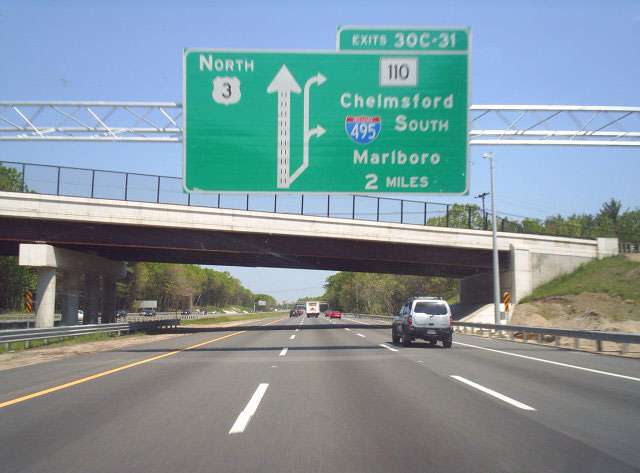
Highway signs must conform to federal colour standards. Image Credit: Flickr User Doug Kerr (CC BY 2.0)

INFO  Get More Information

Spectrophotometers Accomplish Objective Colour Assay

Fortunately, the colour standards do not rely on subjective, human analysis. When it comes to communicating precise differences in the shades of objects, human language lacks the necessary precision. To improve on our imperfect colour description abilities, scientists back in the early 1930’s developed a method to correlate the human perception of colour to the instrumental measurement of light in terms of the primary colours Red, Green, and Blue.  This allows an instrument to measure reflected light and provide numerical coordinates. As a result, acceptable tolerances for the colours of traffic signs can be objectively quantified.

Few people would claim to be able to look at a colour and describe it numerically. A spectrophotometer is designed to do exactly that. As each sheet is extruded, spectrophotometric analysis can determine whether or not it will meet colour tolerance standards. If sheets that do not meet standards are being produced at a growing rate, despite adherence to established formulas, managers should inspect their process to discover the problem. Doing so can lead to increased efficiency or adjustments in formulas.

Looks like someone was in a hurry. Image Credit: Flickr User GizmoDoc (CC BY 2.0)

Choosing the Right Instrument for the Job

The effects of texture play a large role in spectrophotometric assay. With retroreflective sheeting, the 45/0 geometry is the prescribed method and the ColorFlexEZ has been chosen by many manufacturers to check their production. The ColorFlexEZ has built in the special retroreflective trapezoidal acceptance tolerancing capability.  

With over sixty years of industry experience, the technicians at HunterLab have worked extensively in the colour measurement of reflective materials. To learn which spectrophotometer would be best for your process, contact the experts at HunterLab today.