
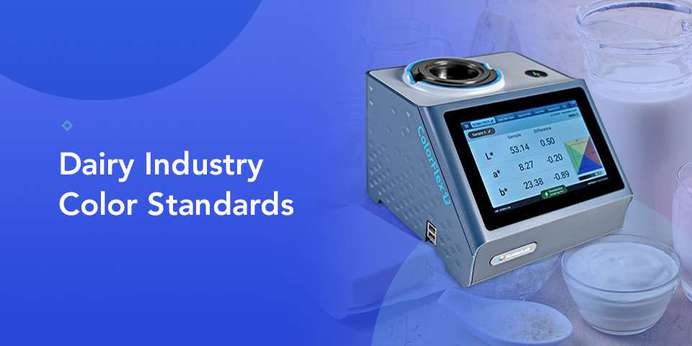
Colour is a critical quality evaluation indicator in dairy product manufacturing, as it helps determine freshness and purity in both raw inputs and finished goods. Measuring at each step is also crucial to ensure products meet standards and gauge the impacts of processing and storage on colour. Industry benchmarks help manufacturers set allowable tolerances and form a basis for scientific comparison to support consistency and quality.
Colour Standards That Apply to the Dairy Industry
Numerous colour standards apply to dairy products at both the governmental and industry levels.
All covered food manufacturing and processing facilities within the U.S. are subject to Food and Drug Administration (FDA) oversight. The agency issues standards on colour tolerances, colour additives, and acceptable measuring methods. Compliance with these standards is mandatory to prevent financial penalties. The United States Department of Agriculture (USDA) has set voluntary standards for colour in milk and butter products to help create consistency between manufacturers for positive consumer perceptions.
Additionally, the industry's American Dairy Product Institute™ determines and maintains standards for its members, including colour tolerances for lactose and whey.