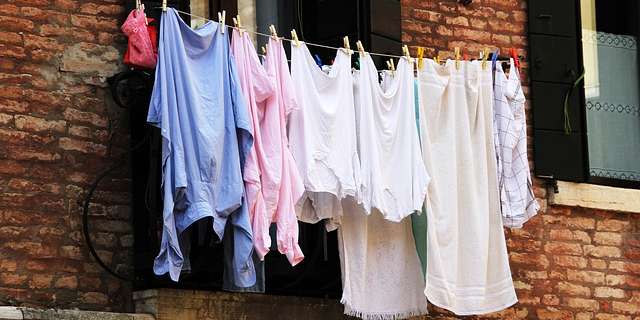
The Grey Change scale can help detect the amount of fading that occurs in different textiles after they’re washed. Image Source: Max Pixel

A homeowner decided to wash a set of red living room curtains for the very first time, carefully following the cleaning instructions listed on the label. He avoided bleach products and washed the curtains on the delicate cycle setting. But despite his diligence, the colour nonetheless faded significantly after washing; his once-red curtains were now a shade of faded pink, and they no longer matched the colour scheme of the living room.

This is a common challenge that textile manufacturers face, whether they’re dyeing textiles for curtains, blankets, clothing or any other colorful fabric. If a large-scale textile manufacturer fails to identify problems with fading or colour bleeding in its products early on, it could lead to customer dissatisfaction later. Yet there is a solution to this problem. Using the Grey Change and Grey Stain colour scales, which are included in the software packaged with some advanced spectrophotometers, textile manufacturers can identify both fading and bleeding early on in the dyeing process. These two colour scales are specifically designed to analyze colour fastness and dye durability, allowing manufacturers to refine their dyeing processes and invest in the most durable dyes for their products.

The Problem with Some Colorful Textile Dyes

Certain textile dyes are more prone to fading and bleeding than others and environmental factors like exposure to UV rays or frequent washing can significantly alter product colour depending on the chemical makeup of the dye.1 This is why textile manufacturers must consider the colour fastness of the dye being used for each product, as different types of dyes will have different benefits and downsides.

The term “colour fastness” refers to a dye’s durability against fading and bleeding; a dye that has excellent colour fastness will be durable and long-lasting, even when exposed to environmental factors that cause colour fading or bleeding. A dye with poor colour fastness won’t be as durable. For instance, one type of dye that is known for its excellent colour fastness is an azoic or naphthol dye.2 These dyes produce bright, bold colours, especially in the red and orange spectrum, and are highly resistant to fading in the wash or even when exposed to bleach. Conversely, acidic dyes tend to be resistant to colour fading when they’re exposed to sunlight, but they’re much more prone to fading and bleeding after washing. Here are a few more examples of common textile dyes and their typical colour fastness:

  • Basic: Excellent light and wash fastness.
  • Disperse: Good light and wash fastness, but sensitive to nitrogen gas.
  • Direct: Fair lightfastness, but very poor wash fastness.
  • Reactive: Great light and wash fastness, but prone to bleeding excess dye unless it’s washed well during manufacturing.
  • Mordant: Good light and wash fastness, but only available in a small range of colours.
  • Premetallized: Good light and wash fastness, but only available in a small range of colours.
  • Sulphur: Fair light and wash fastness.
  • Vat: Excellent colour and wash fastness. It’s perhaps the most durable textile dye used by manufacturers.
  • Fluorescent brighteners: Fair wash fastness, but very poor lightfastness.

While this basic list of colour fastness can give you a general idea of which textile dyes will be the best choice for your textile products, the list isn’t foolproof. For example, although sulphur dye is generally fairly resistant against colour fading after being washed or exposed to sunlight, some manufacturers have found that certain sulphur-dyed yarns will occasionally fade after about six months of use. This is why it’s important to test your dyes for true colour fastness using the Grey Change and Grey Stain scales; every dye reacts differently with each fabric you use, so by testing each new product in advance, you may produce more durable, colorful textiles.
grey-change-color-scale-2.jpg

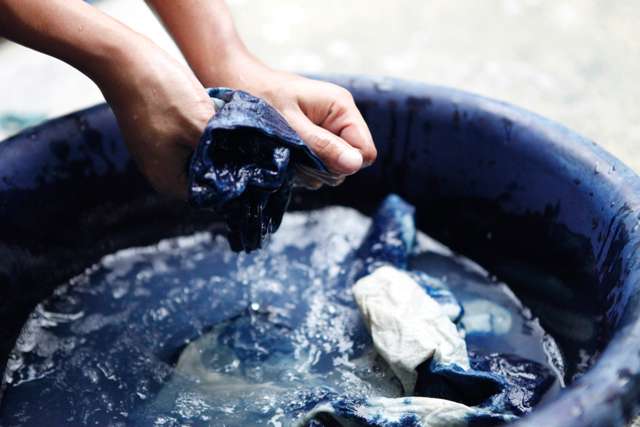
Textile dyes vary in colour fastness depending on the chemical makeup of the dye or the type of fabric that a manufacturer uses. Image Source: Shutterstock user Pichit Tongma

Read  Spectrophotometry in Fabric Production: Achieving Colour Conformity in Blends of Natural and Synthetic Fabrics

Using Grey Change and Stain Scales to Ensure Colour Fastness

Both the Grey Change and the Grey Stain colour scales can help you refine which textile dyes you use to create your products as well as evaluate your dyeing processes. These colour scales work by comparing a textile’s baseline colour (the colour of the product shortly after being dyed) to the colour of the product after it has been washed or exposed to light. While it’s possible to perform a rough version of this colour analysis using visual assessment alone in some cases, you may not detect a subtle change in colour between washed and unwashed textiles with the naked eye. More importantly, visual assessment does not allow you to distill your observations to the objective data necessary for meaningful colour comparison, communication, and correlation to process variables. A spectrophotometer can help you detect, record, analyze, and communicate even subtle colour changes in colour after the very first wash as well as over time, allowing you to determine whether the dye you’re using is durable enough for your products and identify areas of potential process improvement.

The Grey Change Scale Detects Early Fading

To best detect colour fading, you can use the Grey Change scale, which identifies even subtle losses of colour in textile samples. The Grey Change scale works by comparing the baseline colour of the sample to five pairs of grey standards, each representing a different stage of colour fading. First, you can measure the colour of your product sample using a spectrophotometer. From here, you can then wash your sample and re-measure the colour, comparing it to the original with the Grey Change scale. If the sample receives a Grey Change scale rating of 5, that means there was no colour loss whatsoever. If, however, the sample receives a Grey Change scale rating of 1, almost all of the sample’s colour was lost during washing. Generally, dyes with good colour fastness will have a rating of about 4 or 5 on the Grey Change scale. Dyes that noticeably fade (going from red to pink, for example) will generally have a rating of about 3 on the scale. Dyes that are very prone to fading will have a rating of 1 or 2 on the scale.

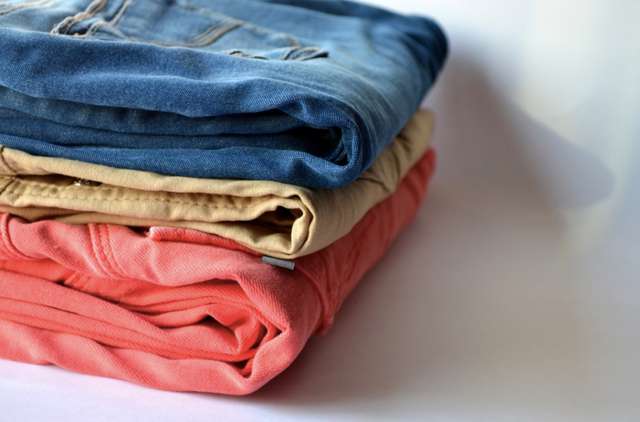
For many manufacturers, it’s important to perform this test after multiple washes to simulate use over time. For example, a pair of dark blue jeans might appear to retain its colour initially but fade to a much lighter blue after repeated washing. Quantifying those changes is critical to accurately assessing colour fastness and implementing protocols to improve durability of colour. Additionally, the scale can be used to quantify colour change as the result of UV exposure, typically in an artificial aging environment.

The Grey Stain Scale Tests for Bleeding

While the Grey Change scale is used to detect colour fading in a sample, the Grey Stain scale can be used to test textiles for bleeding and possible transfer staining. Even if a textile sample doesn’t fade in colour, it’s possible that excess dye in the fabric will bleed onto other clothes during washing and result in staining. This happens often with direct red dyes in particular, especially if a piece of red fabric is washed alongside white fabrics.3 The Grey Stain scale can help you detect this problem shortly after you dye your fabric, allowing you to refine your dyeing process in response.

The Grey Stain scale works in much the same way as the Grey Change scale, analyzing the colour of the sample against five standard colour pairs. This time, however, you’ll measure the colour of a piece of white test fabric, both before and after washing. After the white fabric is washed alongside your dyed fabric sample, you can use a spectrophotometer to analyze the colour of the white fabric. Did it change in colour? If the white fabric receives a rating of 5 on the Grey Stain scale, then it did not change in colour, meaning that your colorful fabric sample didn’t bleed and stain the white fabric. If the white fabric received a rating of 1 or 2 on the scale, then significant colour bleeding occurred, and you may have to refine the type or the amount of dye that you use in your textiles to prevent future bleeding.

grey-change-color-scale-3.jpg

Even slight colour fading can cause a significant change in colour over time, especially in products that are frequently washed, like clothing. Image Source: PX Here

INFO  Get More Information

How to Use the Grey Change and Grey Stain Scales

In order to use the Grey Change and Grey Stain colour scales to analyze the durability of your textile dyes, you’ll need to operate your spectrophotometers in reflectance mode. Next, you can configure the display of your instrument so that it shows you the colour scales. From here, you can simply follow the specific instructions for mounting your fabric samples onto the port of your spectrophotometer. As long as you are operating in standard reflectance mode and your sample is either backed by a white uncalibrated tile or made completely opaque, you can obtain an accurate Grey colour scale reading for each sample. A number of HunterLab instruments s are capable of measuring samples using both types of Grey scales, as they are included in our innovative EasyMatch QC software. Because this software is already included with the spectrophotometers, you won’t have to perform a visual assessment of the Grey colour scales yourself; this analysis is done for you, with a great degree of accuracy.

HunterLab Experience

For more than 60 years, HunterLab has worked closely with the textile industry to find solutions to the varied challenges manufacturers face. Our spectrophotometers are designed to accurately detect the colour of textile samples and include specialized software with the ability to make Grey Change and Grey Stain comparisons, offering manufacturers a fuller picture of their products. Using these tools and techniques, you can refine your textile dyeing process and create products that are as durable as they are beautiful. Contact us to find out more about our renowned instruments and which spectrophotometer may be best suited to your needs.