
Charles Revson, the famously irascible founder of Revlon Cosmetics, once opined that “in the factory, we make cosmetics, in the store, we sell hope.”
But the majority of consumers tend to purchase items in colours that subjectively please them, with little objective evaluation of how products will look once applied. And if you’re a manufacturer, that’s bad news. Cosmetics purchasers already show very little loyalty to specific makeup brands1, and what loyalty is left could easily be eroded by dissatisfaction with colour choice—regardless of the other qualities your brand might offer.
Trained makeup artists, of course, have developed techniques to help users select the best foundation colours for their skin tones2. However, such methods still tend to require a trained eye and a high degree of subjective judgment. To eliminate subjectivity, some cosmetics manufacturers and marketers are beginning to use portable spectrophotometers to change how buyers select foundation—giving them objective information about the colours most suitable for their skin tones. In short, spectrophotometers allow you to sell more than hope.
Skin Colour Measurement
Because skin is translucent, it both absorbs and reflects light, and its colour can look different under different lighting conditions. Different regions of skin also have a differing numbers of layers, surface curvatures, and other variances. Previously, these variations posed significant challenges to anyone who tried to use a benchtop spectrophotometer to measure skin tone. There are simply too many areas to measure—and too much variety—for a benchtop device to be a practical tool at your point of sale.
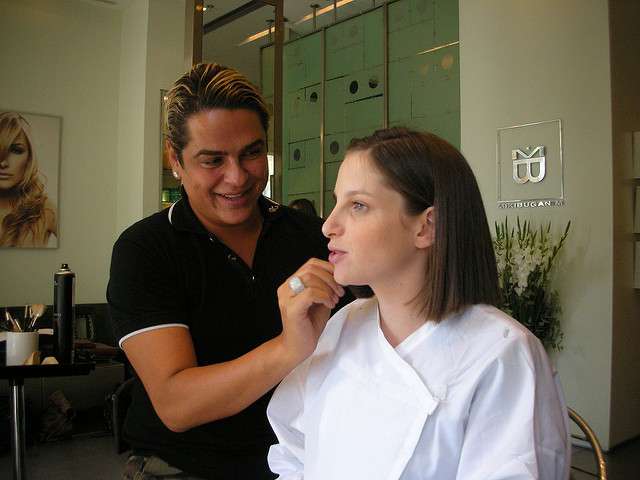
Skin colour varies widely, making accurate measurement challenging. Image credit: Flickr user Achi Raz (CC BY 2.0)
But portable, handheld spectrophotometers are bridging that gap. Your technicians can use these devices to measure a subject’s specific skin tone at different angles and under varying lighting conditions—and to take sample measurements of several different areas of each customer’s skin. The device can be customized with software that combines those measurements into a single reference standard, and customers can even return to the sales counter at different times of the year for scans that are specific to the season.
Each reference standard can also be matched to one of the 110 possible tones on Pantone’s SkinTone colour grid so that, at the end of the measurement process, your customers will have objective information about their underlying skin colour, complete with a specific Pantone colour designation. Your cosmetics sales personnel and makeup artists can then use this information to identify the best foundation colour.