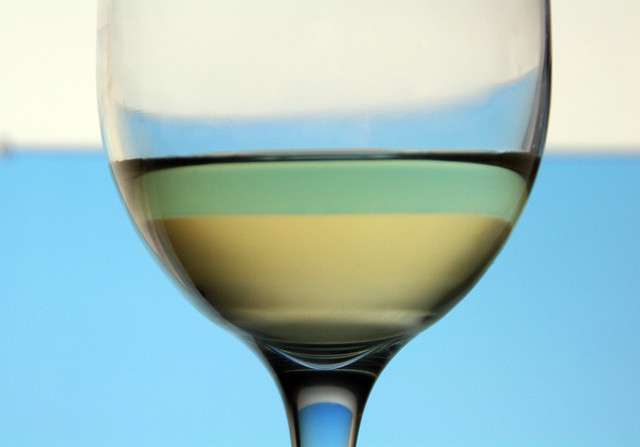
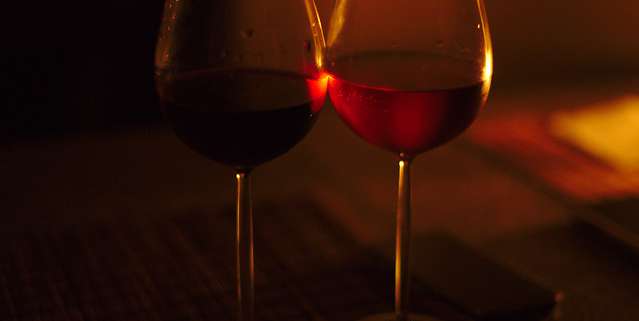
Lighting can change how one perceives the colour of wine. Image Credit: Flickr user idea-saras
I once opened a bottle of white wine, and before I even took my first sip, I knew it had gone bad. How did I know? It was a dull brown colour that resembled a dry, dead leaf. Since the wine should have been a light straw yellow colour, I was able to quickly discover that it had oxidized in the bottle1. Sure enough, I found that the bottle had a leaky cork, which spoiled the wine inside and gave it that brownish tinge.
Sommeliers and casual wine drinkers alike look at colour to determine the wine’s style, quality and age. However, winemakers themselves also use colour quality control to decide whether their wine is worth bottling in the first place. It’s essential for winemakers to find and prevent serious flaws in their wines before they reach the bottling stage, and colour quality control is one common method for spotting inconsistencies. Additionally, some high-end wineries have to go through extensive tasting panels before their wines can receive certain prestigious titles. Meeting critics’ precise colour standards allows these wineries to sell their products at a higher price.
Better Coloration Means Higher Value
In Germany2, high-end wines are rated on a five-point scale by a panel of experts from the German Agricultural Society. The panel scores each wine on overall quality, including whether the wine is the correct colour and opacity for its style. Wines that receive a score higher than 4.5 points out of 5 are eligible for the prestigious gold medal, while wines with perfect scores can earn a Gold Prize Extra seal. Just having this quality seal on the bottle could turn a $15 bottle of Riesling into a $50 bottle.