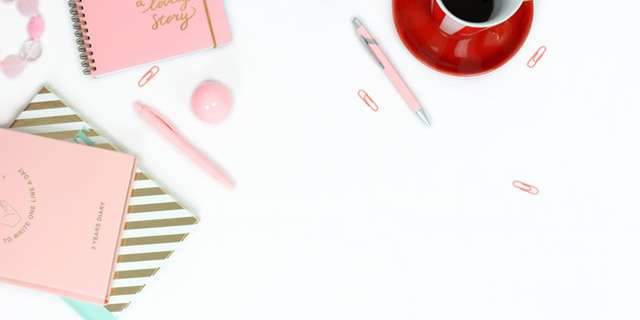
For decades, pink has been associated with femininity, but it wasn’t always that way. Image Source: Pexels user Chimene Gaspar

Pink wasn’t always cool. For years it spoke to a kind of hyperfemininity, standing in for the word “girl”. It was the colour of Barbies and bubble gum, nail polish and Mary Kay Cadillacs. It was regarded as a stark dividing line between genders and an excess of girlishness, and girlishness was not something to be taken seriously.

Of course it wasn’t always this way. When pastel-colored children’s clothing first emerged in the mid-1800s, pink had no gendered associations at all. By the early 1900s, however, that had changed. “The generally accepted rule is pink for boys, and blue for girls,” announced Earnshaw Infant’s Department in 1918. “The reason is that pink, being a more decided and stronger colour, is more suitable for the boy, while blue, which is more delicate and dainty, is prettier for the girl.”1 And so it went until the 1940s, when the associations reversed and pink became visual shorthand for “girl” while blue announced “boy”. Despite a temporary return to more gender-neutral apparel in the ‘60s and ‘70s’, these associations largely remain intact today.

Now that is changing and manufacturers of consumer products and packaging are an important part of both responding to and shaping this cultural transformation. To stay on top of and drive changing colour trends, it’s imperative to implement strict colour quality control protocols throughout the product development and manufacturing processes.

color-trends-2.jpg

The celebration of millennial pink is an important lesson in how cultural conversations can transform our associations with colour. Image Source: Unsplash user Erol Ahmed


Read  Temperature Effects on Colour Measurement: Maintaining Accuracy in Extreme Conditions

The Evolution of Colour Trends

Colour is known to be one of the most significant drivers of purchasing decisions for virtually all consumer goods, from furniture to food, clothing to personal hygiene products. Colour preferences are not static, instead they constantly change in response to cultural shifts and marketing efforts. Staying relevant and creating desirable products, then, requires understanding and being responsive to colour trends.

Perhaps of the most fascinating and surprising colour trend to emerge in recent years has been the celebration of pink. Specifically, millennial pink, which Elle Décor describes as “not quite salmon, but not quite rose.”2 The shade began to gain momentum in the early 2010s driven by high fashion designers like Céline, Ryan Roche, and Jonathan Saunders, the release of Wes Anderson’s The Grand Budapest Hotel, Glossier packaging, and the nebulous world of social media. In the fall of 2015 Pantone announced Rose Quartz, a now-familiar version of millennial pink, as its 2016 Colour of the Year, inspired in part by an Agnes Martin exhibit at the Tate Modern. Soon, pink was everywhere.

So what accounts for the rise of millennial pink, this in-between shade, different from the pale pastels of receiving blankets, more muted than Barbie pink? “We’re in a moment of ambivalent girliness,” writes Véronique Hyland in The Cut. “We’re embracing our girlier impulses: our vocal fry, the “likes” and “ums” we were told would hold us back, our #girlboss-ness. But we’re not quite there. We still have to hold something back.”3 However, others believe the popular of pink arises not just from a newfound celebration of femininity for women, but larger conversations about gender fluidity and breaking down of gendered barriers. “As gender sheds its once-binary definition in favor of a more complex, inclusive, and comprehensive one, pink is undergoing a similar rebranding, rejecting the increasingly defunct girly-girls only interpretation of femininity,” says Kim Vandervoort of Salon. “It seems obvious that this generation’s creative types would, knowing or unknowingly create an aesthetic that … mirror[s] the softening of rigid gender boundaries. It’s a pink for everyone.”4

color-trends-3.jpg

Spectrophotometers allow you to stay responsive to ever-changing colour trends by facilitating colour formulation and ensuring consistency. Image Source: Pexels user Lum3n.com

INFO  Get More Information

Staying on Top of Colour Trends

While millennial pink is having its moment and may have a long-lasting impact on how pink is perceived, colour trends inherently change. Already, tastemakers are shaping the development of tomorrow’s hot new colours, requiring everyone from paint companies to publishers, fashion houses to furniture makers to shift their attention toward new hues. This process is facilitated by modern spectrophotometric technologies.

Spectrophotometers are designed to see colour the way the human eye sees it, only better. By distilling colour information to objective numerical data, colour can be analyzed with the highest degree of accuracy and precision, replacing the subjectivity inherent to human sight. This allows you to create concrete colour standards when developing new colour formulations, regardless of material. You can also analyze virtually any type of sample to create standards reproducing historical colours. With your standard in place, the manufacturing process can be continuously monitored to ensure the colours of all products fall within your accepted range of tolerance, giving you the ability to instantly detect unwanted variation. If your products or product lines are comprised of multiple, disparate materials, then the colour data provided by your spectrophotometer allows for easy colour matching to ensure cohesion.

With colour trends quickly changing, having flexible and versatile spectrophotometric instrumentation enables you to continuously stay on top of colour trends and make rapid colour switchovers. Some spectrophotometers, such as those offered by HunterLab, are also able to create an extensive archive of colour data that can be drawn on to easily re-introduce past colours. Data can be shared across multiple manufacturing sites, allowing for seamless colour communication. As a result, you can ensure consistent, accurate coloration regardless of location. Spectrophotometers allow you to create a complete colour quality control system that will ensure you meet the exacting and changing preferences of your customers.

HunterLab Innovation

HunterLab has been a pioneer in colour measurement technologies for over 60 years. Today, we offer a comprehensive range of portable, benchtop, and in-line spectrophotometers designed to meet the diverse needs of our customers in a broad range of industries. Our instruments are sought out by companies all over the world to act as the core component of their colour quality control protocols owing to their extraordinary accuracy and ease of use. Contact us to learn more about our renowned spectrophotometers, customizable software packages, and world-class customer service and let us help you select the perfect colour measurement tools for your needs.