Research shows that colour is one of the most significant variables affecting customers' choice of virtually all consumer goods, from the foods we eat to the clothes we wear to the medications we take. Colours are vital to guiding consumer choices — selecting the correct hues can be crucial to a product's success.

As such, understanding how colour theory works is essential to your ability to harness the potential of colorfully. You can attract customers, enhance their experiences, and shape customer relationships with your product with appealing colour harmonies.

What Is Colour Harmony?

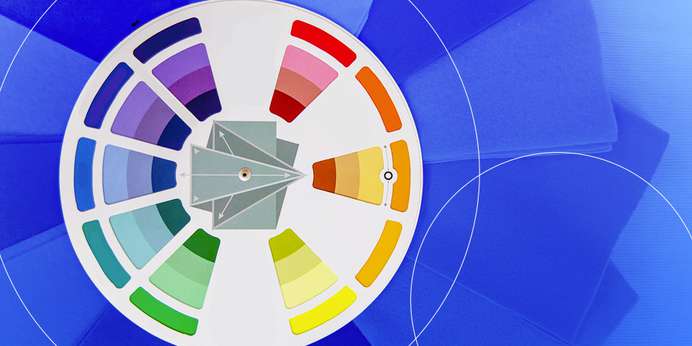
Colour harmony is a set of rules for producing visually appealing colour combinations. These ideas frequently use the colour wheel, a circular depiction of primary, secondary, and tertiary colours ordered in rainbow order. 

You can find colour harmony by placing geometric shapes on the wheel. Choose your key colour — the colour in your design you cannot change or want to draw attention to — and locate the colour harmony types on the colour wheel to identify the combinations most pleasing to the eye.

Once you have found harmonious colours, you can adjust their saturation, tone, tint, and shade. These factors make colours brighter, darker, or lighter, letting you achieve more hues beyond the standard 12 on the colour wheel. Changing these aspects of your colours can give your colour scheme the right look or mood for your project.

How Understanding Colour Harmony Can Help Enhance Consumer Perception and Experience

Colour is very significant in product marketing. It is an effective marketing tactic that impacts customer purchases in various ways. Marketers must explore colour harmony to promote items successfully. Almost every product sold nowadays has a colorful façade. Choosing the proper colours can have a significant influence on product sales. While no one set of rules governs colour choices, research has created broad recommendations based on associative learning, which describes the link between colour and emotion.

Colour goes beyond visual appeal — it can affect a person's perceptions and behaviors. Colour psychology studies how colours impact human behavior, especially for branding. Your colour choices will impact your customers' impression of your brand, including whether they purchase from you. Marketers employ colour associations to enhance product sales by conveying a message to the customer. Colours enhance consumer perception and experience through:

Package Designs

Package designs and colours help customers decide if they want to purchase the product. For example, most toothpaste and whitening strip packets are blue. Blue is linked with cleanliness, reinforcing the product's promise of white teeth. White symbolizes purity, making it a perfect accent colour. Black is frequently the colour of choice for electronics and other luxury effects. These things are costly, and the dark hue helps to promote them as rare, high-quality items.

Brand Recognition

Colours help you stand out from competitors or differentiate between product types. Your colours speak to your brand's personality, so choose colours that speak to the brand image you want to portray. Use the same colours across all your branded materials to make your brand recognizable. Successful colour manipulation allows buyers to quickly and effortlessly recognize the desired brand among a sea of identical items.

Customer Associations

Every colour is associated with a mood or concept. Make use of these connections to tie your items to a specific emotion. While certain colour associations appear deeply ingrained, the consumer's personality, age, gender, and cultural background all have a significant role — various colours appeal to different personality types of buyers. 

Fast food restaurants and clearance sales employ stimulating hues such as red, orange, and black to create a sense of urgency in impulsive purchasers. Lighter shades of pink and sky blue are used in retail clothes stores to create a quiet, pleasant environment for traditional consumers who want to browse things at their leisure.

Examples of Colour Harmony
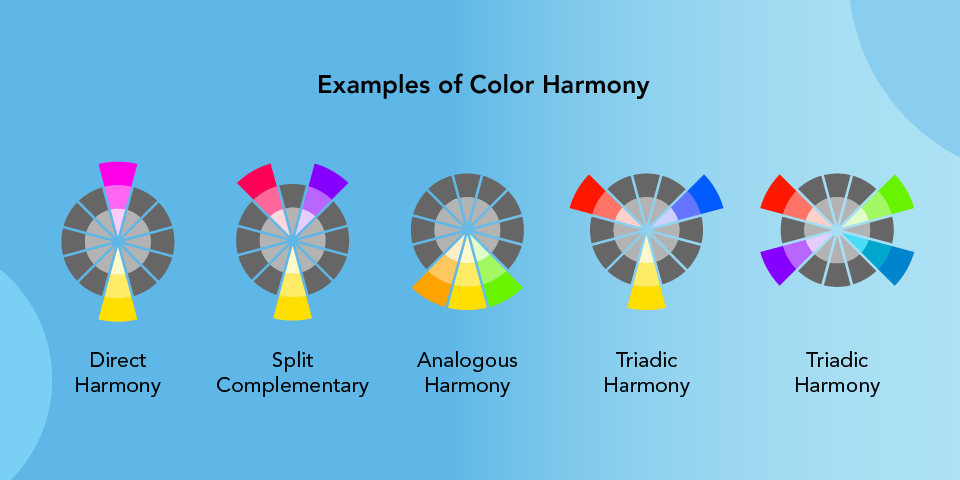
A blue background with color wheels showcasing the different forms of color harmony
Read  Temperature Effects on Colour Measurement: Maintaining Accuracy in Extreme Conditions

Colour harmony allows you to find visually pleasing combinations. The most common colour harmonies include:

Direct Harmony

Direct harmony, also known as complementary colours, involves combining your primary colour with the colour on the opposite side of the colour wheel. The essential instances of direct harmony include red/green, blue/yellow, and orange/green. Complementary colour combinations contrast with one another, creating a lively effect. Although direct harmony can pack a visual punch, one should use it thoughtfully. Complementary colours can be harsh if overused, but these combinations stand out when used correctly.

Split Complementary

A split complementary colour scheme is a variation of direct harmony. Still, instead of selecting the colour directly opposite your primary colour, you choose the colours adjacent to the complement. For example, green would pair with magenta and burnt orange, while red would pair with turquoise and lime green. This colour harmony can be as enjoyable as direct harmony but is less likely to be jarring or overbearing because it is slightly less bold.

Analogous Harmony

Analogous harmony combines your key colour with adjacent colours on the colour wheel. Because these colours are closely related, this colour scheme is also known as related. In contrast to direct harmony, analogous colour harmony produces a calming and comfortable look, and most viewers find it pleasing to the eye. Part of the reason we like analogous harmony may be that we are used to seeing it in natural environments, which we associate with serenity.

Triadic Harmony

Triadic harmony, also known as triads, pairs your primary colour with the hue of two spaces on each side of your colour's complement. In other words, this colour scheme draws on evenly spaced colours throughout the wheel. Triads can be a highly vibrant and visually appealing strategy that works well with less saturated versions of your colours. To make the most of triadic harmony, select one hue as the predominant colour and use the other two colours for accents.

Tetradic Harmony

Tetradic harmony uses colours arranged in two complementary pairs. To get a tetradic combination, place a rectangle or a square on the colour wheel and pick the colours at each corner. When used correctly, this harmony can produce vibrant visuals. The colour scheme looks best when you choose a dominant colour that doesn't overpower the other three. Creating a balanced colour temperature is important because it features warm and cool colours. The Google logo is an excellent example of the correct use of tetradic harmony.

Monochromatic

Monochromatic colour harmony involves using a single base hue in a composition. The colour is regularly modified in value (lightness or darkness) and saturation (intensity) to generate variations. The final palette creates a minimalist, uniform, coherent style with little visual contrast.

Achromatic

Achromatic colour schemes use only neutral hues, typically variants of black, white and intermediate greys. The sharp contrast between black and white conveys sophistication and expertise, making it a popular choice for communicating seriousness and elegance.

INFO  Get More Information

The Role of Spectrophotometers in Colour Harmony

Monitoring colours with a spectrophotometer ensures your hues remain consistent throughout manufacturing. This equipment uses sophisticated optical geometries to take accurate and precise colour measurements to support quality control efforts.

The spectrophotometers at HunterLab ensure your selected colours are precise every time. Our equipment captures detailed and reliable colour information from your products to ensure consistency.

Enhance Consumer Perception and Experience With Solutions From HunterLab

HunterLab has the colour measurement solutions you need for your application. We are the industry leader in spectrophotometers to obtain consistent and accurate colour measurement results. Contact us today for more information about our spectrophotometers.