About
BLOG

Interested in a little light reading?

Our blog is continually updated with helpful educational information, advises, research and insights—all in the name of helping you level-up your color and appearance needs. Grab a drink and enjoy our stories!

Explore stories

"A Better Method of Measuring Color and Haze in Beverages"

Read

Explore Our Products

View More

"10 Things You Didn’t Know About Color"

Read

"What Is Color Tolerance and Why Is It Important?"

Read

"Dear Vegetable Oil Manufacturers, Here’s How Color Measurement Can Make Your Customers Happy"

Read

"Color Measurement for Regulatory Compliance Across Global Markets"

Read

"Best Practices for Measuring the Color of Colas"

Read

"Ensuring Accurate Color Measurement of Hydrochromic Textiles with Spectrophotometers"

Read

A Better Method of Measuring Color and Haze in Beverages

Posted on Mar 19, 2026 by HunterLab

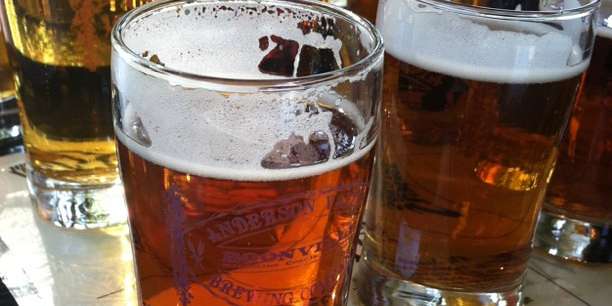
Color and appearance measurements for the beverage industry are used to ensure that the overall product appearance is the same from lot to lot. In the marketplace, it is rare that consumers are permitted to taste food products prior to purchasing them. However, they frequently can look at the product. They make a judgment decision largely based on overall appearance including color.

Coloring the mind of your Consumer:

Never has the consumer been more empowered than now in this digital age where knowledge of the products they purchase has been made available to them at a click or swipe, and this testifies that a greater need has evolved for the F&B industry to build a product with enticing visual properties such as Color and haze without compromising the highest level of quality. A strikingly similar parallel of ‘Go-Green’ campaign has also weaved it’s way in the Food & Beverage industry influencing the consumers to choose naturally colored products over artificially bright and unnatural Colored products, and this has birthed the need to test the quality of the beverage for Color consistency across all stages of the process like production and storage as the ingredient changes can alter the base color of a beverage, resulting in the perception that the product is different or of lower quality.

Diverse Optical Characteristics and their Methods for measurements:

The complexity of successfully measuring Color and appearance in the Beverage Industry is further enhanced by the fact that beverages are of types opaque, translucent or transparent, and each form requires different instrumentation and techniques. Opaque liquids have high solids content with a characteristic of high Brix value when light passes through it and Translucent liquids possess medium levels of solids and exhibits a lower brix value when light passes through it. Therefore, it is crucial for the food processors to assess the right measurement modes like reflective or transmittance before they measure the Color during any stage of processing. This significantly increases the need of a spectrophotometer to measure the spectral data values and also measure the transmission haze.

Posted in Color In Food Industry

10 Things You Didn’t Know About Color

Posted on Mar 19, 2026 by HunterLab

Between the history of color and associations with certain shades in different cultures, color meanings and usage are fascinating to learn about. Here are 10 fun facts about colors.

1. Blue Was Once Seen as a Low-Class Color

In Ancient Rome, royalty wore white, red and black. Those in lower society wore blue. Because the color blue was associated with the working class and barbarians, it was not mainstream. Blue became more acceptable when it became the color of the Virgin Mary’s cloak in the 12th century.

2. Queen Victoria Started the White Wedding Gown Tradition

In 1840, red was the popular color of bridal gowns. Queen Victoria didn’t follow this tradition, wearing a white gown to her wedding instead. Within a few years, white wedding dresses were regarded as the best color for brides.

3. Some Languages Describe Colors and Shades Differently

Tribal African tongues and other languages describe blue and green as different shades of the same color. The Russian language specifies light and dark blue as different colors, not different shades of the same color. Many ancient languages didn’t have a word for blue.

4. Purple Was the Color of Royalty Because It Was Expensive to Obtain

Until 1856, the color purple came from snail mucus. The snails used were almost extinct, and 20,000 were required to get one ounce of purple dye. Since purple was a rare and expensive color, it was only worn by royalty. For commoners, wearing purple was a crime punishable by death.

5. Red Is the First Color a Baby Sees

Infants start to recognize the color red at two weeks old because red has the longest wavelength, which is easy to process. Babies can see the full spectrum of colors at five months.

Posted in Color And Appearance Theory

What Is Color Tolerance and Why Is It Important?

Posted on Mar 18, 2026 by HunterLab

Color tolerances set acceptable limits for the appearance of a product and are an essential part of quality assurance and quality control processes for color. You can efficiently determine whether a product falls within the limits by establishing tolerances. If it does, the product passes. Failed goods fall outside the tolerances, meaning process adjustments may be necessary to create the desired appearance. 

Many industries, such as food, plastics, and chemicals, rely on accurate appearance. Tolerances enable you to establish a standard and decide how much variation to allow, giving you consistent color outcomes. 

What Is Color Tolerance?

Color tolerances are the parameters within which a product's color can vary yet remain acceptable. Typically, visual assessment is the initial step to define the acceptable color range. Spectrophotometry then objectively and scientifically quantifies and manages those tolerances.

Before establishing tolerance values, you must decide on the observer, choose a color scale, such as Hunter L,a,b, and then select illuminants for comparison, like D 65 and Illuminant A. Depending on what you're measuring, the scale you choose might come from the International Commission on Illumination (CIE), which sets global measurement standards, or from another entity. 

Once you have a comparison standard, you can gather products and measure their color to determine acceptable variations called tolerance values. 

In this process, you start by selecting a relevant standard for your product, then determine how much this standard can vary before it creates visible differences in appearance. This test helps you set boundaries for future production to objectively decide whether products fall close enough to the original standard to conform to quality expectations.

Detecting Color Differences

You can establish tolerances based on two levels of difference:

  • Minimum perceptible difference: A visual comparison shows a just-noticeable difference between the standard and the sample. 
  • Maximum acceptable difference: The level represents the largest acceptable difference between a standard and a sample. 

Focusing on the maximum acceptable difference means a broader range of acceptable values, while relying solely on minimum perceptible difference can lead to high rejection and material waste. As a result, choosing the right approach is typically industry-driven. For example, the food industry frequently uses the maximum acceptable difference, but pharmaceutical manufacturers usually opt for the minimum perceptible difference.

Range of Tolerance Definition

The range of tolerance is the acceptable level of variation related to an established color standard. You will establish this standard using a measurement model like CIE L*a*b*, which results in three values measuring:

  • L*: Lightness, from dark at zero to light at 100.
  • a*: Position on the red–green axis, with the positive number indicating red and the negative indicating green.
  • b*: Position on the yellow–blue axis, with yellow represented as the positive and blue as the negative.

Once you establish a standard, you can decide on each dimension's tolerance. Here are the formulas for determining the difference (∆) between a sample and a reference:

∆L* = L*sample - L*reference

∆a* = a*sample - a*reference

∆b* = b*sample - b*reference

You can also calculate the total color difference across the three values in a single formula, with the results represented by delta E* (∆E*). Here's the formula to determine ∆E*:

∆E* = √((∆L*)2+(∆a*)2+(∆b*)2)

While ∆E* values can be helpful, use this method carefully. When the difference is spread over three dimensions, you may get a value that looks acceptable but has significant variation in one measurement, such as red vs. green. 

This variation will create a noticeable visual difference but may not impact the delta E* value if the other dimensions are close to the standard. If you calculate the difference values separately, you can more closely monitor each one to verify that none stray too far from the standard.

Posted in Explore By Category

Dear Vegetable Oil Manufacturers, Here’s How Color Measurement Can Make Your Customers Happy

Posted on Mar 18, 2026 by HunterLab

Vegetable oils such as olive oil and peanut oil must meet consumers' visual expectations with consistent coloring. Vegetable oil manufacturers can please customers and increase profits with color measurement solutions like spectrophotometers.

Posted in Color Measurement

Color Measurement for Regulatory Compliance Across Global Markets

Posted on Mar 18, 2026 by HunterLab

Among the many challenges facing modern global manufacturers, regulatory compliance ranks at the top. The laws encompass product color standards to uphold consumer safety, advance best practices, and promote standardization. Operations that cross borders also span all these different legal frameworks that cover color and color measurement, from the FDA and USDA to ASTM, ISO, and JIS. Failing to adhere to all applicable standards has real, costly consequences, including material waste, penalties, and fines.

Spectrophotometry is the best solution for ensuring consistent, compliant color measurements. As the universal color translator, these devices provide objective, repeatable data that simultaneously satisfies multiple regulatory frameworks.

Variations in Regional Color Standards and Their Scope

The standards maze goes beyond bureaucratic differences to reflect real industrial priorities and their regulatory enforcement.

Organizations like ASTM and ISO primarily establish measurement methods that instruct manufacturers how to capture readings. For example, ASTM E1164 dictates the geometric conditions required for obtaining spectrophotometric data, such as d/8° or 45°/0°, while ISO 11664 — which is equivalent to CIE standards — defines the fundamental calculations for colorimetry.

In contrast, regulatory bodies like the FDA and USDA rely on these established methods to set the acceptance criteria. For instance, the USDA has specific Color Grades for products like tomato paste and orange juice. Calculating these specific grades requires extracting data using instruments equipped with the correct measurement geometries.

In Japan, Japanese Industrial Standards (JIS) for color measurement align closely with international CIE and ISO principles to ensure global consistency.

As a result, the true challenge for manufacturers isn't documentation and paperwork. It's having the right color measurement solution to bridge these different regulatory frameworks.

The High Costs of Inconsistent Measurement Protocols

Noncompliance with color standards isn't an option. Aside from potential regulatory fines and penalties, violations can lead to:

  • Rejection of batches at incoming QC: Customers may turn away entire shipments, essentially doubling shipping costs with return logistics.
  • Reworks due to failed color audits: Reformulating, reprocessing, and relabeling products reduces efficiency and profitability.
  • Loss of contracts: Manufacturers may face reputational damage and lose future revenue opportunities for failing to deliver to specs and on time.
  • Product recalls: If faulty goods hit the market, manufacturers must absorb the costs of recalling the products, which can range into the millions.
  • Market exclusion: Repeated violations can result in being banned from selling in certain areas.

Plus, there is a substantial hidden cost to inconsistent measurement protocols — managing separate inventories for different regions. These separate streams mean more variability in raw material colors and less flexibility to redirect products based on demand shifts.

The Pitfalls of Visual Evaluations Across Multisite Operations

Manually evaluating color is an insufficient approach, and one that won't satisfy regulators. The process is unreliable since human color perception varies by individual and observation conditions. Differences in lighting, sample presentation, and operator fatigue will naturally arise, and all can significantly influence the accuracy of your color evaluations.

Visual assessments are also impossible to quantify precisely, so there's no way to document compliance objectively and share that evidence with regulators in other jurisdictions — you can't email a visual impression as proof.

Posted in Color Measurement

Best Practices for Measuring the Color of Colas

Posted on Mar 18, 2026 by HunterLab

There is no doubt that color affects a consumer's decision when purchasing a product, especially a well-known beverage like cola. Colas from brands such as The Coca-Cola Company and PepsiCo have their signature brown color that few people can mistake for another beverage.

Consumers know what they are looking for when they want a cola soft drink, so it is essential to get the color right when producing these beverages. This blog will explore the famous caramel color of cola and discuss the best practices for measuring the color of these beverages.

Posted in Color Measurement

Ensuring Accurate Color Measurement of Hydrochromic Textiles with Spectrophotometers

Posted on Mar 18, 2026 by HunterLab

Moisture can change the color of fabrics in deliberate, overt ways or create subtle color shifts nearly imperceptible to the human eye. Image Source: Pexels user snapwiresnaps.tumblr.com

The Unseen Emporium in London, England is more of a laboratory than a design house. Through a daring and innovative combination of fashion, chemistry, and digital technologies, the three masterminds behind the label work to produce dynamic clothing, accessories, and lifestyle goods that respond to their environments based on specific stimulants.1 Among their most eye-catching creations are extravagantly tailored leather jackets that change color as the humidity in the room fluctuates, the moisture level creating vivid chromatic shifts. The phenomenon of hydrochromism—color change in response to water—has heretofore primarily been intentionally implemented in the textile industry as a novelty in the form of color-changing umbrellas and swimwear. The Unseen Emporium, however, is bringing it to a new level of artistry.

But hydrochromic textiles are not a recent invention. Although deliberately moisture-sensitive dyes with dramatic color changes may be in their infancy, some level of hydrochromism is inherent to most textiles already in use today, often to the consternation of textile manufacturers.

Dark cotton fabrics will display a greater degree of color change in the presence of moisture. Image Source: Pexels user snapwiresnaps.tumblr.com

Posted in Color In Textiles
Prev
4
5
6
7
8
…
Next

Most Related Posts

  • From Smartphones to Smart Spectrophotometers: How Smart Technologies Are Changing Color Measurement Workflows
  • From Clear to Pure: Chemical and Color Analysis in the Petrochemical Industry
  • Food Dyes — Harmless or Harmful? Why Do We Color Food?
  • Food Coloring Regulations and Standards
  • Exploring Color Measurement Methods for Fiber Cement Siding
  • Expanding Flexibility and Color Measurement Potential with Double Beam Spectrophotometers
  • Everything You Need to Know About Dye Allergies
View More

Follow Us

  • LinkedInFollow us on LinkedIn
  • YouTubeFollow us on YouTube
  • facebookFollow us on Facebook
  • XFollow us on X (formerly Twitter)
  • instagramFollow us on Instagram