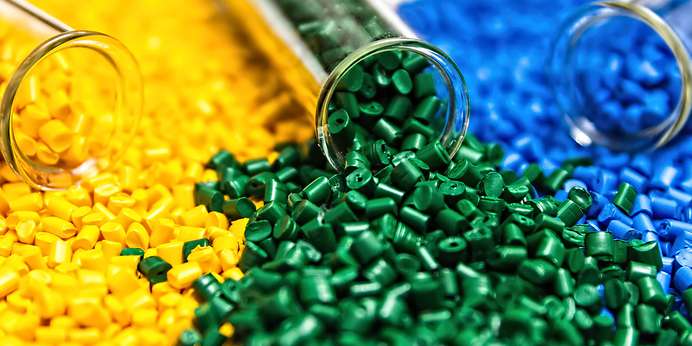
Plastic recycling is essential as the world continues to emphasize sustainability. Recycled plastic pellets from post-consumer and industrial waste offer value in various applications, including traffic cones, plastic chairs, detergent bottles, trash cans, and flower pots.
Ensuring consistent color in products made from reprocessed materials can be complex. Here at HunterLab, we offer a range of solutions to measure the color of recycled pellets for precise results.
Challenges in Measuring Recycled Materials
Quantifying color in recycled plastic pellets presents unique challenges, such as:
- Material variations: Recycled pellets contain plastics from different sources, resulting in color variations. They are often blended to achieve a desired color. Color measurement can help ensure consistent blending ratios and a uniform final product color.
- Contamination: Foreign materials present in recycled pellets can affect color measurement accuracy. Implementing measures to minimize contamination in recycled pellets can improve color consistency.
- Physical form: Recycled pellets vary in size, shape, and opacity, affecting how light interacts with the material during measurement. These properties demand the right equipment and measurement methods for precision and consistency.
Best Practices for Precise Color Measurement
Spectrophotometers/colorimeters are the industry standard for precise color measurement. These devices analyze how light interacts with a sample and quantify the intensity of wavelengths across the visible spectrum to translate color into numbers. The following best practices will help you make the most of this technology to support your goals:
- Prepare and present samples accurately and consistently: It is crucial to maintain consistent sample preparation. Per ASTM D6290-19, operators must use a clean, optically clear and scratch-free sample cup filled to a sufficient depth to ensure effective opacity. Additionally, covering the sample cup with an opaque cover is crucial to block ambient room light and prevent external interference during measurement.
- Measure across a large area: The larger the sample area measured, the more precise and repeatable the results. Refer to ASTM D6290-19 Standard Test Method for Color Determination of Plastic Pellets for guidance on proper measurement methods. Specifically, the standard recommends taking three separate measurements using a "dump-and-fill" technique with fresh pellets to ensure an accurate and representative average.
- Determine the relevant color spaces: Choose a shared color space to establish communication throughout the production chain.
- Leverage color quality control software: Ensure your spectrophotometer integrates with or includes built-in color quality control software. This technology allows you to compare the color of your recycled pellets to target specifications or predefined color ranges.