Aeros
Learn More
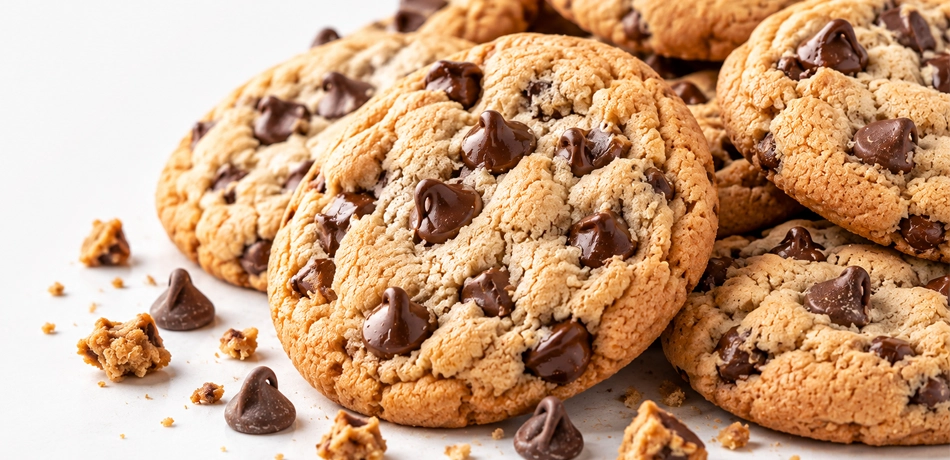
Color is one of the first quality attributes consumers notice. Measuring color helps manufacturers detect changes in browning caused by bake time, temperature, ingredients, or process conditions, supporting consistent appearance, quality, and brand standards from batch to batch.

THE CHALLENGE
Even minor color differences between batches can make cookies appear underbaked, overbaked, or stale, potentially affecting consumer trust and brand reputation.
Maintaining consistent cookie color presents several challenges:
Oven hotspots, ingredient differences, and dough handling can cause color variations.

Uneven shapes, textures, and inclusions such as chocolate chips and nuts can affect measurement consistency.

Small measurement areas in instruments may not accurately represent the overall color of cookies or an entire batch.

Lighting conditions, operator fatigue, and differences in human perception make it difficult to evaluate large volumes consistently.
The cost of getting it wrong: over-baked product brings burnt flavor and rejects, underbaked product brings poor texture. Both surface as product rejection, waste, complaints and brand damage.
THE SOLUTION
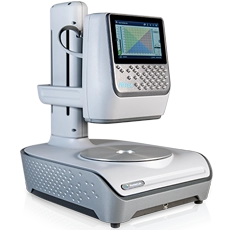
The HunterLab Aeros spectrophotometer is designed for non-contact color measurement of baked goods, including cookies, helping manufacturers maintain consistent product appearance and streamline quality control.
| Features | Aeros |
|---|---|
| Best For | Cookies, crackers, biscuits, and other baked goods with irregular shapes, textures, and sizes |
| Key Benefits | Non-contact measurement analyzes cookies without pressing or grinding, preserving their natural form. Large area capture (27.5 in², 35 readings in 5 seconds) averages across multiple cookies or an entire tray section, overcoming irregularities. Automatic rotation and height adjustment ensure repeatable results regardless of cookie size or placement. Integrated touchscreen and software provide instant pass/fail decisions and data storage without needing an external PC. |
| Indices / Color Data | CIE L*a*b*, ΔE |
HunterLab is ISO 9001:2015 certified and our products are individually CE certified.
Explore the flyer for key features and benefits for cookie color measurement. Or bring us your product, and a color specialist will help you find the right fit.
For meaningful batch-to-batch comparisons, measure cookies at a consistent interval after baking and under consistent sample conditions.
See the complete Aeros measurement workflow in action and learn how objective color data can be used to evaluate cookie color, compare results across batches, and maintain consistent product appearance.
Cookies brown through the Maillard reaction and caramelization. The Maillard reaction occurs between amino acids and reducing sugars at elevated temperature, while caramelization breaks sugars down directly. Both are driven by time and temperature, so oven profile, bake time and formulation all shift the final color.
CIELAB color values are widely used for cookie and baked-product color control. While L* is often the most closely monitored parameter because it reflects the progression from lighter to darker baked products, it does not fully describe color. The a* value captures shifts toward red-brown tones that often develop during Maillard browning, while b* reflects changes in yellow-golden appearance. ΔE quantifies the overall color difference between a sample and a target standard by considering changes in all three dimensions simultaneously. Monitoring L*, a*, b*, and ΔE together provides a more robust evaluation of bake consistency than relying on L* alone.
Aeros automatically adjusts the measurement head to the optimal distance of 83 mm from the cookies, helping ensure consistent measurement conditions. This reduces operator-dependent setup and measurement variability. Combined with its non-contact design and rotating platform, Aeros can measure a large area of cookies without mishandling the sample, providing a more representative color result.
Ingredient variability is a common cause. Butter, sugar type and flour lots all affect browning and uniformity. Process conditions matter as much: oven temperature, bake time, air velocity and humidity each change how far browning develops. Because these drift gradually, color usually shifts before anyone notices a difference in texture or flavor.
After cooling, at a consistent interval. Color continues to develop as a cookie cools, so measuring at varying times produces readings that cannot be compared batch to batch. Fixing the cooling time before measurement is what makes the numbers meaningful. Many producers also verify incoming ingredients and check finished product before packaging.
No, and it is better not to. Grinding changes the surface being measured and destroys the sample. Non-contact instruments like the Aeros read whole cookies as they sit in a sample tray, which preserves the product and reflects what a consumer actually sees.
Start from production samples your team already agrees are acceptable, measure them, and use that spread to define objective pass/fail limits. Tolerances should reflect what a customer would notice, not the smallest difference the instrument can resolve. Apply the same method and tolerances across every facility so a pass in one plant means a pass in another.