About
BLOG

Interested in a little light reading?

Our blog is continually updated with helpful educational information, advises, research and insights—all in the name of helping you level-up your color and appearance needs. Grab a drink and enjoy our stories!

Explore stories

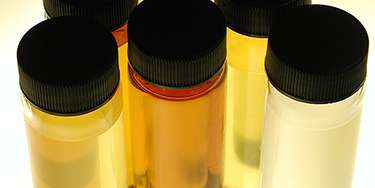
"What Is the Best Way to Measure the Color of Vegetable Oil?"

Read

Explore Our Products

View More

"What's the Best Way to Measure the Color of Plastic Pellets?"

Read

"What Is the Best Way to Measure the Color of Plastic Bottles?"

Read

"What Is the Best Way to Measure the Color of Opaque Sheet Plastic?"

Read

"What Is the Best Way to Measure the Color of Opaque and Transparent Pellets?"

Read

"What Is Color Tolerance and Why Is It Important?"

Read

"Transmission vs. Reflection: Find the Right Spectrophotometer"

Read

What Is the Best Way to Measure the Color of Vegetable Oil?

Posted on Jan 28, 2026 by HunterLab

Vegetable oils like soybean oil play a pivotal role in many products and applications, from snack food manufacturing to biodiesel fuel development, commercial frying, and personal hygiene goods production. Its color directly correlates to integrity and customer perception, demonstrating the need for accurate measurements throughout manufacturing processes.

The Importance of Color Measurement in Vegetable Oil

Quantifying color in vegetable oils is essential for many reasons:

  • Quality: Color and clarity are primary quality and purity indicators in edible oils. Consistent measurement helps ensure adherence to implemented quality assurance methodologies and supports consumer confidence.
  • Money savings: Refining processes can substantially impact oil color. Establishing that color falls within tolerances at each stage helps minimize waste and prevent downstream bleaching and blending issues that can be costlier to resolve.
  • Conformance with industry standards: The American Oil Chemists' Society (AOCS) issues industry guidelines for oil analysis, including color measurement methods, suitable color models, and standards. Manufacturing contracts and specifications often require following the organization's frameworks.
  • Regulatory compliance: Vegetable oil processing and manufacturing facilities must comply with regulations set forth by the Food and Drug Administration (FDA) and the United States Department of Agriculture (USDA). Both consider color to help ensure quality and consumer safety.

Posted in Food

What's the Best Way to Measure the Color of Plastic Pellets?

Posted on Jan 28, 2026 by HunterLab

Using a spectrophotometer is the best way to measure the color of plastic pellets. These technological devices deliver reliable and accurate measurements that help you ensure the color remains consistent with each batch while adhering to industry standards.

Measure the Color of Plastic Pellets Using the Right Equipment

Plastic pellets vary in transparency and opacity, so you should use the appropriate measurement equipment and accessories for accurate results. Plastic pellets should be measured with a reflectance spectrophotometer. Opaque plastic pellets require only a sample cup, while transparent plastic pellets may require the use of an opaque cover. 

Keep Industry Standards in Mind

An effective color measurement system follows industry standards. As a part of quality and process control, it's important to measure the color of plastic pellets according to the testing standards set by ASTM. Plus, following the standards ensures you measure the pellets more accurately for consistent results.

Spectrophotometers can help you adhere to industry standards by offering a straightforward way to meet the outlined specifications.

Assess the Degree of Yellowness

Achieving clear and consistent colors is critical in plastic production. However, plastic resin can turn yellow when subjected to oxidation. Yellowness directly impacts the value and perceived quality of plastic products. To prevent the yellowish appearance, optical brighteners are used to make the plastics look more clear or white. 

Optical brighteners are also often used to enhance the appearance of recycled plastics. As a result, it's essential to assess the degree of yellowness in plastic resin to determine the appropriate concentration of optical brighteners needed to counteract the yellowing effect of plastics throughout the supply chain.

As the plastic production industry moves toward using recycled plastics, you'll need a robust spectrophotometer that can measure the color and fluorescence quality of virgin and recycled plastic resin and a combination of the two. By doing so, the spectrophotometer can help mitigate yellowness and ensure the optical brighteners are adjusted for at every stage of the production process. 

Posted in Explore By Category

What Is the Best Way to Measure the Color of Plastic Bottles?

Posted on Jan 28, 2026 by HunterLab

The use of plastic bottles in liquid packaging first became popular in the 1950s and 1960s. Today, plastic's cost-effectiveness, durability and recyclability have made it the go-to material for bottles among most major companies. Throughout the manufacturing of these bottles, it is vital that processors maintain accurate coloration. Any product entering the sales market should be uniform and consistent, down to the label and the packaging. This level of precision calls for specialized tools — and HunterLab provides them.

The Power of Spectrophotometers 

When you need to measure the color of plastic bottles, spectrophotometers offer the most objective and precise results. A spectrophotometer measures how light reflects off the bottle and uses those measurements to produce a numerical value in line with some of the most well-known color indices. 

Spectrophotometers make it easy for any brand to streamline its coloration practices and increase product consistency. Their use can translate to major benefits in:

  • Brand identity: Plastic bottles can be manufactured in almost any color, so many brands produce their bottles using a unique pigment combination to set them apart. Coloring bottles consistently allows you to establish your own look that consumers will begin to recognize over time, even before they see the label.

  • Consumer satisfaction: Changes in any part of your product or its packaging — including a significant color departure — can signal to loyal consumers that your product has changed in some way. By keeping your colors consistent, you can put consumers at ease and ensure they stay with your brand instead of choosing a competitor. 

Posted in Plastic

What Is the Best Way to Measure the Color of Opaque Sheet Plastic?

Posted on Jan 28, 2026 by HunterLab

Maintaining consistent color in opaque sheet plastic is crucial for manufacturers. Even slight color variations can impact brand identity and product quality. The right tools and techniques can achieve precise color control, ensuring every sheet matches your specifications. 

The best way to measure the color of opaque sheet plastic is by using a spectrophotometer. These solutions analyze light reflected from a sample and translate it into numerical data. This data represents value in a defined color space, allowing for objective and repeatable measurements.

Factors Affecting the Appearance of Opaque Plastics

When measuring color in opaque materials, we focus on reflectance. Reflectance is how light interacts with the plastic's surface and reflects on our eyes. Various aspects can influence how color appears on opaque materials, including:

  • Opacity: This refers to the material's ability to block light. Opaque plastics do not allow light to pass through. While not directly related to color measurement, opacity can affect color perception.
  • Surface texture: Glossy or matte finishes impact how light interacts with the plastic, influencing the perceived color. Standardizing surface texture provides a complete picture of the plastic's visual characteristics.
  • Lighting conditions: The type of light source can affect how color appears. Standardizing lighting conditions during color measurement is crucial for consistent results. 

Posted in Explore By Category

What Is the Best Way to Measure the Color of Opaque and Transparent Pellets?

Posted on Jan 28, 2026 by HunterLab

A spectrophotometer is the best way to measure the color of opaque and transparent pellets. The color measurement solution enables you to maintain color consistency to meet industry standards and improve the pellets' appearance.

Measure Pellets With the Right Equipment

When measuring the color of opaque and transparent pellets, it is essential to utilize a spectrophotometer that considers opaqueness and transparency. Spectrophotometers that measure reflectance are well-suited for evaluating both opaque and transparent pellets.

Prepare Your Samples

A standard procedure needs to be implemented when preparing and presenting samples. Having procedures that everyone follows helps limit any inconsistencies between samples to ensure more accurate results. Consider developing a repeatable sample preparation method for repeated results.

Maintain Industry Standards When Measuring

Posted in Plastic

What Is Color Tolerance and Why Is It Important?

Posted on Jan 28, 2026 by HunterLab

Color tolerances set acceptable limits for the appearance of a product and are an essential part of quality assurance and quality control processes for color. You can efficiently determine whether a product falls within the limits by establishing tolerances. If it does, the product passes. Failed goods fall outside the tolerances, meaning process adjustments may be necessary to create the desired appearance. 

Many industries, such as food, plastics, and chemicals, rely on accurate appearance. Tolerances enable you to establish a standard and decide how much variation to allow, giving you consistent color outcomes. 

What Is Color Tolerance?

Color tolerances are the parameters within which a product's color can vary yet remain acceptable. Typically, visual assessment is the initial step to define the acceptable color range. Spectrophotometry then objectively and scientifically quantifies and manages those tolerances.

Before establishing tolerance values, you must decide on the observer, choose a color scale, such as Hunter L,a,b, and then select illuminants for comparison, like D 65 and Illuminant A. Depending on what you're measuring, the scale you choose might come from the International Commission on Illumination (CIE), which sets global measurement standards, or from another entity. 

Once you have a comparison standard, you can gather products and measure their color to determine acceptable variations called tolerance values. 

In this process, you start by selecting a relevant standard for your product, then determine how much this standard can vary before it creates visible differences in appearance. This test helps you set boundaries for future production to objectively decide whether products fall close enough to the original standard to conform to quality expectations.

Detecting Color Differences

You can establish tolerances based on two levels of difference:

  • Minimum perceptible difference: A visual comparison shows a just-noticeable difference between the standard and the sample. 
  • Maximum acceptable difference: The level represents the largest acceptable difference between a standard and a sample. 

Focusing on the maximum acceptable difference means a broader range of acceptable values, while relying solely on minimum perceptible difference can lead to high rejection and material waste. As a result, choosing the right approach is typically industry-driven. For example, the food industry frequently uses the maximum acceptable difference, but pharmaceutical manufacturers usually opt for the minimum perceptible difference.

Range of Tolerance Definition

The range of tolerance is the acceptable level of variation related to an established color standard. You will establish this standard using a measurement model like CIE L*a*b*, which results in three values measuring:

  • L*: Lightness, from dark at zero to light at 100.
  • a*: Position on the red–green axis, with the positive number indicating red and the negative indicating green.
  • b*: Position on the yellow–blue axis, with yellow represented as the positive and blue as the negative.

Once you establish a standard, you can decide on each dimension's tolerance. Here are the formulas for determining the difference (∆) between a sample and a reference:

∆L* = L*sample - L*reference

∆a* = a*sample - a*reference

∆b* = b*sample - b*reference

You can also calculate the total color difference across the three values in a single formula, with the results represented by delta E* (∆E*). Here's the formula to determine ∆E*:

∆E* = √((∆L*)2+(∆a*)2+(∆b*)2)

While ∆E* values can be helpful, use this method carefully. When the difference is spread over three dimensions, you may get a value that looks acceptable but has significant variation in one measurement, such as red vs. green. 

This variation will create a noticeable visual difference but may not impact the delta E* value if the other dimensions are close to the standard. If you calculate the difference values separately, you can more closely monitor each one to verify that none stray too far from the standard.

Posted in Explore By Category

Transmission vs. Reflection: Find the Right Spectrophotometer

Posted on Jan 28, 2026 by HunterLab

Spectrophotometers empower manufacturers across numerous industries to capture accurate color and spectral data. These measurements support regulatory compliance, conformance with industry standards, and quality assurance that keeps customer satisfaction and loyalty high. Modern solutions offer measurement through either transmission or reflectance optical configurations.

Learning more about these approaches, their ideal substrates and applications, and their differences will guide you to the best solution for your color measurement needs.

Understanding Color Measurement

Light is the foundation of color measurement, with its wavelengths in the visible spectrum ranging from violet at 380 nanometers to red at 780 nanometers. The energy a light source provides varies across the spectrum depending on the light source. When it encounters matter, its wavelengths are either reflected, absorbed, refracted, transmitted, scattered, or diffracted. The object's chemical makeup helps determine what photons it will absorb versus those it emits or transmits. These emitted or transmitted wavelengths then enter the human eye, stimulating its photoreceptors. Emitted or transmitted wavelengths are the colors our eyes ‘see’ depending on where the energy falls within the visible spectrum.

Color perceptions vary between humans, making visual comparisons unreliable and underscoring the need for scientific color measurement solutions. Spectrophotometers simplify the task by analyzing and quantifying color in widely accepted color spaces like CIELAB and CIE XYZ. Transmission and reflectance are the two primary configurations spectrophotometers use to capture and report color and spectral data.

Color Measurement Through Transmission

When spectrophotometers measure color by transmission, they pass light directly through the sample. An optical sensor on the opposite side of the sample collects the energy for analysis and reporting.

The Science Behind Transmission Measurement

Measuring wavelengths through the transmission of color quantifies them into a ratio called transmittance. In scientific terms, transmittance is the percentage of incoming light that passes through a sample. The sample will also absorb a certain amount of the energy, requiring precise calculations using the Beer-Lambert Law, which describes how light is absorbed when it passes through matter.

Transmission measurements typically need at least 30% of the source light to pass through the sample with the light source at a perpendicular angle.

Key Considerations for Choosing Transmissive vs. Reflective Measurement

Transmission measurements work for transparent to translucent materials that allow 30% or more of the light to pass through — even if the surface is textured, like etched glass.

Opaque samples, which don’t let enough light through, are better measured using reflectance.

Applications for Transmission Color Measurement

Common applications for transmission color measurement include quantifying color in:

  • Foods and beverages: Products ranging from edible oils to fruit juices and food dyes are compatible with transmittance measurement.
  • Plastics: This approach is widely used in the plastics industry for food and beverage containers, transparent sheets and film, eyeglass lenses, and medical equipment like syringes, IV bags, and other clear medical devices.
  • Chemicals: Use this method to quantify color in motor oils, lubricants, and petrochemicals.
  • Pharmaceuticals: Injectable solutions and liquid medicines to monitor purity and detect any unwanted color changes.

Transmittance is also the most reliable color measurement approach for everyday products like clear liquid detergents and ophthalmic lense

Posted in Color Measurement
Prev
1
2
3
…
Next

Most Related Posts

  • What Is the Best Way to Measure the Color of Vegetable Oil?
  • What's the Best Way to Measure the Color of Plastic Pellets?
  • What Is the Best Way to Measure the Color of Plastic Bottles?
  • What Is the Best Way to Measure the Color of Opaque Sheet Plastic?
  • What Is the Best Way to Measure the Color of Opaque and Transparent Pellets?
  • What Is Color Tolerance and Why Is It Important?
  • Transmission vs. Reflection: Find the Right Spectrophotometer
View More

Follow Us

  • LinkedIn
  • YouTube
  • facebook
  • X
  • instagram