
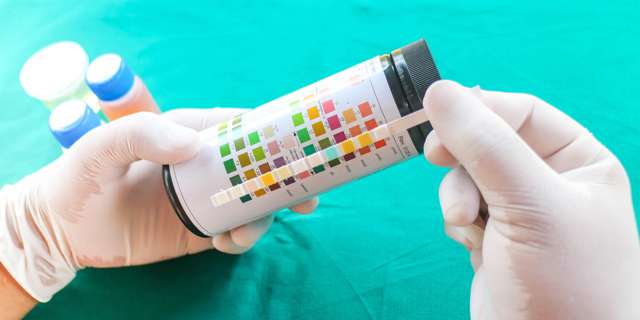
Medical test strips provide users with important information about their health. Image Source: Shutterstock user memorisz

Medical test strips must be as accurate as possible to be effective, as even subtle colour inconsistencies between the strip and the colour-coded test package could have negative consequences for the person using the strip. For example, if someone who has diabetes uses a urinalysis test strip to monitor the condition, a disagreement between the strip’s colour and the diagnosis code could lead to an inaccurate assessment of blood glucose levels, potentially compromising patient health.

For this reason, medical test strip manufacturers need to have a reliable colour quality control protocol in place when they create their products. Spectrophotometric instruments allow manufacturers to ensure that their test strips and diagnosis codes match as perfectly as possible, making it easy for customers to see where they fall on the colour scale.

Why Colour Accuracy Matters in Medical Test Strips

While many healthcare professionals use medical test strips to diagnose conditions in patients, self-administered over-the-counter medical test strips are becoming more popular. In fact, at-home test strip sales increased by more than 45 percent between 2010 and 2012.1 The blood glucose test strip market, in particular, is consistently growing in value and is expected to be worth nearly $13 billion worldwide by 2021.2

However, despite the popularity of at-home test strips, there are still some risks associated with using test strips at home. In a medical office, doctors have more tools at their disposal to diagnose and monitor health conditions such as diabetes. As such, if a test strip appears muddled in colour or inaccurate, a medical professional can simply run other tests to reach a correct diagnosis. At home, however, test strip users rely entirely on the strip’s colour accuracy to provide them with vital information about their health. Unless they make a follow-up appointment with their doctors to confirm whether the test strip was accurate, at-home test strip users have to take the test strip’s colour at face value.

The challenge that manufacturers face is that test strip colours aren’t always as clear as they should be. For example, one study found that patients frequently struggled to correctly interpret the colour of their blood glucose test strips, especially when those patients had a visual impairment or viewed the strips under poor lighting conditions. 3 Moreover, even if test strip users correctly interpreted the colour of the test strip, if this colour didn’t perfectly match the sample colours provided by the test strip manufacturer, users couldn’t reach a reliable diagnosis.

This is a potentially dangerous problem for test strip users and manufacturers alike. A user might have a high level of glucose in the blood, but if the test strip’s colour is unclear or it doesn’t match the colours provided by the manufacturer, the user might not be sure of a high glucose diagnosis. As a result, the user might not take the necessary steps to bring glucose levels down to a normal level.4 To solve this problem, test strip manufacturers must refine their colour quality control protocols to ensure that every test strip provides, clear, accurate results.
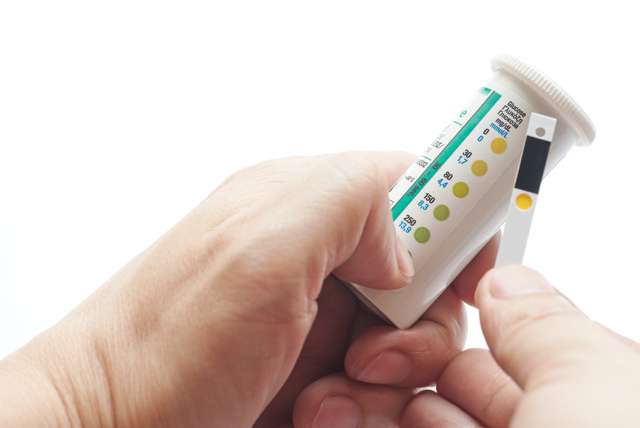
medical-test-strips-spectrophotometer-2.jpg

Correct coloration is essential to ensure accurate results in medical test strips. Image Source: Shutterstock user Ji Zhou

Read  Colour-Coding Technology: 50 Shades of Grey Pills?

How to Improve the Accuracy of Your Medical Test Strips

To ensure that your medical test strips are as accurate as possible, you should use a colour spectrophotometer to compare a sample test strip’s results to your existing colour chart. A spectrophotometer is the best tool to use for colour quality control because the instrument is capable of detecting even subtle variations between colours and objectively quantifying colour information. This is essential when you are designing a new medical test strip product and creating a reliable colour chart that your customers can follow when they use your products. You can use a spectrophotometer to set colour standards for all of your medical strip products.

For example, if you’re creating a new strip that tests for ketosis levels, you must coat the testing paper in a substance that changes colour when it comes into contact with acetoacetate in urine.5 This coating typically ranges from a pale beige colour when little acetoacetate is present to a deep shade of brown or purple when high levels of acetoacetate are present. All ketosis test strips use the same type of coating to get the most accurate results, however, the reliability and accuracy of the test strips depend on how detailed the colour chart is.

To ensure that your colour chart is reliable, you can expose your sample test strips to different levels of acetoacetate and then test the colour of these samples using a spectrophotometer. Once you have your spectrophotometric colour results, you can then create a paper colour chart that matches these sample colours perfectly. A spectrophotometer allows you to get an exact colour match between your test strips and your chart, which in turn improves the quality of your final test strip product.

The ColorFlex EZ spectrophotometer is a useful tool for medical test strip manufacturers who want to ensure that their strips and colour charts align. The instrument measures colour the way the human eye sees it, which is critical when performing colour quality control tests on medical strips; your customers will need to perform visual analysis on your product, so it’s important that the colour of the test strip and the colour chart appear consistent to the naked eye. The compact size of the instrument also makes it easy to use even in cramped laboratory conditions. Moreover, the ColorFlex EZ can store as many as 250 different product standards and 2,000 sample measurements at a time, making it ideal for setting multiple colour standards for each of your medical test strip products.

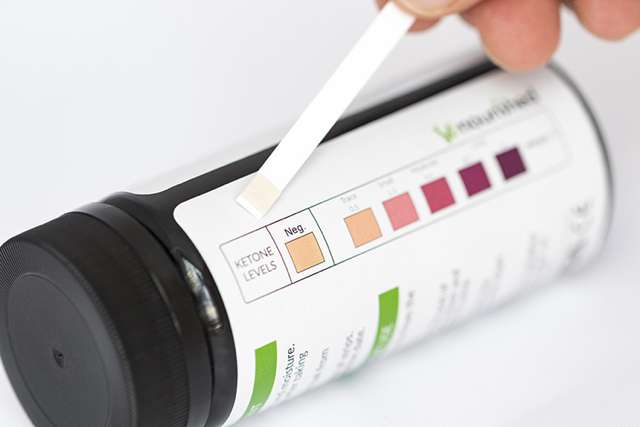
medical-test-strips-spectrophotometer-3.jpg

Inconsistent colours in medical test strips could lead to misdiagnosis or other medical complications. Image Source: SoNourished

INFO  Get More Information

Medical Test Strip Accuracy Leads to Credibility and Trust

When you use a spectrophotometer like the ColorFlex EZ to test the accuracy of your medical test strips and their accompanying colour charts, users can trust your products. This is essential in the pharmaceutical and medical industries—after all, if your products help diagnose and treat medical conditions, they must be reliable every time in order to help users monitor and protect their health. Additionally, having a reliable colour chart for your test strips could help you meet safety compliance standards and other regulations governing the sale of over-the-counter test strips. By improving your colour quality control protocol and determining that your medical test strips perfectly align with a colour-coded diagnosis, you’ll create a dependable product that your customers can use to maintain a healthy lifestyle.

HunterLab Reliability

If you’re ready to improve the colour accuracy of your medical test strips, contact us to find out more about our line of advanced spectrophotometers. For more than 60 years, we’ve worked closely with the pharmaceutical industry, offering the best colour quality control solutions for medical products. Our instruments, such as the ColorFlex EZ, are capable of measuring the colour of your test strip products to ensure that every strip perfectly aligns with your unique colour coding scheme.