
When analyzing a surface, keep in mind that texture influences how colour is perceived. High gloss surfaces obscure colour, and changing this texture to something more matte can change how the colour looks. Since colour measurement with a spectrophotometer involves shining light onto the surface and measuring reflectance, special considerations must be made about evaluating colour and appearance (SPEX) or colour alone (SPIN) with gloss.

Understanding Gloss Measurements

Gloss is a surface attribute that creates a shiny, metallic appearance. This visual perception appears when the surface is elevated and exposed to direct light. Gloss measurements are taken with a glossmeter that determines specular reflection (gloss) by measuring the amount of reflected light at an equal and opposite angle.
Knowing how to measure the colour of a gloss depends on the surface type. For coatings, plastics and other nonmetal surfaces, some of the light is absorbed into the material. Metal surfaces are more reflective, so the angle doesn’t need to be so specific.

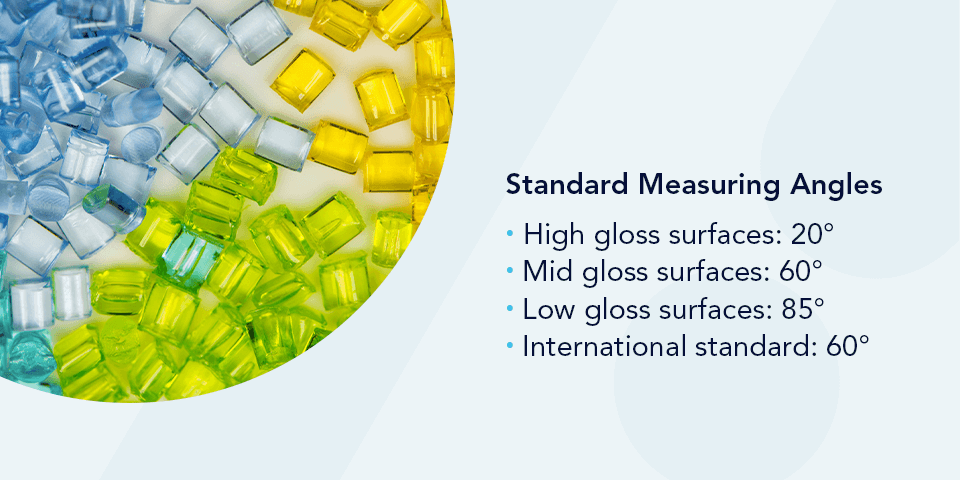
The settings to use when measuring the colour of a gloss depend on the surface type. The standard measuring angles are:

  • High gloss surfaces: 20°
  • Mid gloss surfaces: 60°
  • Low gloss surfaces: 85°
  • International standard: 60°

It is important to know gloss measurements because gloss psychologically influences customers, so this aspect needs to be consistent across products and batches.
01-Standard-Measuring-Angles.png
Read  Temperature Effects on Colour Measurement: Maintaining Accuracy in Extreme Conditions

SPIN vs. SPEX

SPIN and SPEX have several similarities and differences.

What Is SPIN in Spectrophotometry?

Specular component included (SPIN) measures the true colour data without the effect of surface appearance. Measuring with SPIN requires the surface to be evenly lighted from all directions. This measuring environment is ideal for shiny and textured surfaces alike. With the specular port of the glossmeter closed, the light will go to a white trap so the gloss signal will go directly to the viewing port.

What Is SPEX in Spectrophotometry?

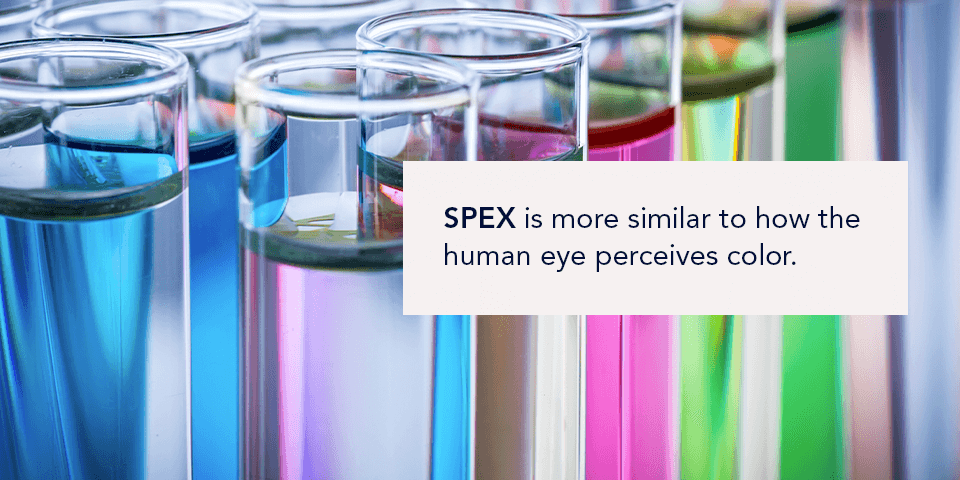
Specular component excluded (SPEX) considers the appearance colour, so the gloss affects the measurement. SPEX is more similar to how the human eye perceives colour. Surface characteristics become part of the colour, so glossy surfaces appear darker than matte surfaces that are the same colour. Measuring with SPEX means that the specular port of the glossmeter is open, so the light from that area of the sphere goes to a black trap and is not included in the measurement.

02-SPEX-is-more-similar.png
INFO  Get More Information

Contact HunterLab

Gloss consistency is important, and the experts at HunterLab will help your business achieve that consistency with every batch. Contact HunterLab online today to learn more about our colour measuring services. To learn more about the science of colours, read our blog.