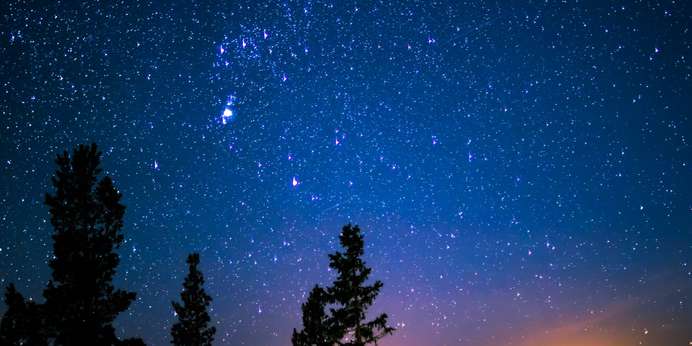
In astronomy, a star’s colour tells its story. Measuring the colour of a star gives astronomers immense insights into its temperature, age and composition even from hundreds of thousands of miles away. By measuring stars’ wavelengths, you can determine their elemental makeup and main components.
What Is Astronomical Spectrophotometry?
Spectrophotometry refers to the process of measuring a sample’s electromagnetic wavelengths to determine information such as colour, chemical composition and age. Every element in a star emits a unique wavelength of electromagnetic radiation, which allows spectrophotometry to examine the percentage of hydrogen, helium and trace elements in a star. Astronomical spectrophotometry uses Planck’s curve to examine a star’s peak wavelength and understand components of its makeup, which are impossible to judge from Earth.
Since stars are powered by nuclear fusion at their core, they maintain a steady dynamic equilibrium throughout their life and display their life cycle position using colour. Due to this uniform time and colour cycle, you can determine a star’s age by its hue. Though all stars appear white due to their peak wavelength on the colour spectrum, many are blue, yellow, red and green. The following star colours correspond with the listed heat levels in Kelvins:
- Blue stars: 10,000-50,000 K
- Yellow stars: 5,500 K
- Bright red stars: 3,500 K
- Dark red stars: 2,500 K