
Makers of felt hats depend on manufacturers for consistent coloration. Image Credit: Unsplash user Onur Bahçıvancılar

Felt is a highly diverse fabric, used in applications from clothing to children’s toys to automotive and interior design and many more. Just ask Lucy Sparrow. The artist recently opened 8 ‘Til Late, a bodega near Manhattan’s High Line stocked from floor to ceiling with replica products made entirely of felt, from peanut butter to pickles, burritos to breakfast cereals. So what attracted Sparrow to felt? “Pure practicality,” she says. “It doesn’t fray, and also it’s available in more colours than you can possibly imagine. The colour-matching capabilities are absolutely awesome. I like that the whole art practice comes down to one material.” 1

Indeed, colour is perhaps the most attractive quality felt, regardless of who is using it. Whether felt is to be part of a greater design or used on its own, felt manufacturers must ensure their products are consistently colored.
felt-color-2.jpg

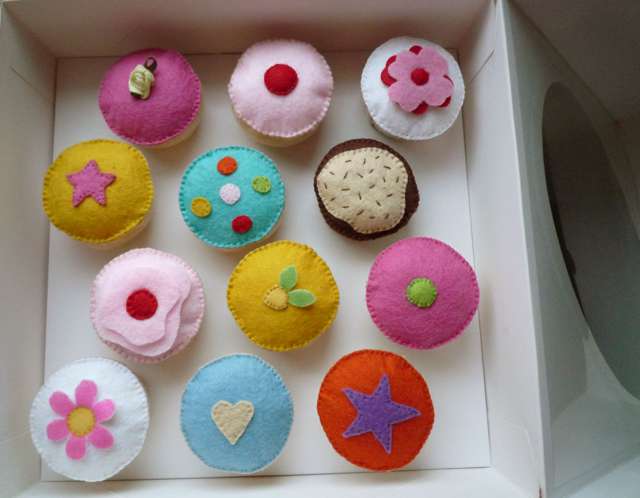
Vividly colored felt can even be used by creative bakers to make cupcakes. Image Credit: Flickr user Melanie Hughes

Read  Spectrophotometry in Fabric Production: Achieving Colour Conformity in Blends of Natural and Synthetic Fabrics

Felt Manufacturers Require Colour Control

Felt products must be colour consistent both for general production and for customer orders. In general production, standard cuts and colours of felt are produced in bulk and purchased by designers as is. Designers and other shoppers who buy general production felt often are seeking to replicate patterns over a large amount of product and need their felt to always be the same colour to fit their pattern. If the felt products they have to choose from vary over time or over a single sheet, they may choose to seek felt from a more dependable source.

For custom felt production, where designers order specific cuts and colours from felt manufacturers, colour quality control is even more essential. When designers place their orders, they have a clear idea of what colour their felt needs to be. They’re paying more for a custom order over generally produced felt for the purpose of ensuring that their felt product will be exactly the colour they desire. For these customers, who often represent large orders and have continuing business relationships, manufacturers must be able to produce the proper felt colour without deviation or error.

Numerical Colour Definition Is Essential for Communication

In either bulk or custom applications, the process of colour quality control begins with communication. Specific shades of colours are difficult to communicate because the human language lacks clearly defined words for the myriad potential shades. So, when dyeing felt to meet the same bulk standard or a customer’s specific request, simply dyeing it “maroon” or “cerulean” isn’t enough to guarantee that it will be the same colour as last time, or the colour the customer desire. For this reason, manufacturers must define colours using CIE L*a*b*, the numerical scale used by spectrophotometers. By assigning colours specific numerical values, manufacturers can replicate any colour with decimal precision. Both standard production colours and customer orders can be rendered numerically, ensuring that dyeing process is always working towards the correct end goal.

felt-color-3.jpg

Manufacturers rely on spectrophotometers to produce felt products that meet fashion designer’s standards. Image Credit: Flickr user Cecilia Coelho

INFO  Get More Information

Dyemasters Depend on Spectrophotometers

Knowing the precise colour of felt to be produced is only a part of the battle. It still remains to dye the felt to standard and then to assess that the end result is the proper colour. The dyeing process can be difficult and inexact, due to variations in raw materials and the colorfastness of different pigments on felt. To control the end result, cleanliness of all the dyeing tools must be maintained to prevent contamination. As issues will arise with raw materials and each different set of pigments, employing a dyemaster who can compensate for these issues in situ is necessary. But even the best dyemaster is only as effective as the tools they’re working with. Any good dyemaster will depend on their spectrophotometer.

Spectrophotometers are colour measurement instruments. Reflectance spectrophotometers are used to assess the colour of felt and other opaque products. These instruments measure colour by reflecting bursts of controlled light off felt and other objects and analyzing the light that returns. Spectrophotometers are capable of determining precise shades, and returning their results as either a simple pass/fail function or as a clearly defined numerical set. Only with a quality spectrophotometer can dyemasters ensure that their felt matches the exact standards of a customer’s order or the established standard for bulk production. Ideal for laboratory conditions, spectrophotometers take up little bench space, measure rapidly, and are easy for technicians to master. With a spectrophotometer in their laboratory, manufacturers can ensure their felt is always the exact colour it needs to be before it ever leaves the factory.

The HunterLab Difference

With six decades of experience designing colour measurement solutions for the textile industry, HunterLab has come to understand what dyemasters and fabric manufacturers seek in their quality control processes. HunterLab spectrophotometers measure accurately and rapidly and have long provided dependable measurement with cutting-edge controls and software. Contact us today to learn which spectrophotometer can best improve your quality control process.