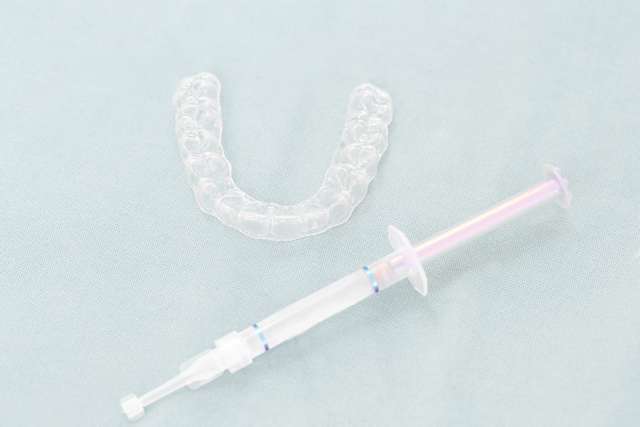
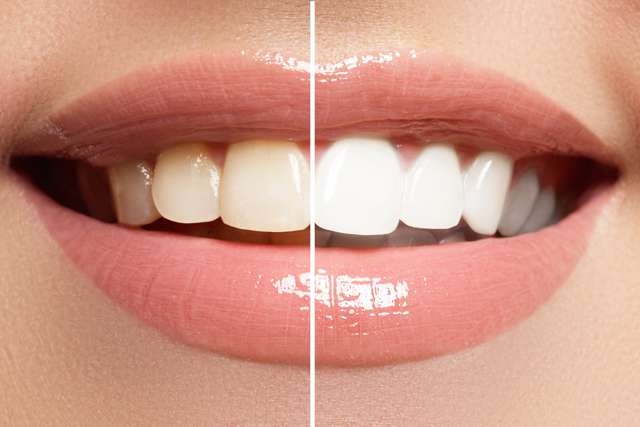
At-home tooth whitening kits remove surface stains to reveal bright, white teeth. Image Source: Shutterstock user Josep Suria

While the colour of one’s teeth may appear to be the only concern when it comes to tooth whitening kits, the colour of the solution itself can actually play a significant role, as it plays a major part in that consumer’s perception of quality and efficacy; while the results of a tooth whitening solution matter, the colour of the solution matters just as much and manufacturers generally aim for a clear end product that suggests a vivid, clean result. Although these associations are in part psychological, colour can also be a very real sign of efficacy, making strict colour quality control critical.

Unfortunately, when working with multiple chemicals, colour accuracy and consistency can be difficult to maintain. Slight reactions between the components of your solution could cause the colour to turn an unappealing shade, become cloudy, or cause the active ingredient to break down, reducing the impact of the blend. Because the colour of oral care products such as whitening solutions has both significant aesthetic and functional implications, it is important that operators are able to locate and resolve colour problems rapidly. This can be achieved by integrating spectrophotometric colour measurement as a central component of your colour quality control protocols.

spectrophotometer-tooth-whitening-2.jpg

Most whitening solutions are clear, suggesting a clean, bright bleaching result. Image Source: Shutterstock user aodaodaod

Read  Colour-Coding Technology: 50 Shades of Grey Pills?

Why Colour Matters in Tooth Whitening Solutions

Typically, the active ingredient in whitening solution is either hydrogen peroxide or carbamide peroxide, which are naturally clear or white in colour. However, both hydrogen peroxide and carbamide peroxide are susceptible to colour changes in the presence of other substances, potentially decreasing aesthetic appeal or product efficacy.1 This is a significant concern, as at-home tooth bleaching solutions are not primarily comprised of their active chemicals; water makes up the largest portion of any solution and mineral deposits in that water can cause a colour change when exposed to peroxides and other bleaching agents. Hydrogen peroxide, in particular, is unstable and as such, there is a wide range of minerals which will react poorly with it. These minerals, such as iron, copper, bronze, chromium, zinc, lead, manganese, chloride and silver, are commonly found in water. Even in trace amounts, such minerals have the potential to react poorly with the hydrogen, causing the solution to change colour and become less effective.2 Using demineralized water doesn’t entirely guarantee there will be no minerals impacting the hydrogen peroxide in your solution. For example, a small amount of hydrogen peroxide mixed with iron can cause the colour of the solution to shift, creating a subtle, unappealing yellow or brownish tint.

In the past, the hydrogen peroxide was kept in a separate tube, which was only combined with the other ingredients once the consumer was ready to use the product. This reduced the risk of unappealing colour changes and ensured the product remained stable. Advances in bleaching chemistry, such as the development of solid bleaching agents, have changed this practice and active ingredients no longer have to be kept separate, as chemical reactions are delayed. However, with these advances come the increased risk of an unappealing colour result or reduced effectiveness of product due to chemical combinations.3 When the colour of a solution changes, this could be an indicator that an undesired chemical reaction has occurred. In addition to colour change, hard minerals like calcium and salt have the potential to turn a clear solution cloudy. This haze is another indicator that an unwanted chemical reaction has occurred in your solution and may cause customers to question the quality of the product.

spectrophotometer-tooth-whitening-3.jpg

Many consumers opt for at home whitening to save on costs in the dentist’s office. Image Source: Shutterstock user Re_sky

INFO  Get More Information

Choosing the Right Spectrophotometer

Identifying colour and haze issues in whitening solutions isn’t simple, as the naked eye may not pick up on the subtle colour and haze difference. Spectrophotometers, however, allow for objective colour and haze measurement by distilling these parameters to numerical data, allowing for exacting accuracy and precision. Due to the sensitivity of spectrophotometric instrumentation, even the most subtle colour and haze differences can be detected, including those which are typically unseen by the human eye. As such, spectrophotometric technology gives you extraordinary insight into product behavior and the ability to identify unwanted variations early, helping you pinpoint any issues with trace elements in your solution, incorrect formulation, or incorrect processing.

However, choosing the right spectrophotometer is essential to obtaining the most reliable results from your spectrophotometric testing. Today, there are more spectrophotometric options available than ever before, presenting new possibilities for colour and haze analysis. One instrument, however, has the unique ability to measure transmission colour and haze simultaneously: the HunterLab Vista.

The Vista is a revolutionary instrument that combines colour and haze measurement into one simple step, reducing sample preparation time and improving efficiency of measurement. With one-touch standardization, a modern touchscreen display, and embedded Essentials software providing customizable workspaces, and multiple data views, the Vista allows for both ease of use and sophistication of data analysis. Its spill-resistant sample compartment and small footprint mean it is ideal for measuring the colour of liquid samples in virtually any laboratory environment. Data is easily managed through Ethernet communications, direct from the instrument print and email capability, and real-time data streaming to users SPC, LIMS and other data collection systems.

Realizing the Benefits of Simultaneous Colour and Haze Measurement

Integrating the right spectrophotometer in your quality control process can have significant benefits, allowing you to ensure only the highest quality, most appealing products enter the marketplace. This helps you create trusting, long-lasting relationships with your customers. At the same time, combining colour and haze measurement into one step allows for more efficient product analysis, reducing labor time and risk of operator error. Meanwhile, early detection of colour and haze changes can help you make formulation and process changes to enhance product aesthetics and performance as well as production efficiency. In doing so, you can not only produce the best possible product, but realize meaningful cost savings as product waste and rework are minimized.

HunterLab Technology

Are you ready to take your colour quality control methods to the next level? For manufacturers of tooth whitening solutions and other transparent or translucent oral care products, the Vista presents new possibilities for perfecting both products and production. In addition the Vista, HunterLab offers a full range of benchtop, portable, and on-line instruments for accurately and precisely analyzing a wide range of products in the oral care industry. Contact us to learn more about our renowned instruments and let us help you select the right tools for your needs.