
The market for non-dairy milk made from almonds, cashews, and other nuts is growing rapidly; non-dairy milk sales have increased by 61 percent since 2012, and sales are expected to continue to grow over the next few years.1 To cater to this popular market, non-dairy milk manufacturers must ensure that their products are high in quality and consistent in colour. However, according to a 2015 Global Health and Wellness survey, most consumers reported that they are more likely to buy products that contain no artificial colours, preferring all-natural ingredients instead.2 This poses a challenge for nut-based milk manufacturers. How do you produce consistent-colored products without the use of artificial colours?

To offer all-natural products to consumers, many manufacturers are turning to spectrometry to test their products for colour consistency and refine their manufacturing process. By measuring the colour of your almond milk or other nut-based milk products using a spectrophotometer, you can create more consistent batches of milk without relying on artificial coloring agents to create visual appeal.  

Creating Consistent-Colored Almond Milk

When you manufacture almond milk and other nut-based beverages, achieving precise colour consistency across multiple batches can be challenging.3 Each step of the manufacturing process can cause colour variations in your product, including:

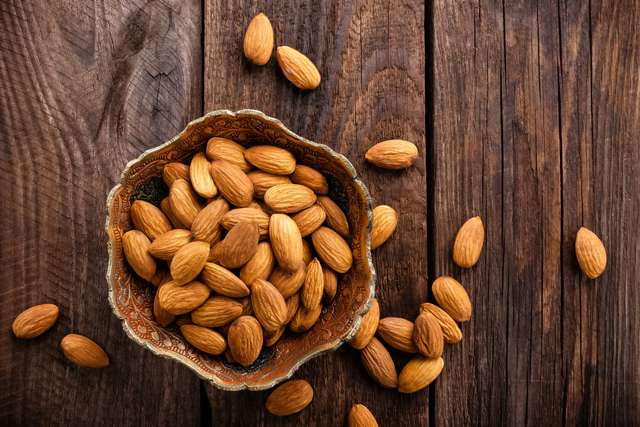
  • Sorting: Although peeled almonds are naturally more consistent in colour than raw almonds that still have the skin on, you should still analyze your raw, skinned almonds and remove any that fall outside of your colour standards in order to achieve colour consistency in your milk products.
  • Soaking: During the soaking stage, colour consistency can vary significantly between one batch of raw almonds and another. Additionally, if you leave the skin on the almonds, your milk product will be darker in colour and it may be more difficult to achieve colour consistency.
  • Blending: When you blend your almonds and add flavors to the mix, the colour of the almond beverage may change again, as added flavors like vanilla extract can impart a brown colour to the product. You may choose to measure the colour of your product once again at this stage in order to maintain colour standards.
  • Filtering: Inadequate filtering may leave solid particles in the milk, impacting appearance and consistency.
  • Pasteurization and other treatments: Pasteurization or ultra-high pressure homogenized (UHPH) treatment processes eliminate bacteria and extend the shelf life of the product.4 During this stage, you should look for signs of discoloration in your product. That’s because the treatment techniques used to extend the shelf life of almond milk can impact the colour of the product; for example, UHPH treatment typically produces milks that are lighter and more stable in colour than pasteurization.

By testing the colour of almond milk and other nut-based milks spectrophotometrically throughout the manufacturing process, you can tailor your processes to create the colour you want and retain colour consistency from batch to batch. A spectrophotometer can help you detect slight variations in colour at every step, allowing you to address the colour issues immediately through UHPH, additional filtering, or stricter nut sorting protocols.
color-of-almond-milk-2.jpg
Read  Temperature Effects on Colour Measurement: Maintaining Accuracy in Extreme Conditions

How to Test Your Nut-Based Milk Products for Colour Consistency

In order to test the colour of your nut-based milk products during the optical sorting stage, the blending stage and the pasteurization, or UHPH stage, you need to use the appropriate spectrophotometer for each task.

Testing the Colour of Solid Ingredients

To test the colour of your raw nut ingredients in solid form, you need to use a non-contact spectrophotometer that is capable of measuring the colour of irregularly-shaped samples. The Aeros spectrophotometer may be the best option for your lab because it is specifically designed for non-contact measurement of textured products like raw almonds and other nuts. Notably, this instrument provides the largest sample area measurement the in the world, allowing you to analyze much larger sample sizes than any other spectrophotometer. This is important when you manufacture nut-based milk beverages, as a large sample of nuts will be a more accurate representation of the entire batch that you plan on using in your final product. Alternatively, if you want to integrate colour measurement within the processing line itself, the SpectraTrend HT may be the perfect choice for your facility. The SpectraTrend HT is an on-line spectrophotometer that continuously monitors colour in real-time, eliminating the need for time-consuming sample preparation and streamlining the quality control process.

Testing the Colour of Liquid Samples

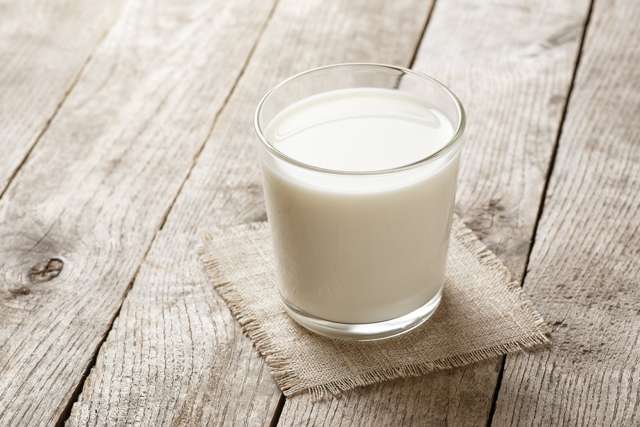
Some manufacturers receive consistent-colored raw nut ingredients in bulk from manufacturers that perform their own colour quality control on their products. As a result, you won’t have to test your raw ingredients for consistency in advance. However, all almond milk manufacturers need to use an instrument that can measure the colour of samples in a liquid state, such as the UltraScan VIS. The instrument measures both reflected and transmitted colour, allowing it to handle samples that range from completely opaque to transparent.

The UltraScan VIS spectrophotometer is engineered for extraordinary accuracy and precision. When the instrument is operated in reflectance mode, it can provide unprecedented insight into the colour of opaque milks and confirm that your products fall within a specific colour tolerance. The UltraScan VIS is also a great choice for measuring the colour of translucent milks, as it is a CIE-conforming sphere instrument that eliminates the effects of light scattering in a semi-transparent liquid. Using this instrument, you can get accurate results regardless of the opacity or transparency of your products.

color-of-almond-milk-3.jpg
INFO  Get More Information

Making the Move Toward More Natural Products

Today’s health-conscious customers are increasingly seeking out natural products, yet still expect a high level of visual appeal. By testing the colour of your raw nut ingredients as well as your final product in liquid form, you can create high-quality nut-based milk products whose colour comes from the best materials and product techniques, not the use of artificial colorants. If your products currently do use artificial colorants, spectrophotometric data can help you evaluate the impact of ingredient and process changes on colour as you move toward more natural formulations. With this information, you can refine your formula and processing methods to meet your desired colour standard and create a consistently-colored product. In other words, spectrophotometers will help you achieve your vision for your product.

HunterLab Technology

Do you want to improve the colour consistency of your almond milk and other non-dairy products? If so, contact HunterLab today to find out more about our diverse lineup of spectrophotometers. From the Aeros to the SpectraTrend HT and the UltraScan VIS, we offer innovative, reliable instruments that address the unique challenges of the beverage industry. Whether you need to analyze raw nut ingredients on the processing line or test liquid products in the lab, we can help you find the perfect instrument for your manufacturing needs.